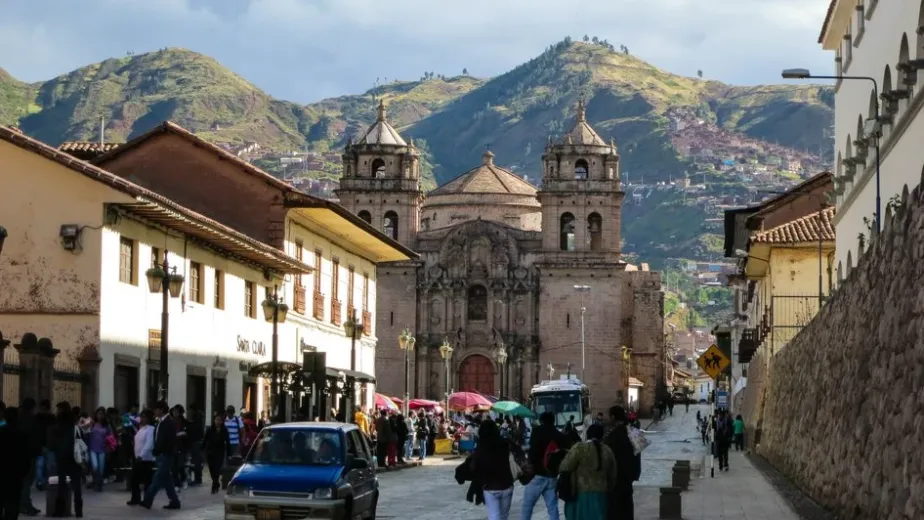
The civilización inka is often remembered for Machu Picchu and little else — a single spectacular ruin standing in for an entire civilization. This does a profound disservice to one of history’s most sophisticated societies. The Inka developed contributions in engineering, agriculture, logistics, and sustainable resource management that continue to be studied by scientists and engineers today. Understanding them reveals a civilization whose intelligence the conventional narrative has badly underestimated.
Three Principles Behind Everything
Before the specific achievements, it is worth naming the principles that unified them. Inka innovation rested on three interlocking capacities: environmental adaptation — the ability to work with the conditions of an extraordinarily difficult landscape rather than against them; systems thinking — an understanding of nature and society as interconnected wholes; and sustainable resource management — the capacity to use resources in ways that could endure across generations.
The genius of the civilización inka was not any single invention. It was a way of thinking that treated environment, society, and resources as one connected system.
Agricultural Terraces
Among the greatest achievements of pre-industrial agricultural engineering are the Inka agricultural terraces, or andenes. These allowed cultivation on extreme slopes while controlling erosion, managing water, and creating distinct microclimates at different elevations. They are still studied today by engineers and agronomists for their sophistication in soil and water management.
Water Management
The Inka developed remarkable systems of water management: canals, aqueducts, drainage systems, fountains, and gravity-based distribution. Machu Picchu remains a studied example of hydraulic engineering, its water systems continuing to function centuries after construction. This mastery of water was essential to sustaining agriculture and settlement across arid and mountainous terrain.
The Road Network
The Qhapaq Ñan — the Inka road network — stretched more than thirty thousand kilometers, connecting a vast expanse of South America without the use of the wheel or horses. Today it is recognized as a UNESCO World Heritage site. That a road system of this scale and sophistication was built and maintained across the Andes, using entirely different technologies from those of Europe, is a testament to extraordinary engineering and organization.
Thirty thousand kilometers of road, across the world’s most difficult terrain, built without the wheel or the horse. The Qhapaq Ñan redefines what pre-industrial engineering could achieve.
Food Preservation
The Inka developed advanced food preservation techniques, including chuño and moraya — forms of freeze-drying that used the natural cycle of freezing nights and sunny days to preserve potatoes for years. Combined with natural drying and storage in colcas (state warehouses), these techniques created food security across an empire subject to variable harvests, allowing surplus to be stored against times of scarcity.
Crop Domestication
The Inka and their predecessors contributed to the development and conservation of crops now valued worldwide: the potato, quinoa, kiwicha, oca, mashua, and tarwi. Many of these are today classified as functional foods of high nutritional value. The potato alone transformed global agriculture after it spread from the Andes. This represents one of the most significant agricultural legacies of any civilization.
Earthquake-Resistant Architecture
Inka construction achieved a level of earthquake resistance that continues to be studied by engineers. Their buildings used precisely fitted stone blocks assembled without mortar — stonework so exact that a blade cannot fit between the stones. This dry-stone technique allows the structures to absorb and dissipate seismic energy, which is why Inka walls have survived earthquakes that toppled later constructions built on top of them.
Logistical Organization
Sustaining a vast territory required a sophisticated logistical system: tambos (waystations), chasquis (relay messengers), state warehouses, and systems of resource redistribution. This organization allowed the administration of one of the largest territories in the pre-industrial world — coordinating labor, goods, and information across immense distances and difficult terrain.
Environmental Adaptation
Perhaps the least recognized contribution is the Inka mastery of environmental adaptation itself: practical knowledge of different ecological zones, high-altitude agriculture, biodiversity management, and the relationships between climate, soil, and production. They understood how to thrive across radically different environments stacked at different elevations — a form of ecological intelligence that modern sustainability science is only beginning to appreciate.
The Inka did not conquer their environment. They understood it so deeply that they could flourish where almost no one else could.
Why These Contributions Matter Now
These achievements are not merely historical curiosities. In an age confronting the limits of unsustainable resource use, the Inka model of environmental adaptation, sustainable management, and systems thinking offers genuine lessons. This is central to the Inka Method’s treatment of history: not as a dead past, but as a living source of knowledge about how human societies can organize themselves in coherence with the natural world.
The civilización inka solved problems of sustainability and resilience that modern society is still struggling with. Their contributions are not behind us — they are ahead of us.