Salkantay Trek 6 days

Price

From: $3,720.00

Duration

6 Days

Max People

10

Tour Type

Expeditions

Attractions

5

Activities

13

Min Age

12


Overview


The Mountain That Decides

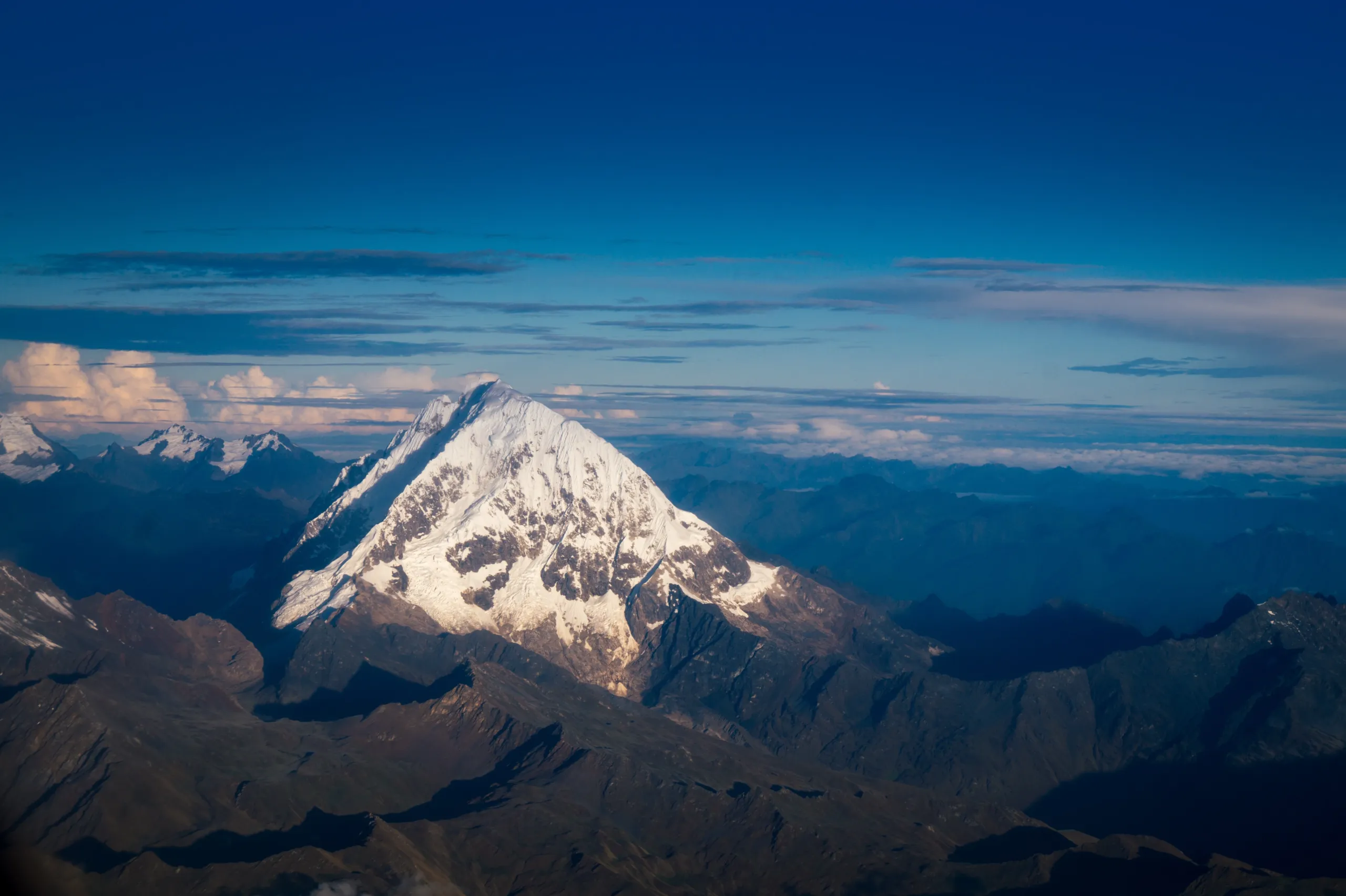
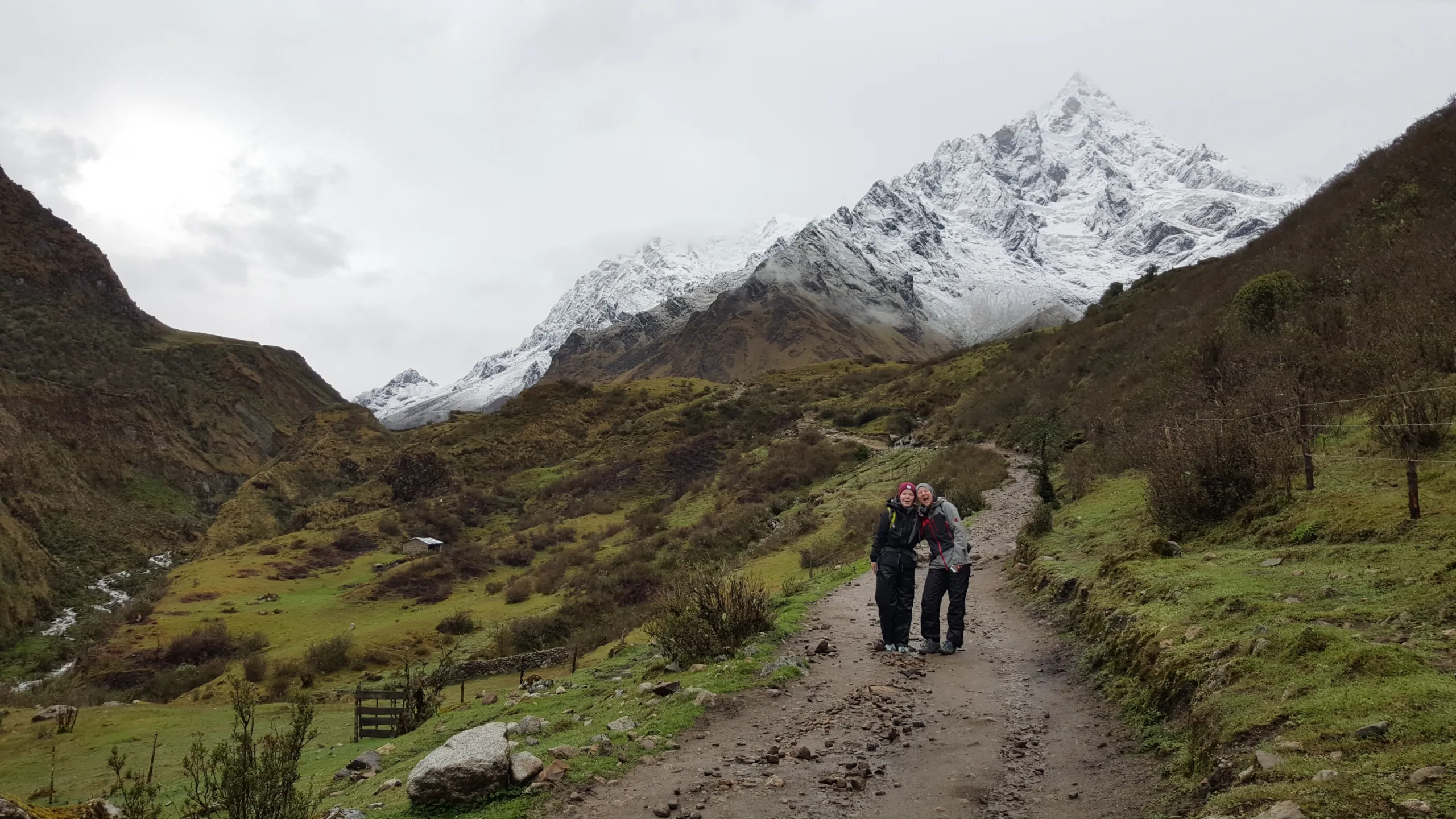
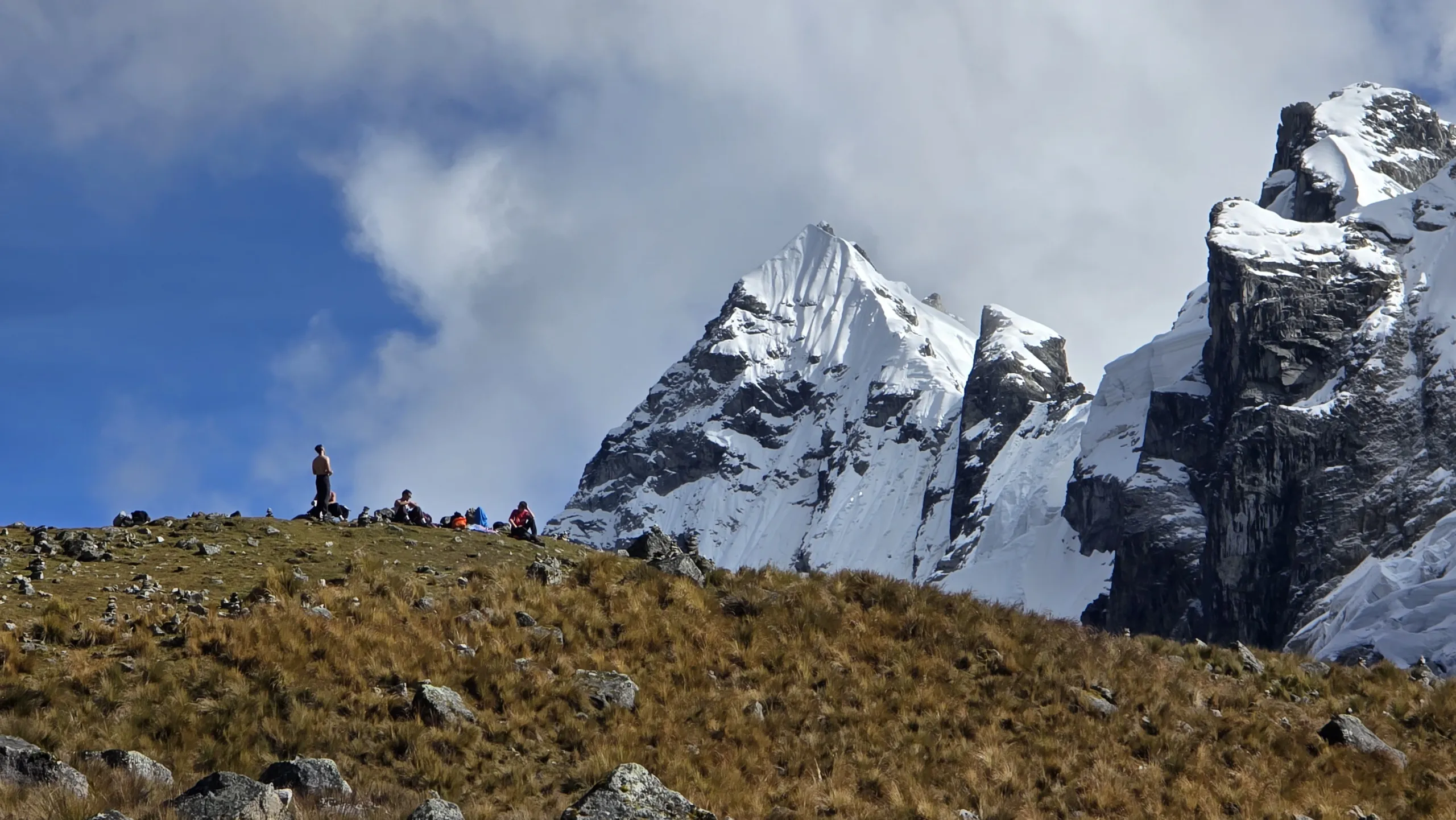
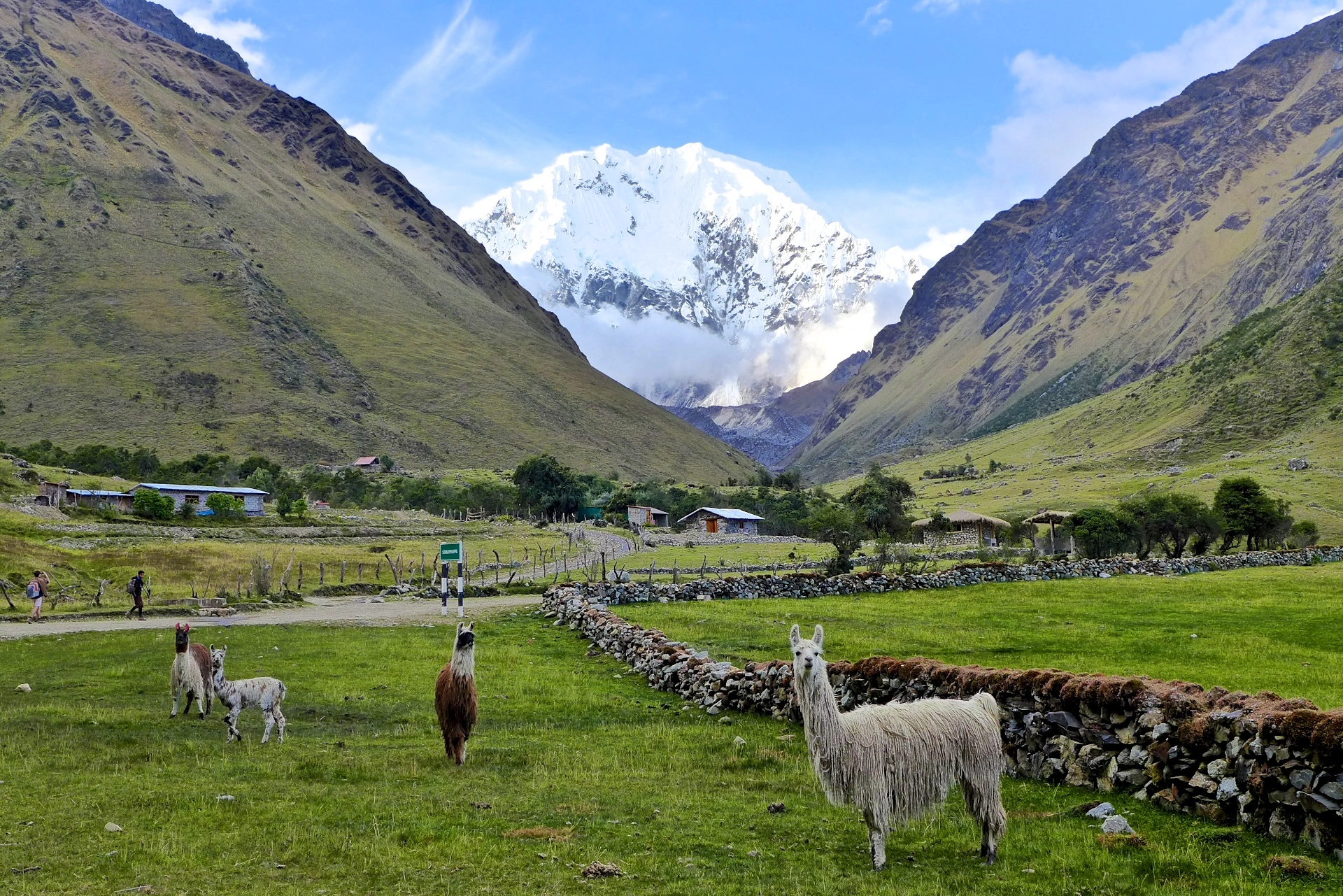
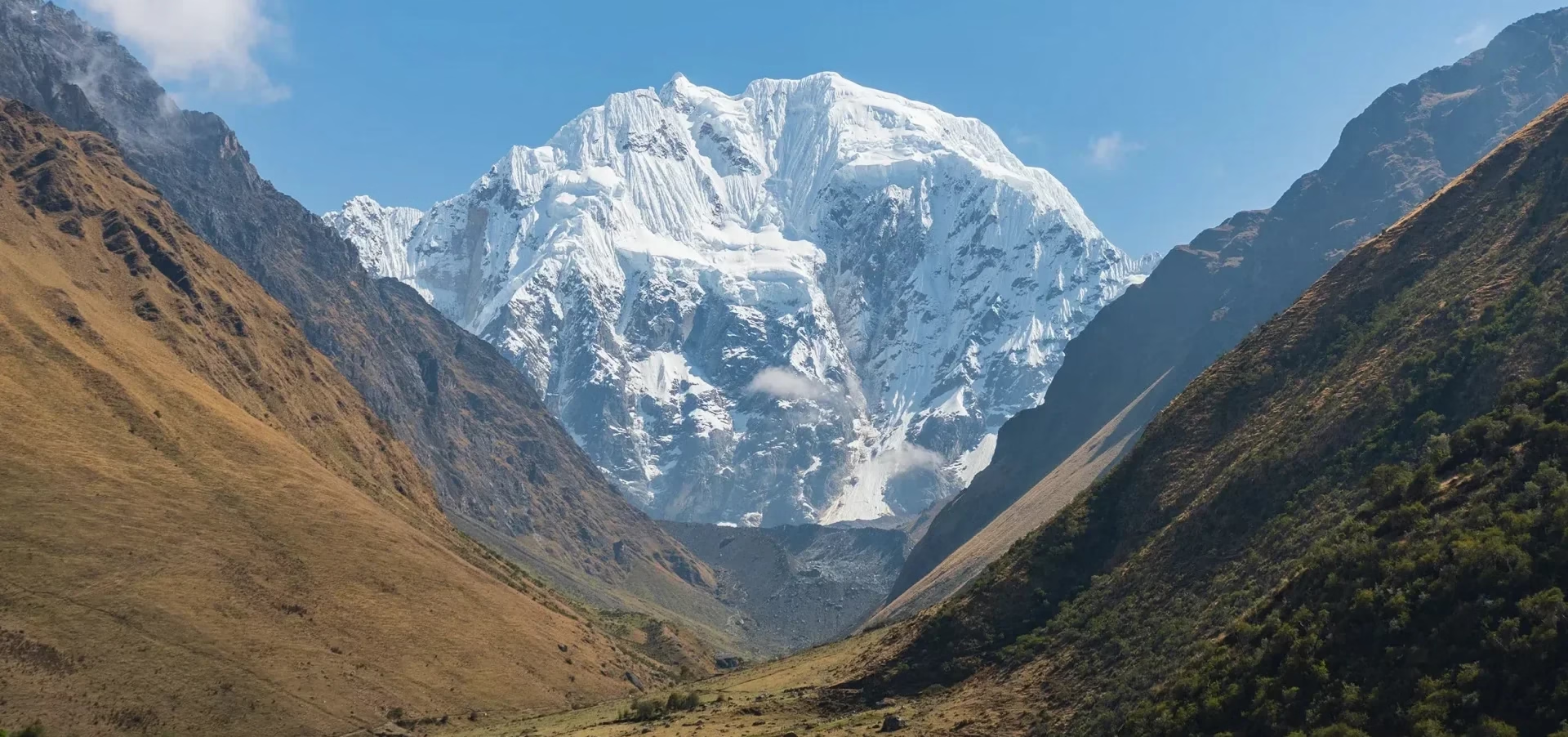
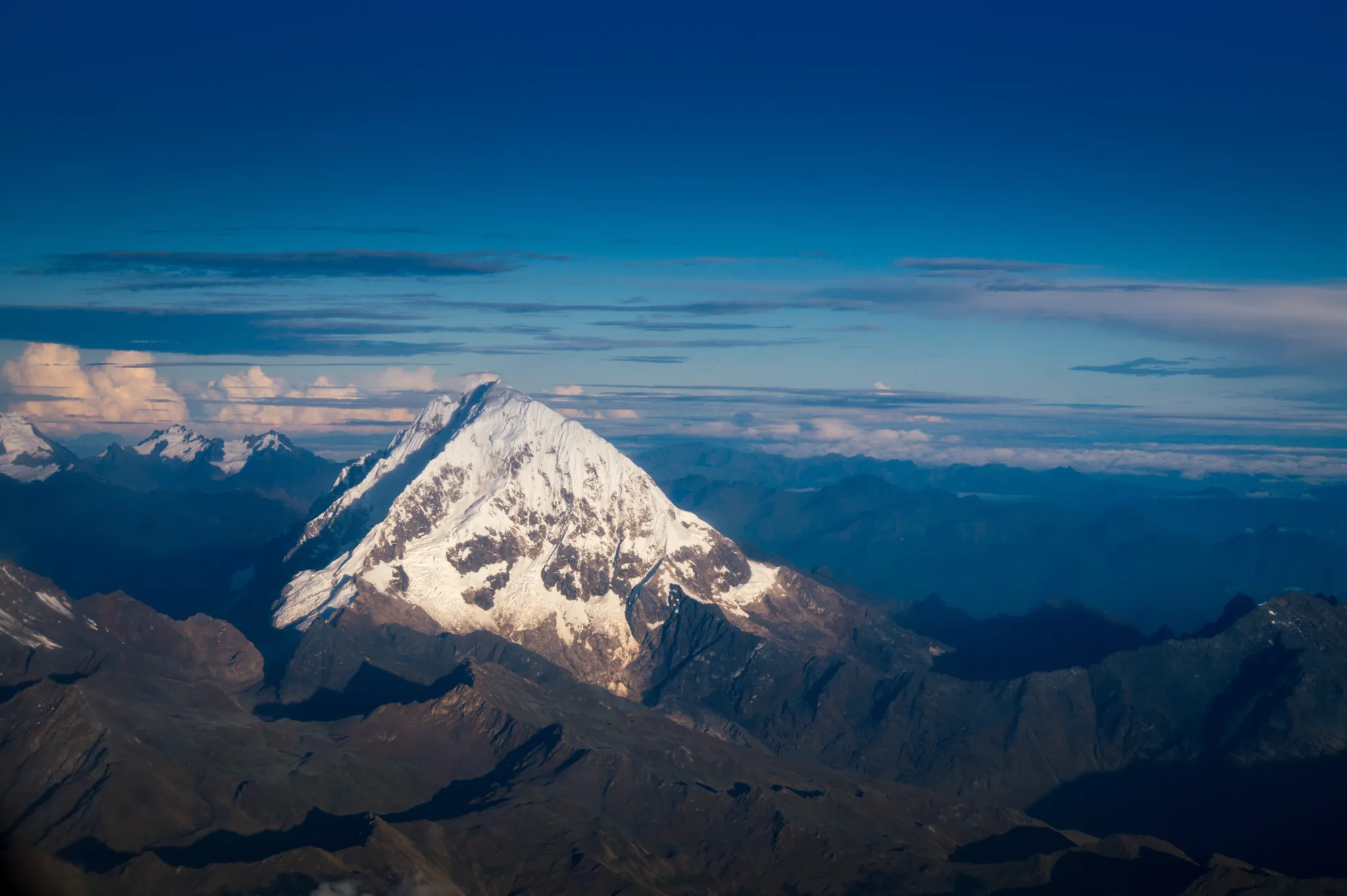
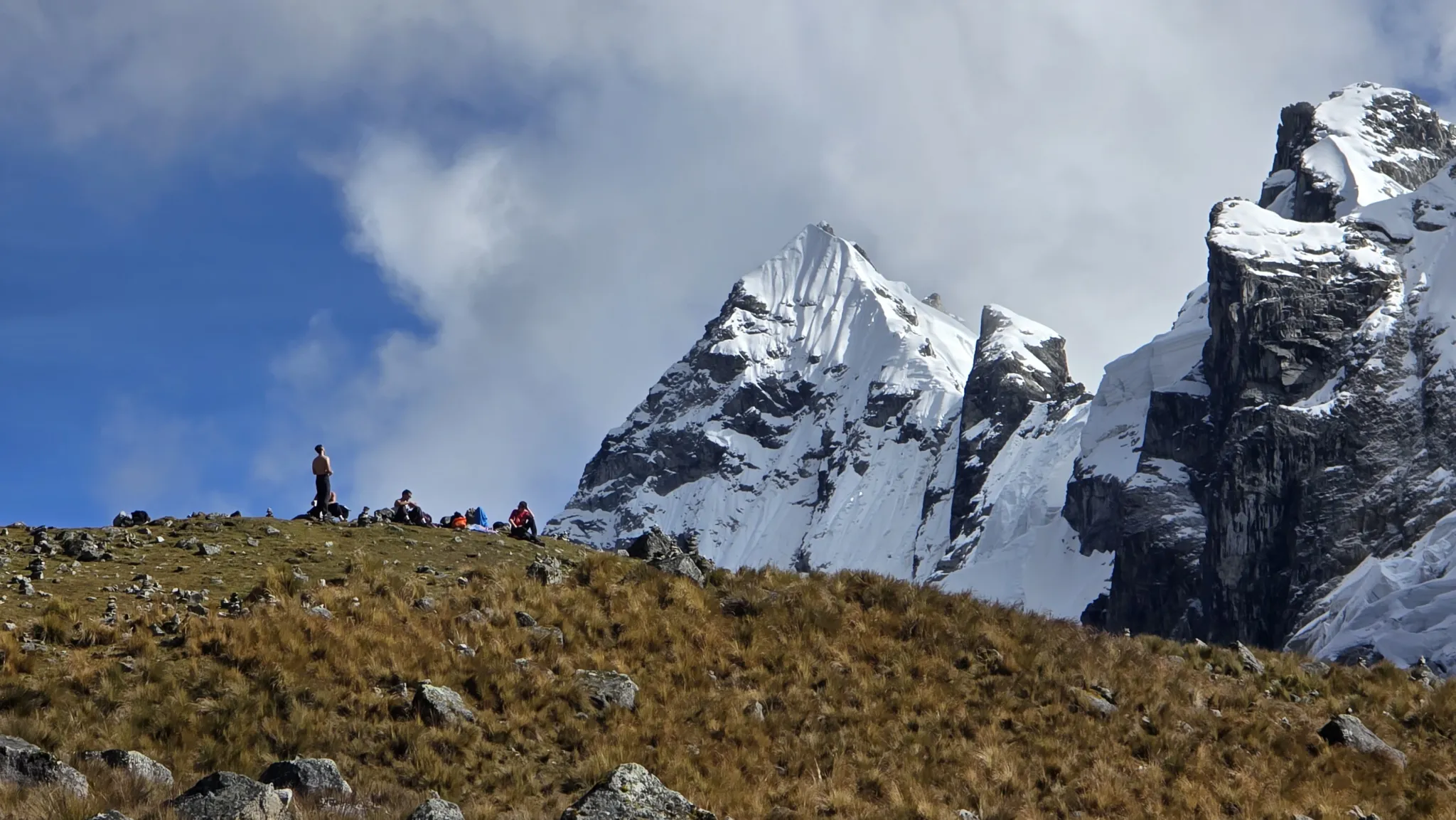
In Andean cosmology, Salkantay is not a mountain. It is an Apu — a living deity, one of the most powerful in the Inka pantheon, whose name translates directly as the savage or the untamed. The communities of the Cusco highlands have made offerings to Salkantay for centuries, not as ritual performance but as genuine acknowledgment that this peak at 6,279 meters governs the weather, the water, and the agricultural fate of everything in its shadow.

Walking through that shadow for six days does something that is difficult to explain before the experience and impossible to forget afterward.

The Salkantay Trek is the most complete Andean journey that exists within reach of Cusco — a continuous traverse from high alpine glacier country through cloud forest, subtropical valley, coffee plantation, and original Inka trail to a viewpoint above Machu Picchu, covering more ecological zones, more altitude variation, and more sheer landscape diversity than any other route in the region. It does not require a permit. It does not follow a corridor. It moves through the full range of what the Andes actually contains.


6 Awesome attractions of Salkantay

# Salkantay mountain & other glaciers

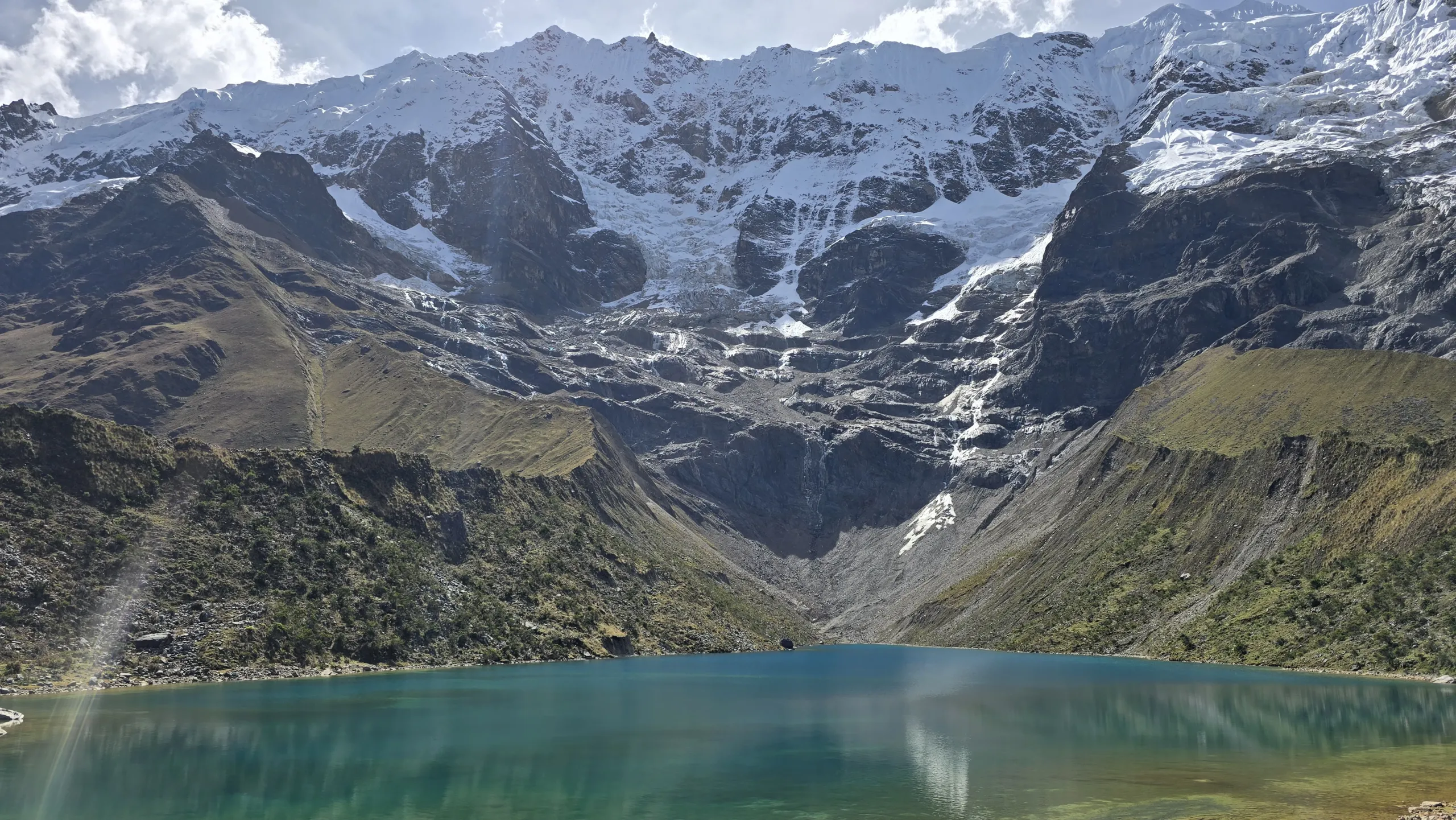
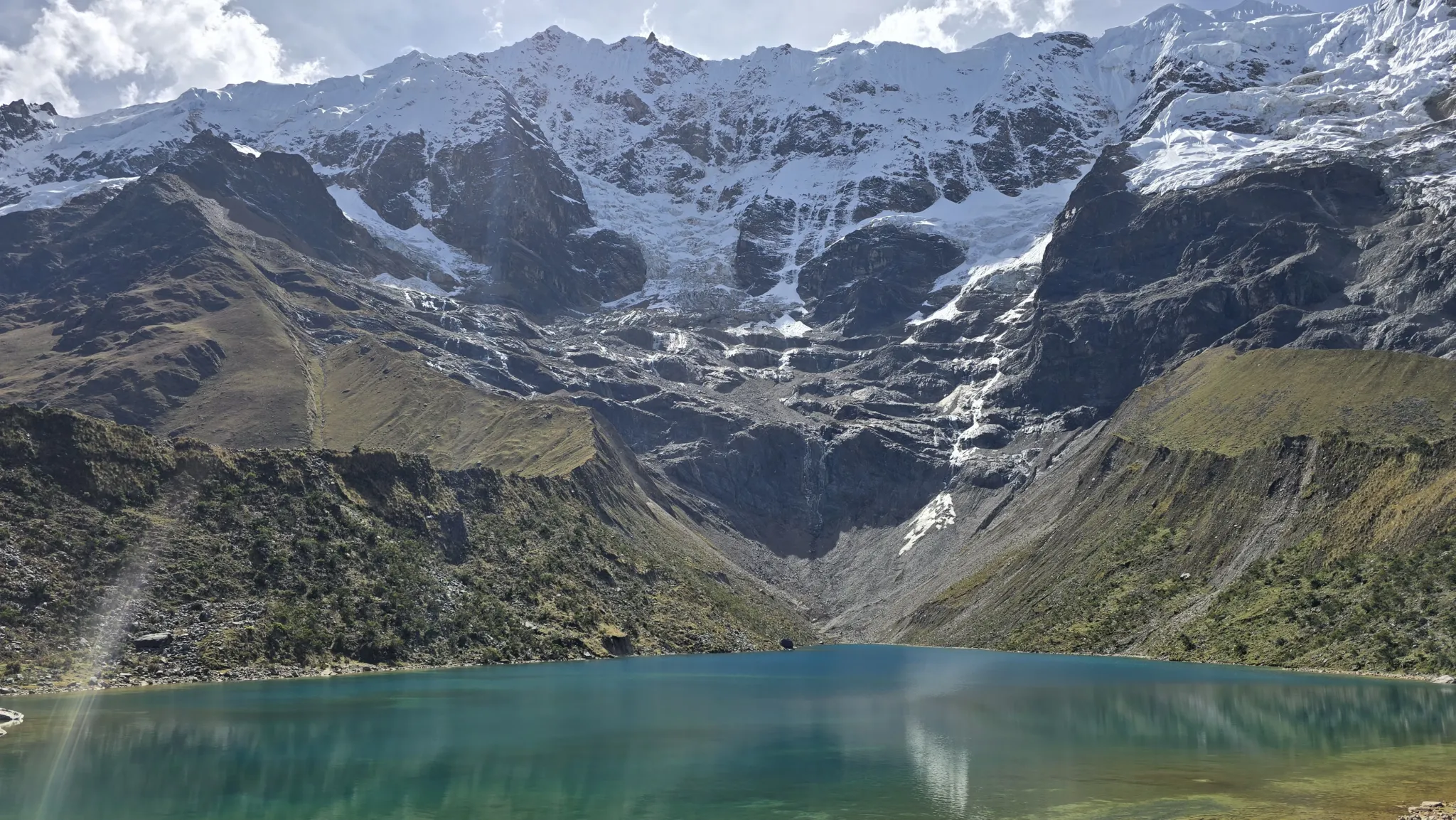
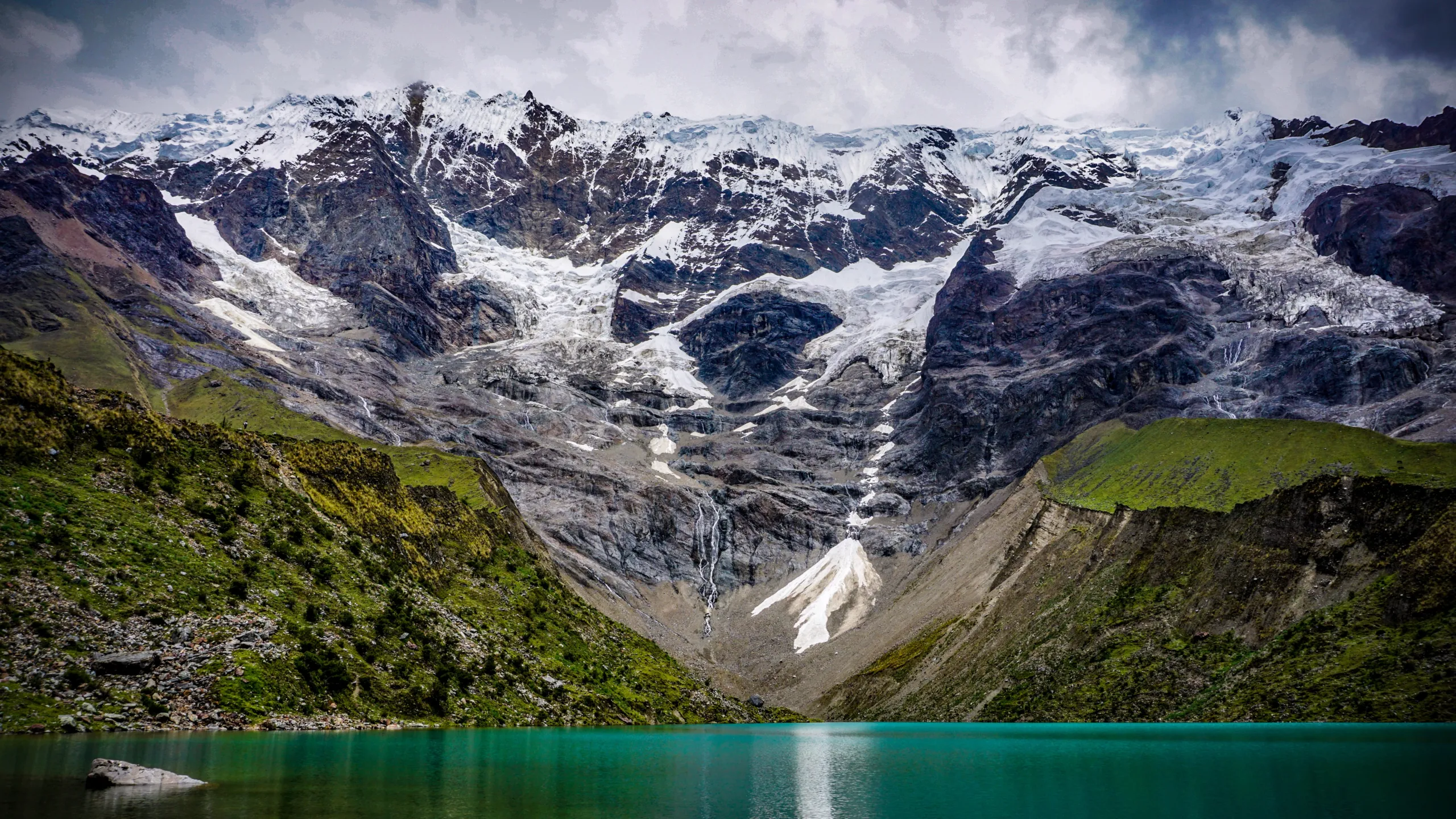
# Humantay lake

# View point of Condors

# Cocalmayo hot springs

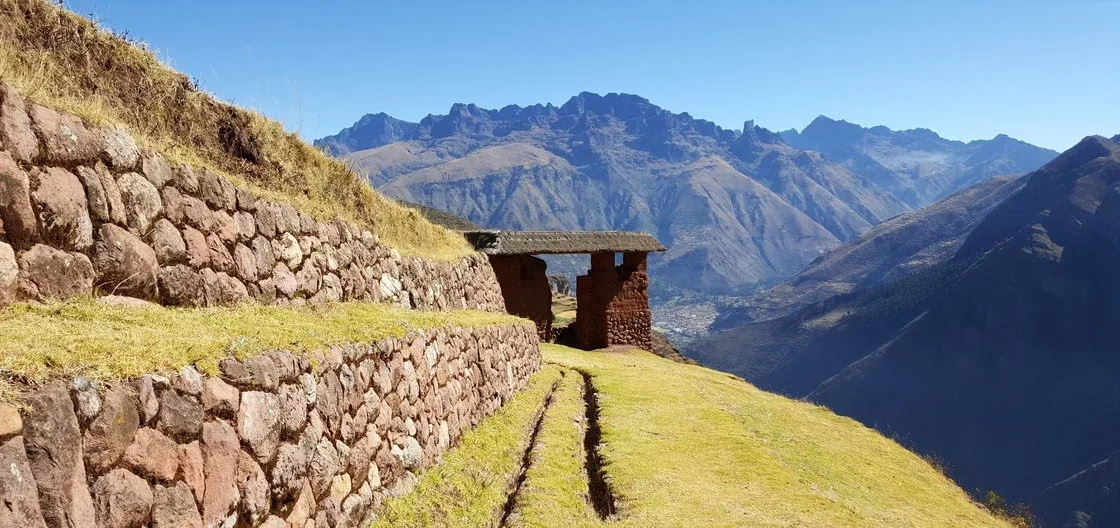
# Llactapata

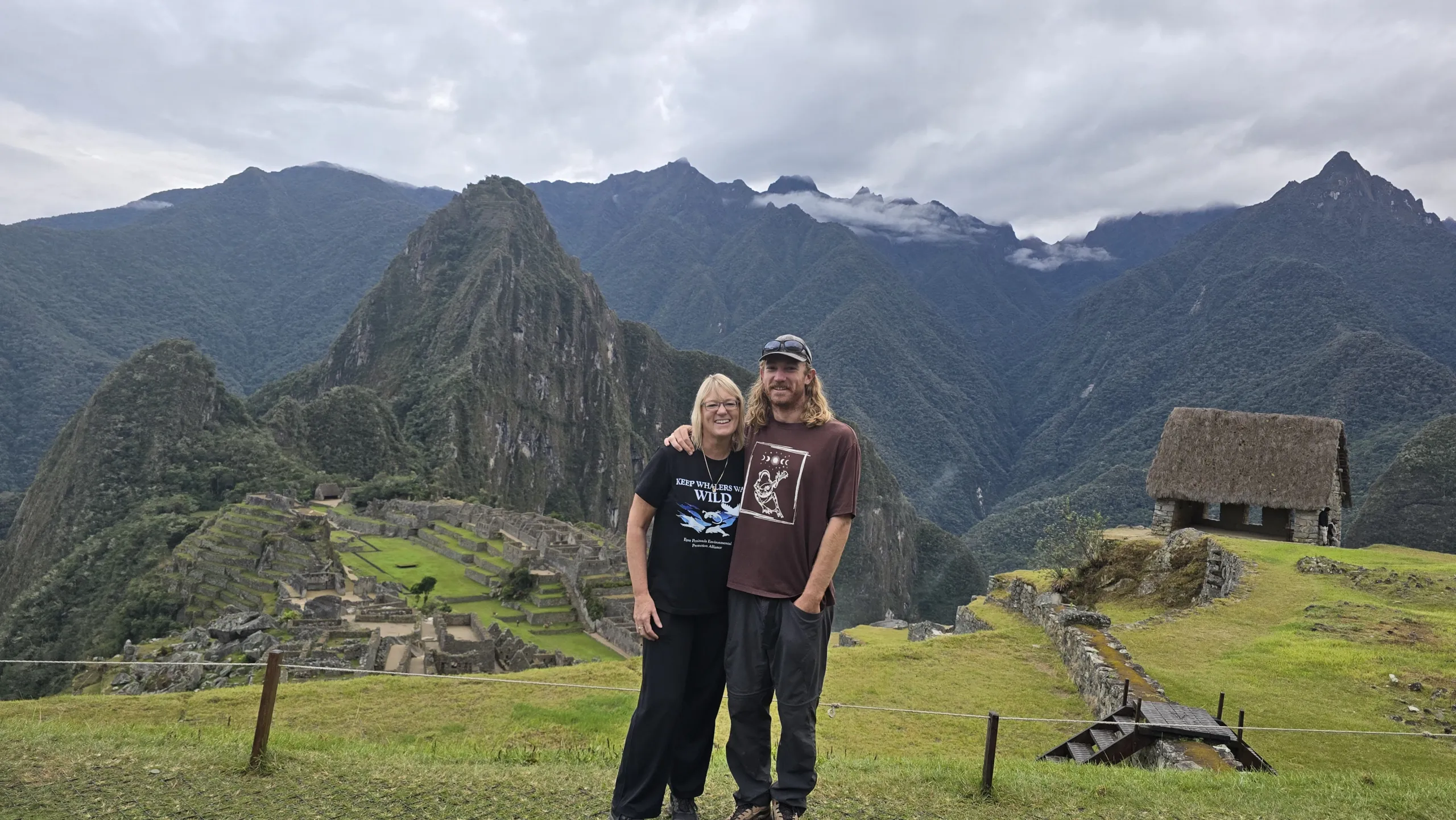
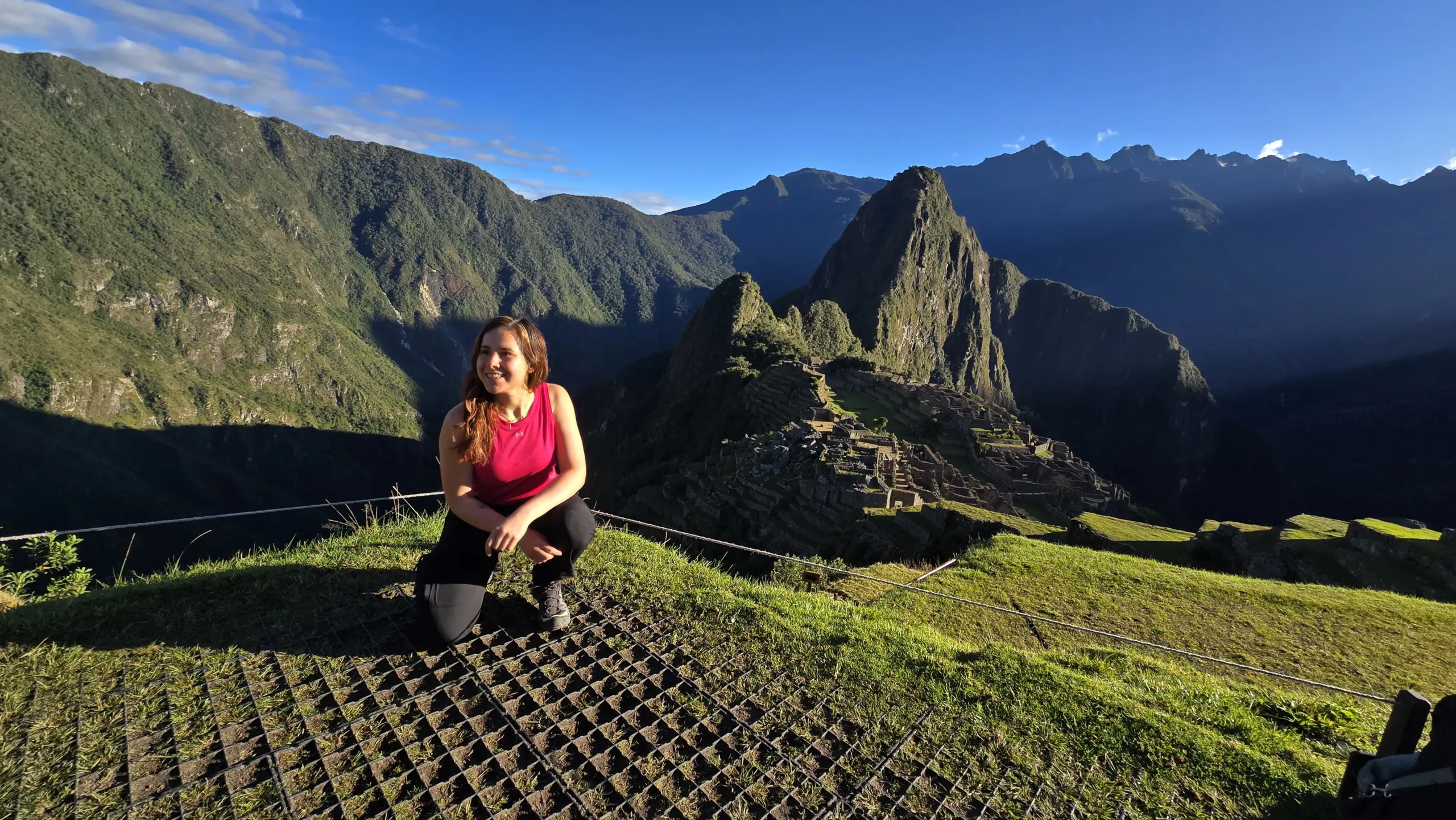
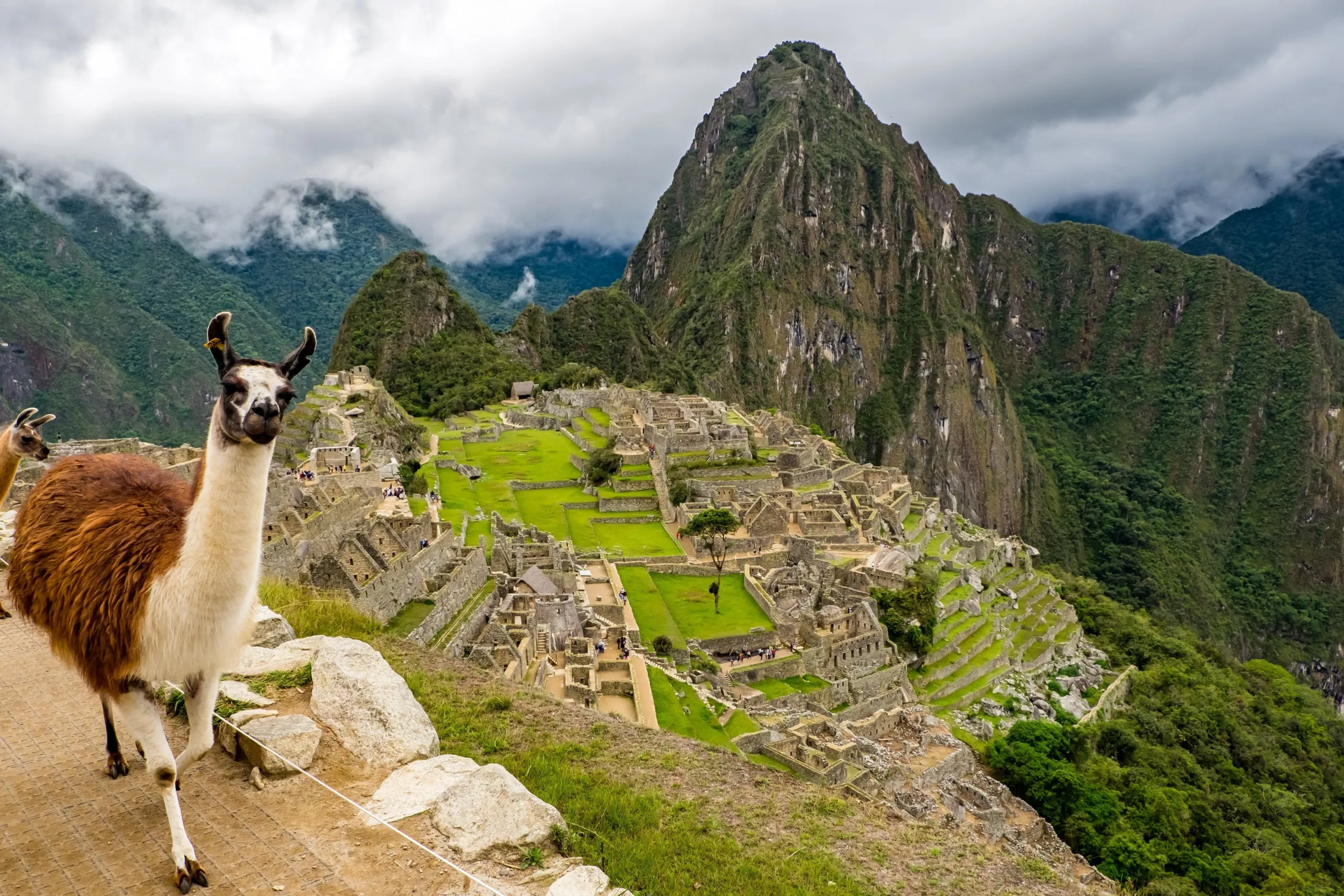
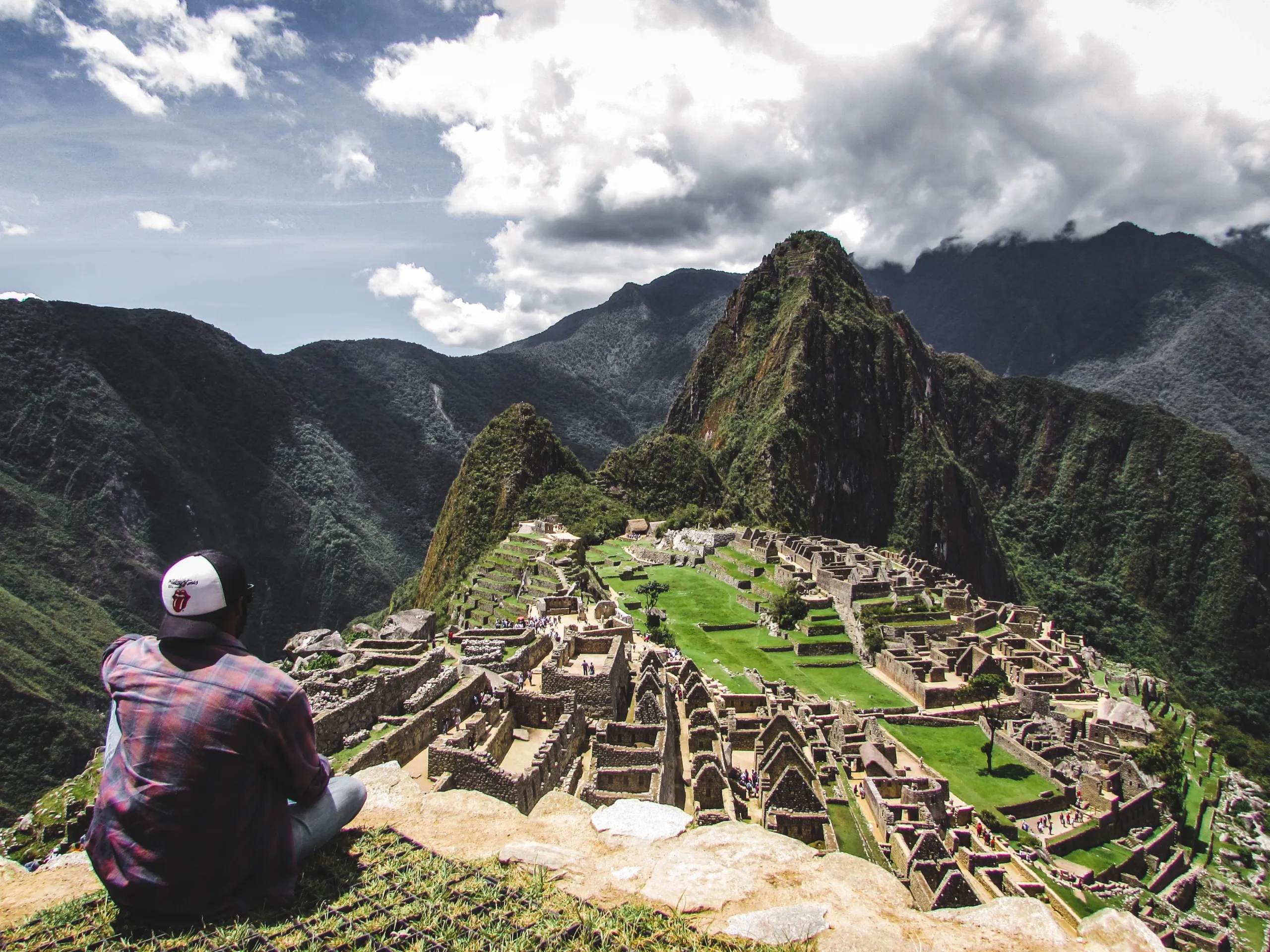
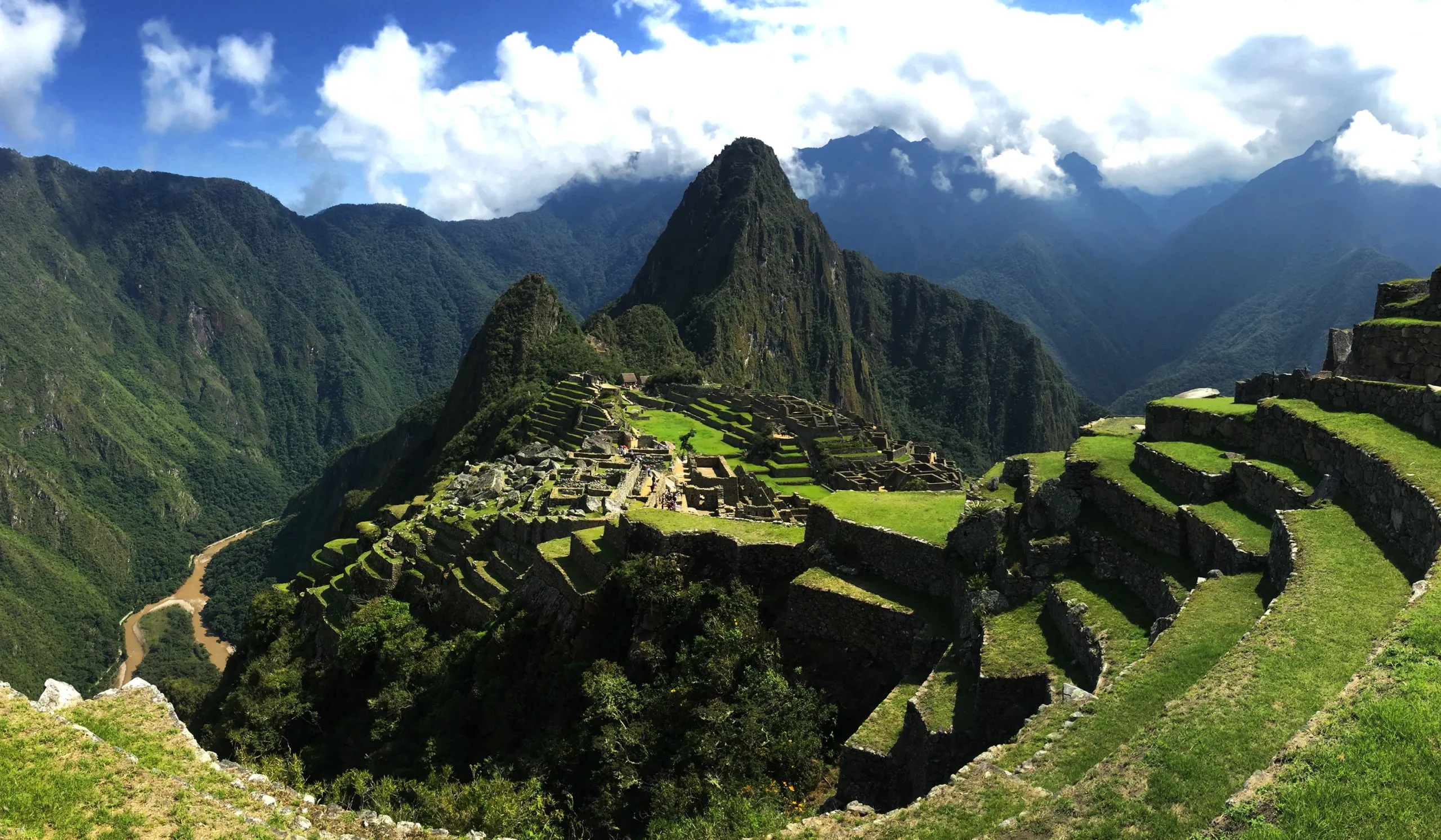
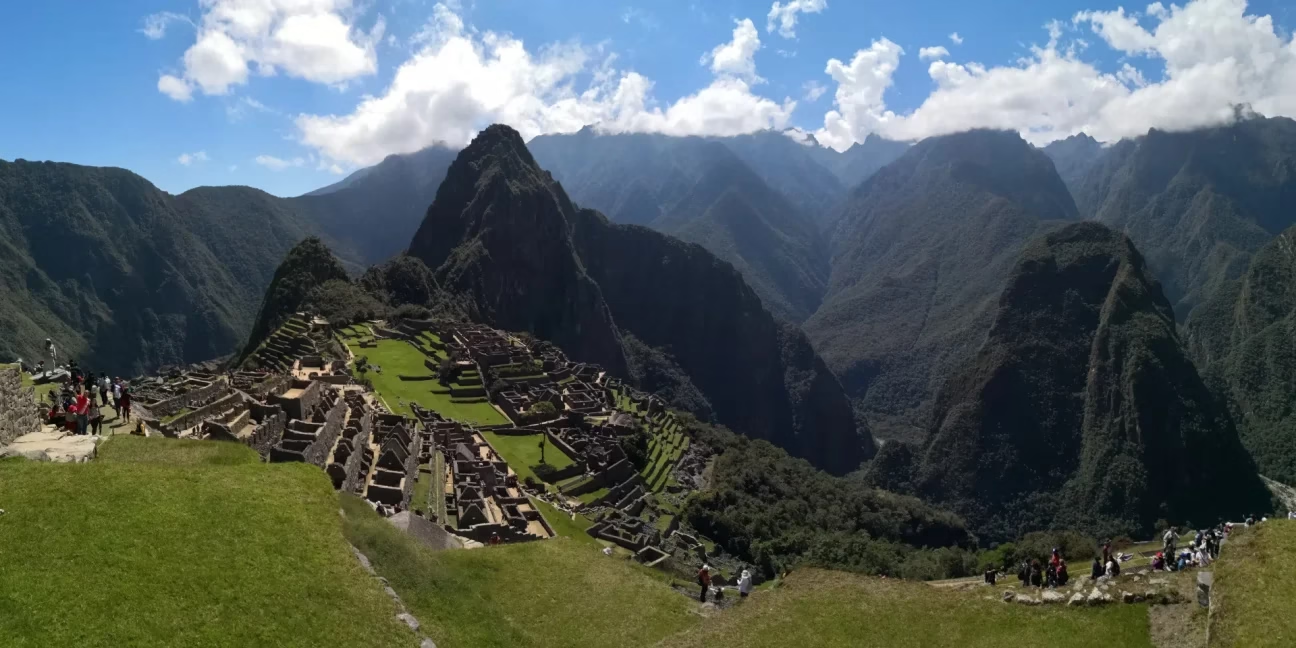
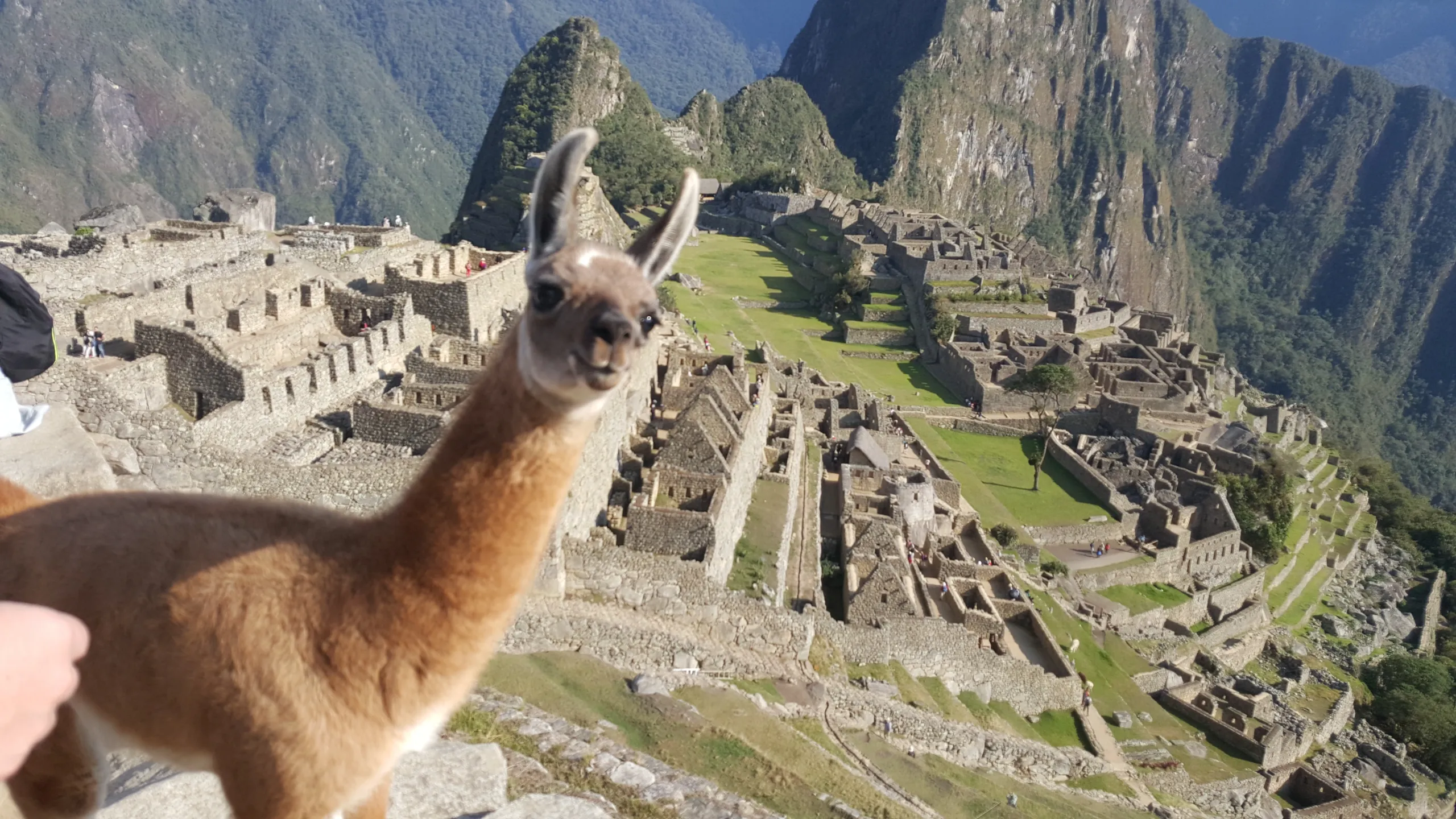
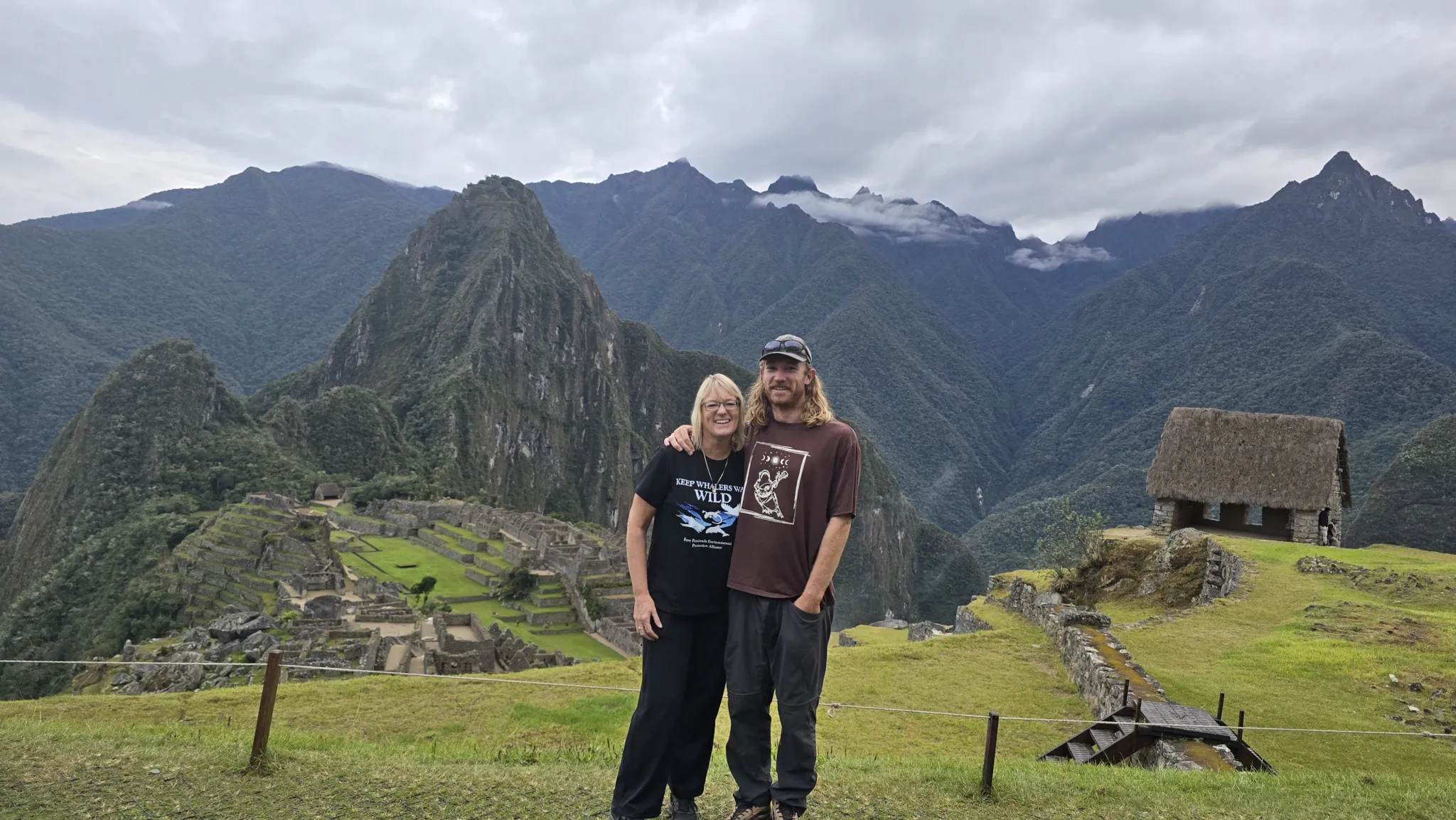
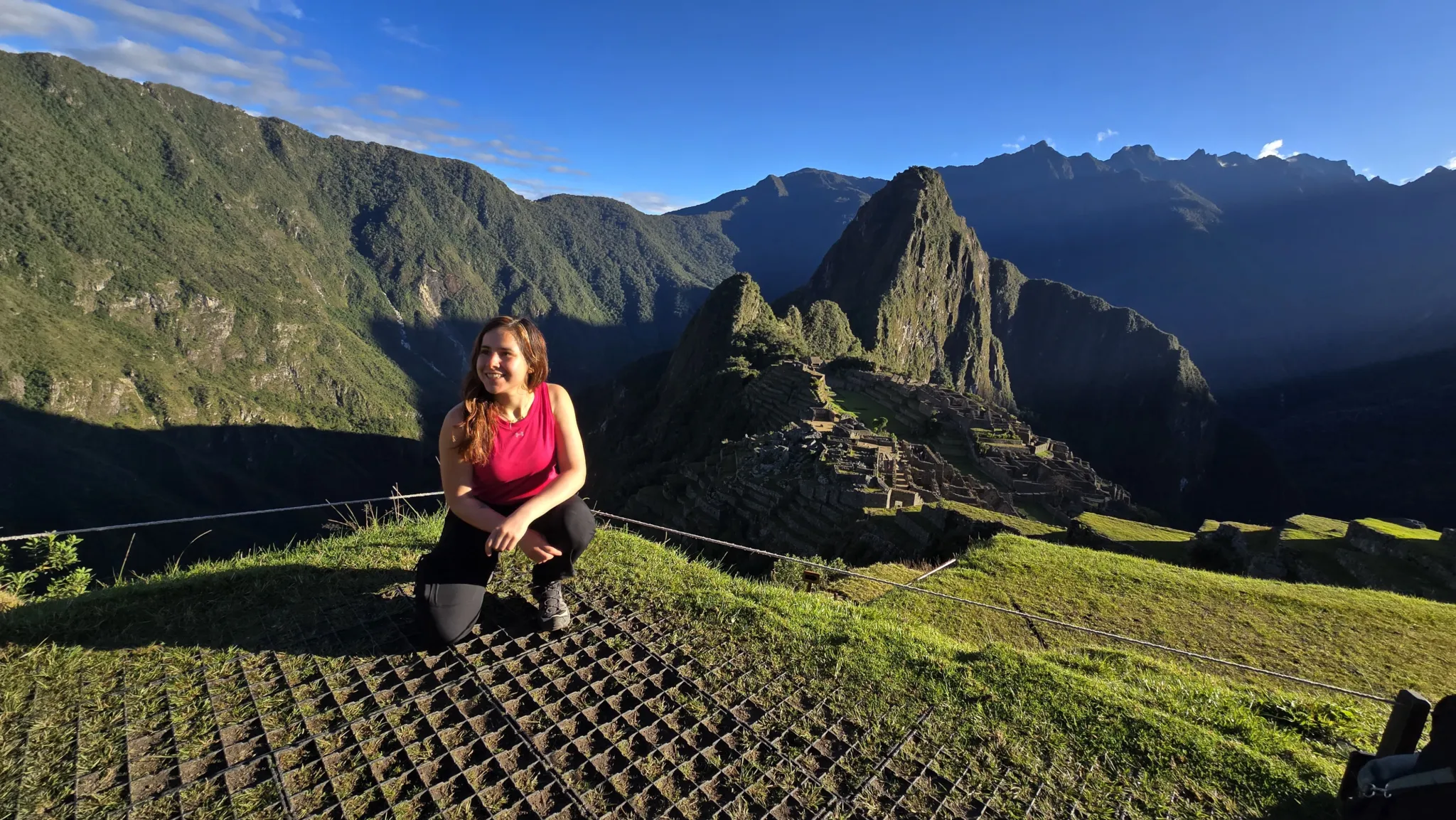
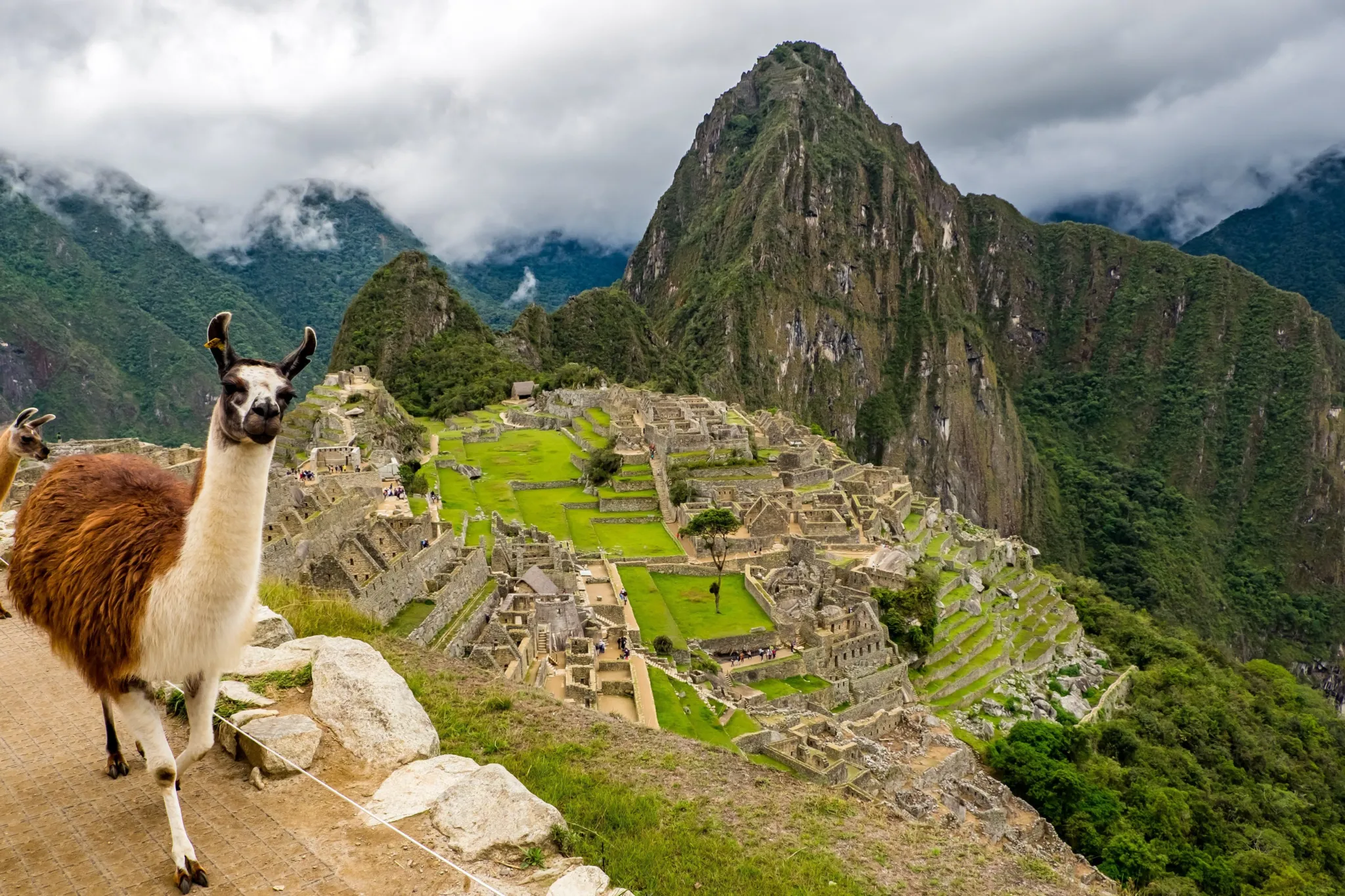
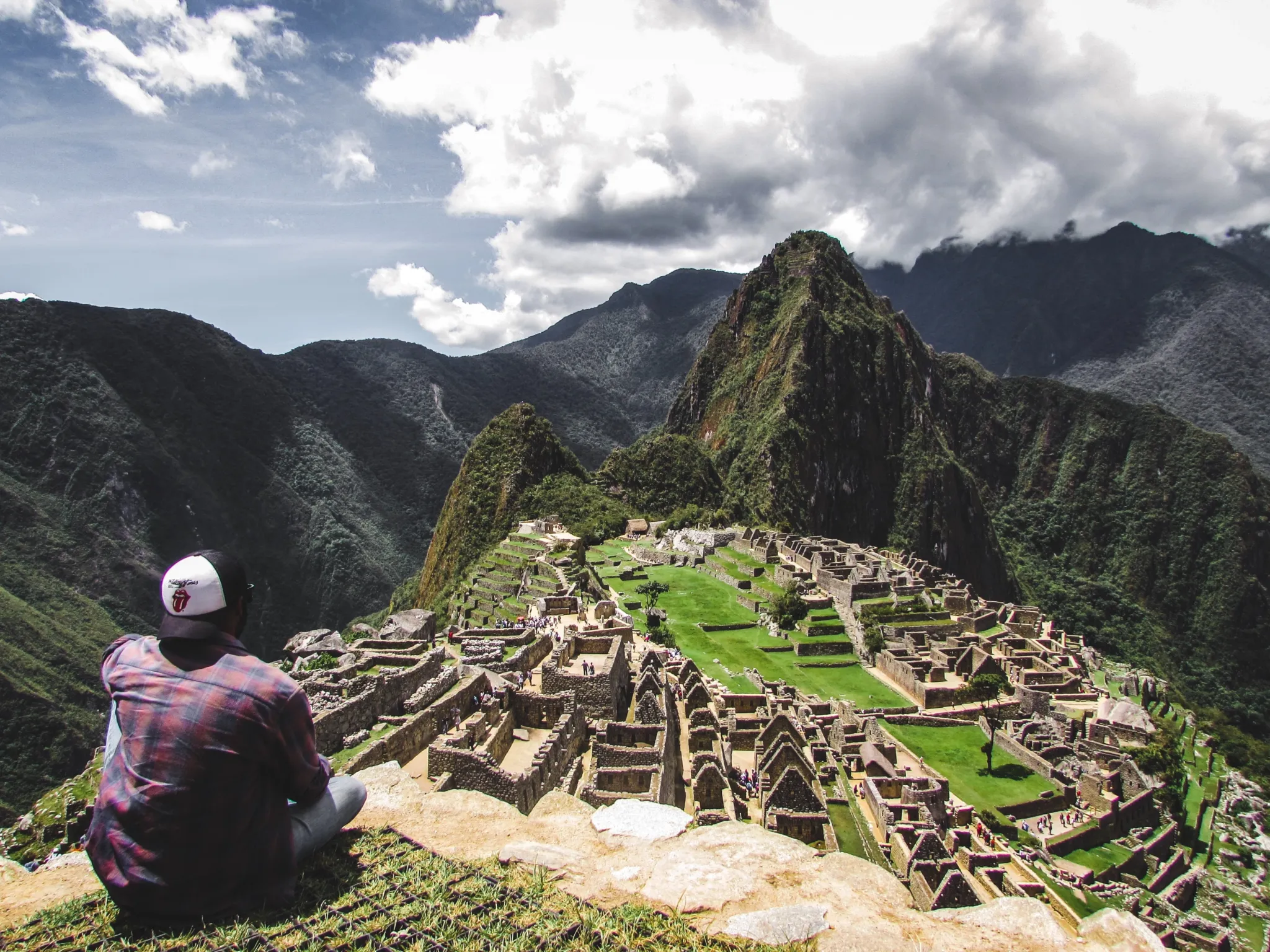
# Machupicchu


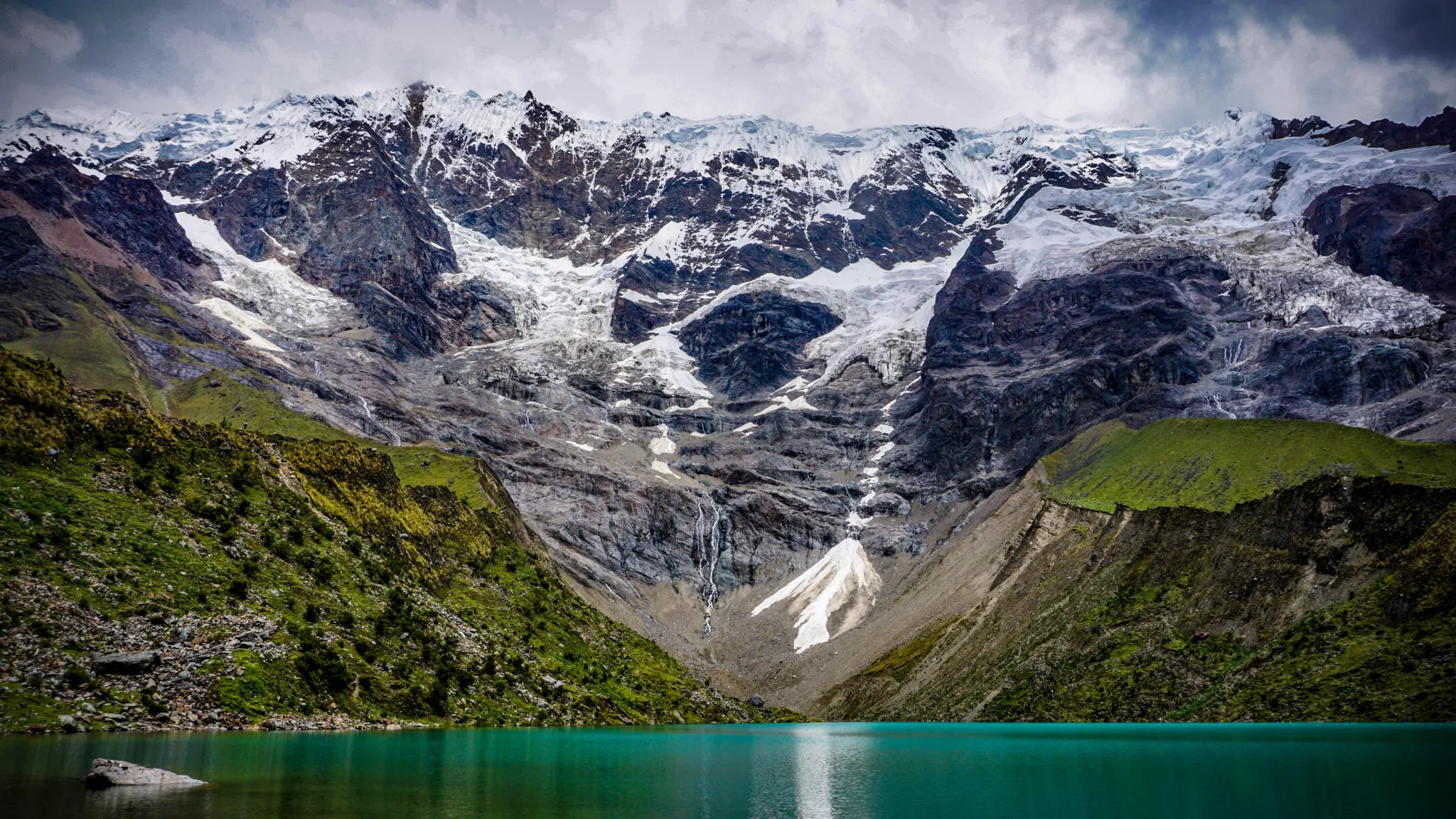
Humanity lake


Salkantay trek


Six Zones. One Continuous Descent Through the Living Andes.

The trek’s therapeutic architecture is built into its geography. Each day descends through a different world — the altitude dropping, the air thickening, the vegetation transforming, the temperature rising — so that by the time the coffee valley of Lucmabamba appears on Day 4, the glacier pass of Day 2 feels like a different lifetime. That compression of landscape and experience into six days produces a recalibration of perspective that no single-environment retreat can replicate.

The last challenge will be to get to Llactapara to have the first view of Machupicchu and the paradicical geography that surrounds the wonder of the world, a night in this place will make us dream of our visit to Machupicchu.

When we arrive in Machupicchu, we will already have had some nature therapy and pleasant memories. The Inka method framework moves through this transformation with you — reading the condor viewpoint, the Humantay lagoon, the Salkantay pass, the cloud forest descent, the thermal springs, the zip-line crossing, and the Llactapata approach to Machu Picchu not as attractions but as a sequential therapeutic landscape, each element chosen by the Inka for reasons that your guide will make legible as you move through them.
Cusco → Chonta → Soraypampa | 7 km | Easy to Moderate

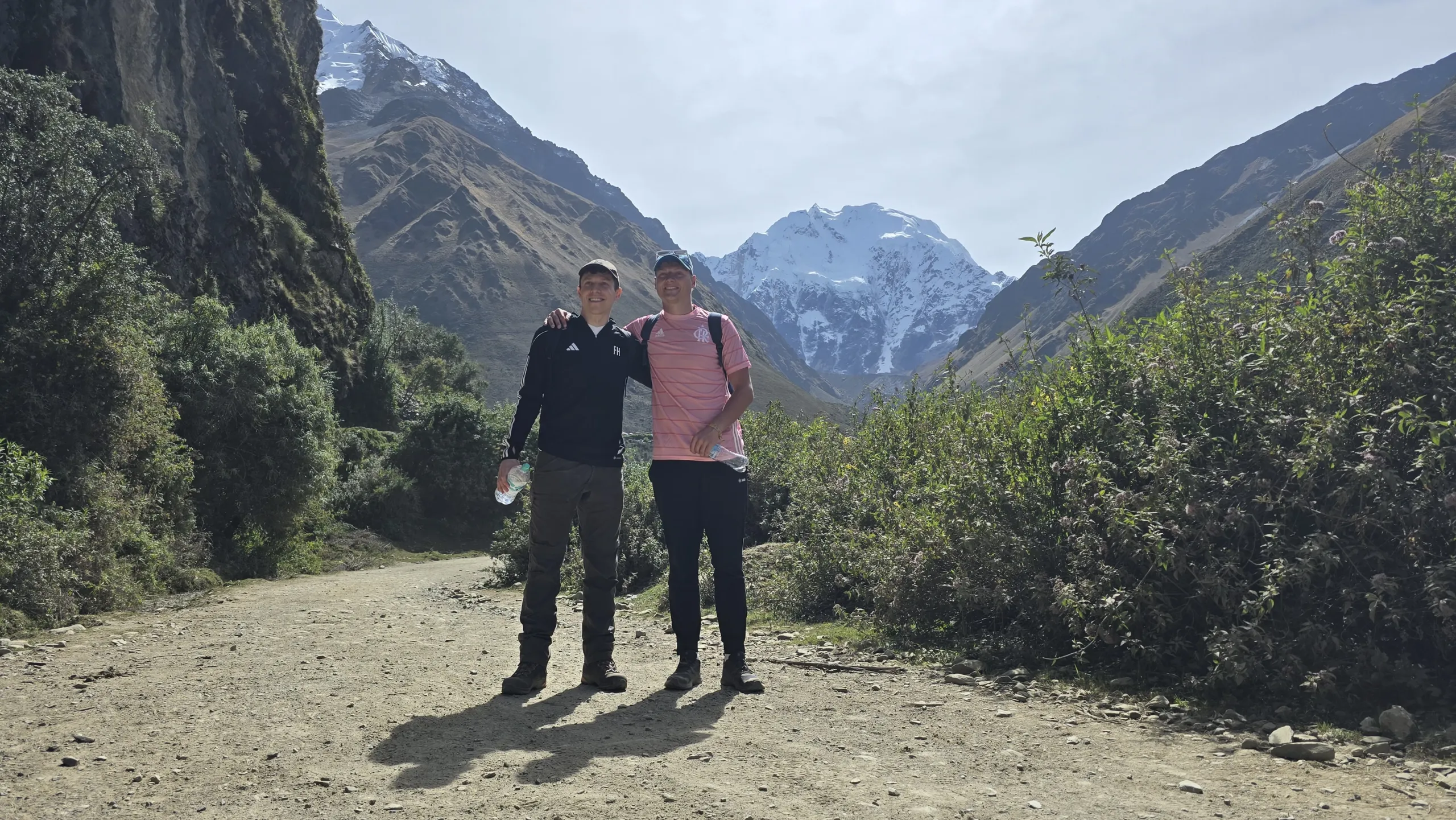
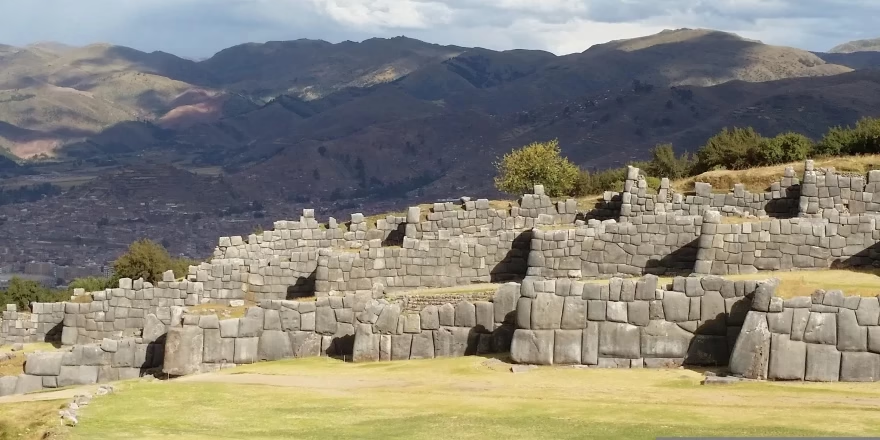
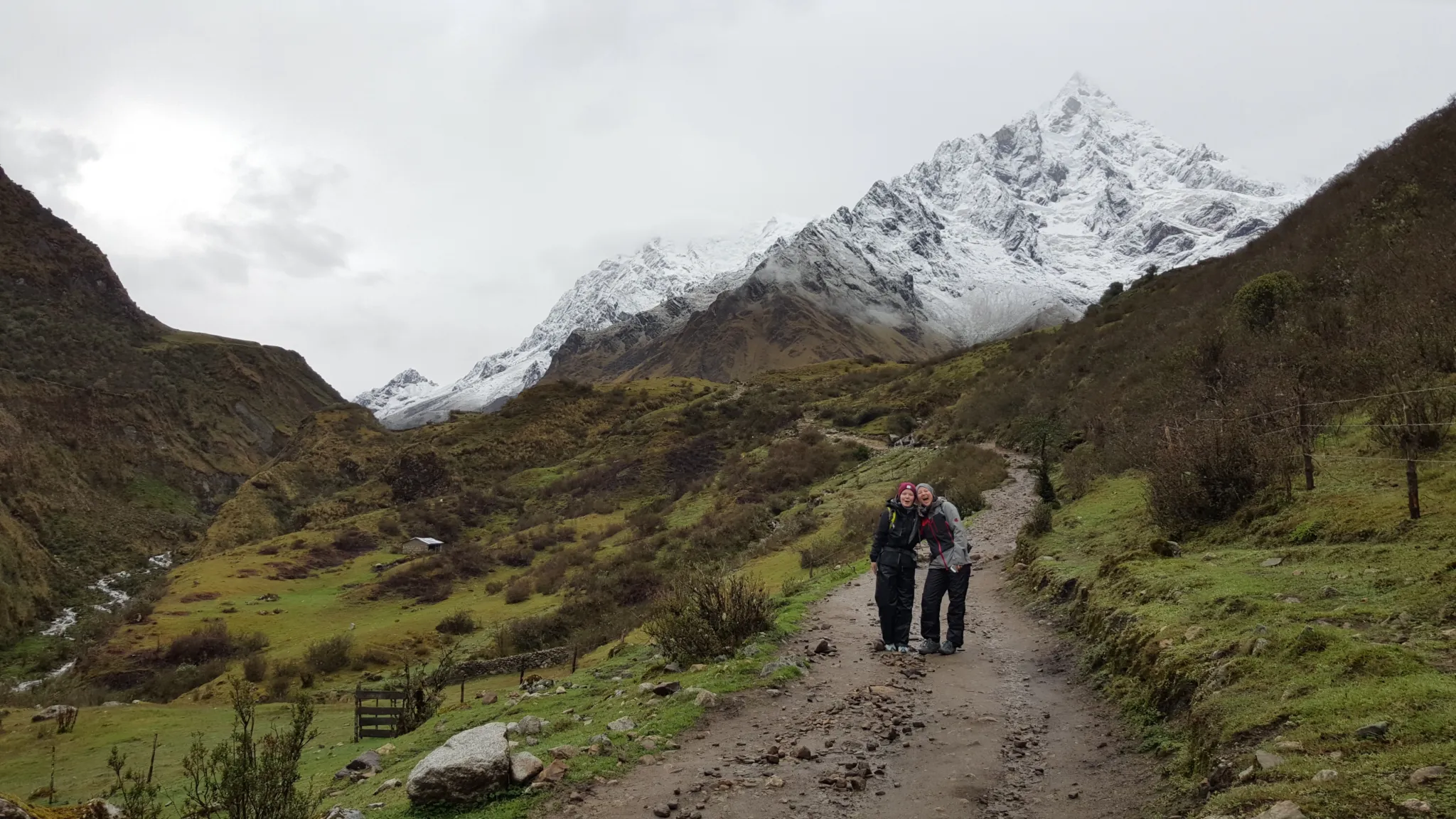
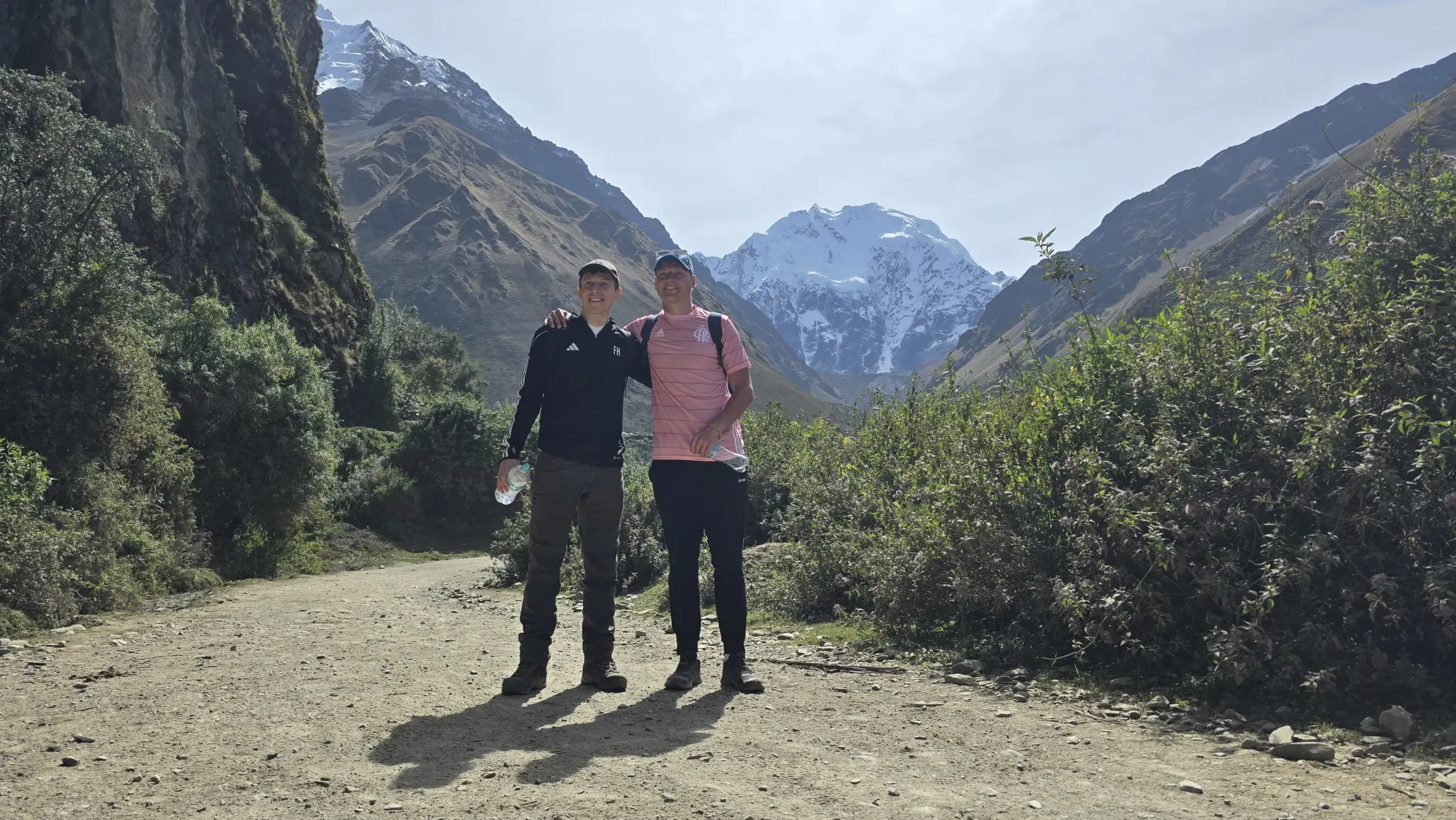
The day begins with detours — deliberate ones. Killarumilloq, the Stone Moon at 3,500 meters. The Tarawasi archaeological complex at 2,654 meters, a pre-Inka site that most Salkantay operators drive past without stopping. The viewpoint of the Salkantay Glacier — a first view of the mountain that will dominate the next two days, seen from a distance that gives its full scale.

Then Chonta — the condor viewpoint at 3,400 meters, where the Apurímac valley drops away below a ridge that the birds use as a thermal highway. Three and a half kilometers of walking to a panorama of the Andes that establishes, immediately, the scale of what you have entered.

Camp at Soraypampa, 3,900 meters, at the base of the mountain. The night at this altitude, with Salkantay’s mass visible against the stars, is the beginning of the experience rather than the end of the day.

  • Distance: 152 km by road + 7 km on foot
  • Altitude range: 2,654 m – 3,900 m
  • Overnight: Camp at Soraypampa

Soraypampa → Humantay Lagoon → Salkantay Pass (4,630 m) → Huayracmachay | 18 km | Moderate to Difficult

The hardest day. The most important day.

The morning begins with the ascent to Humantay Lagoon — a glacial lake at the base of the Humantay glacier whose color exists in a register that photographs consistently fail to capture. The turquoise is not a single tone but a shifting field that changes with the light and the angle, surrounded by glacier and rock at an altitude where the silence is so complete it has a physical quality.

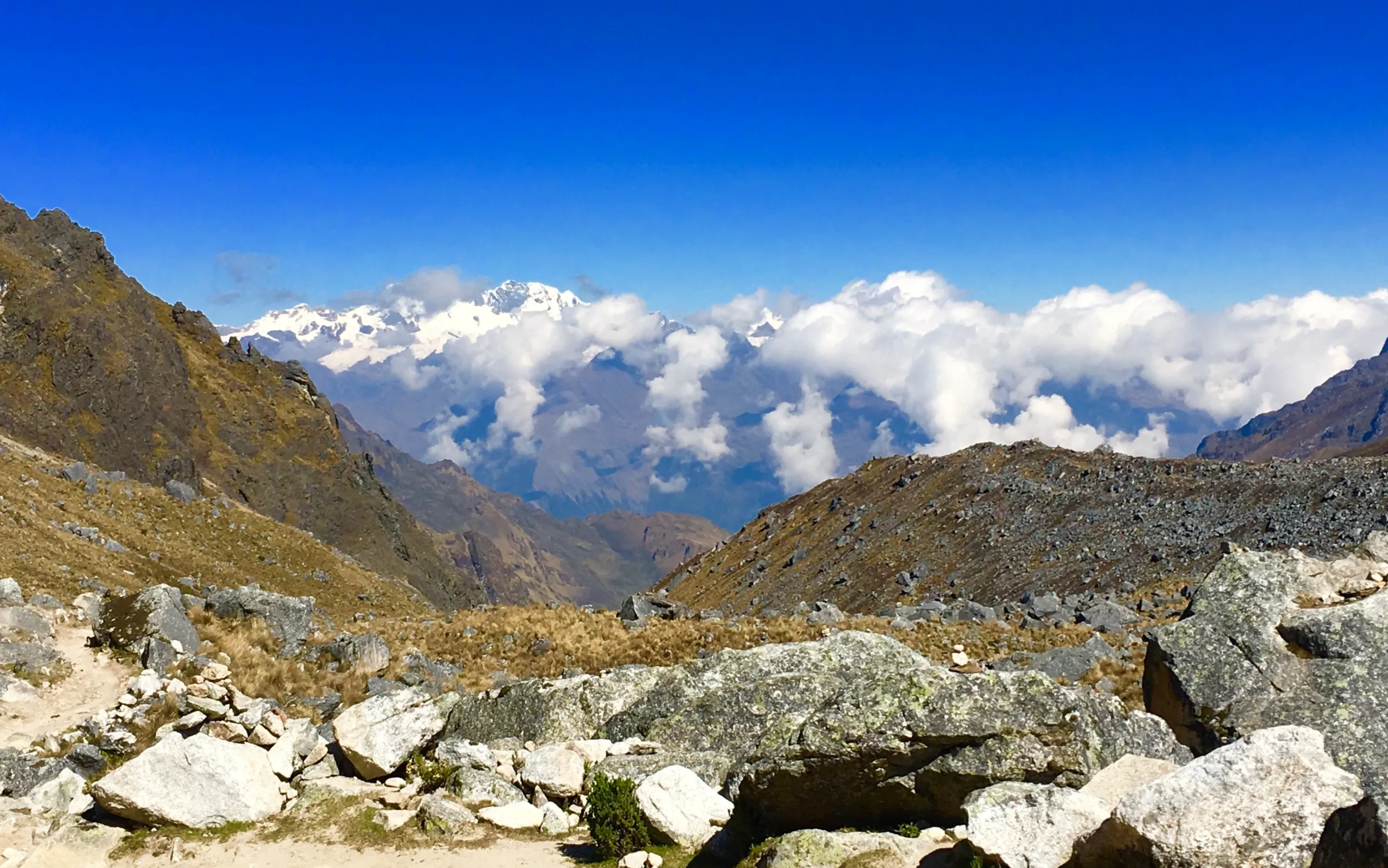
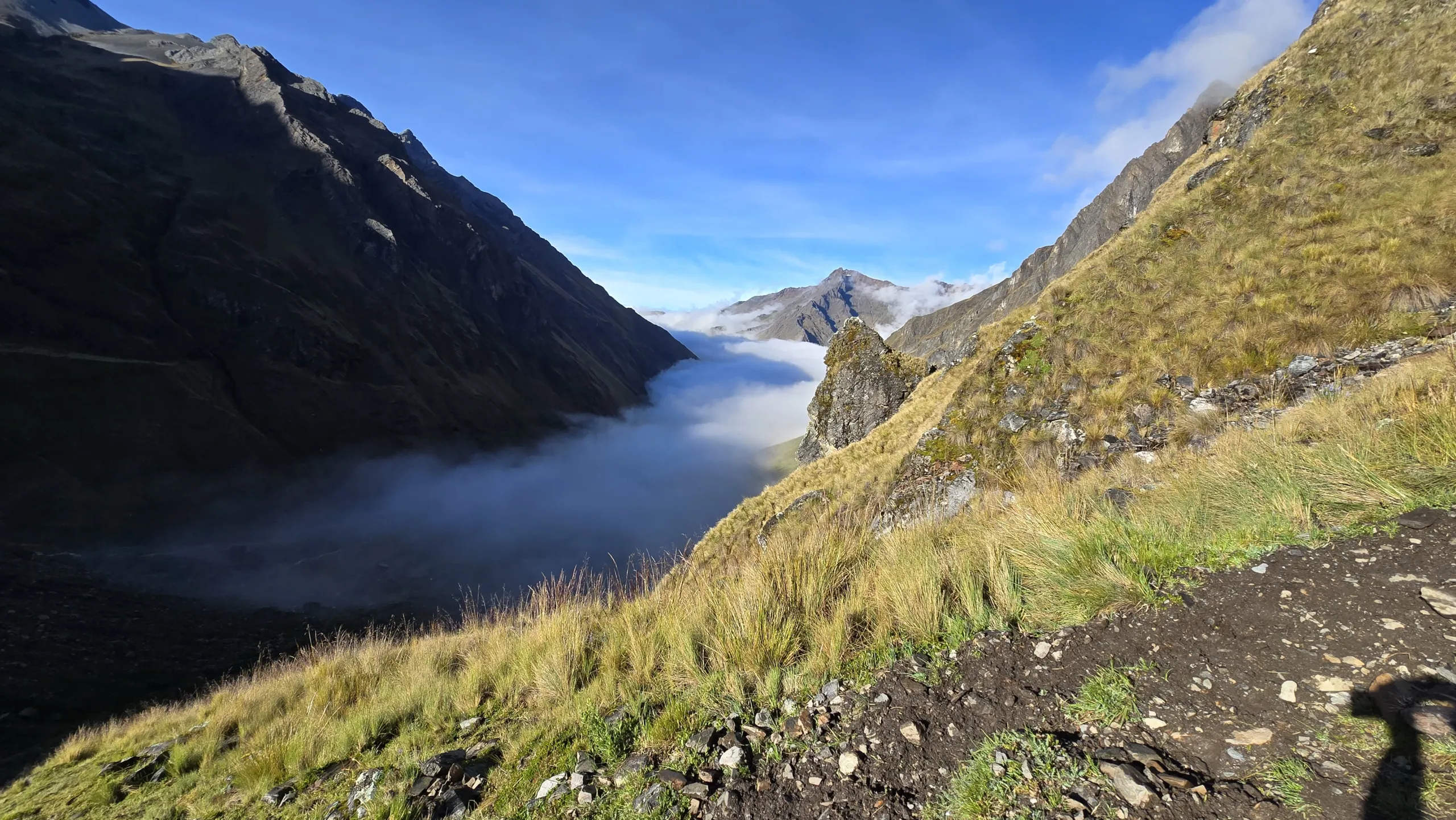
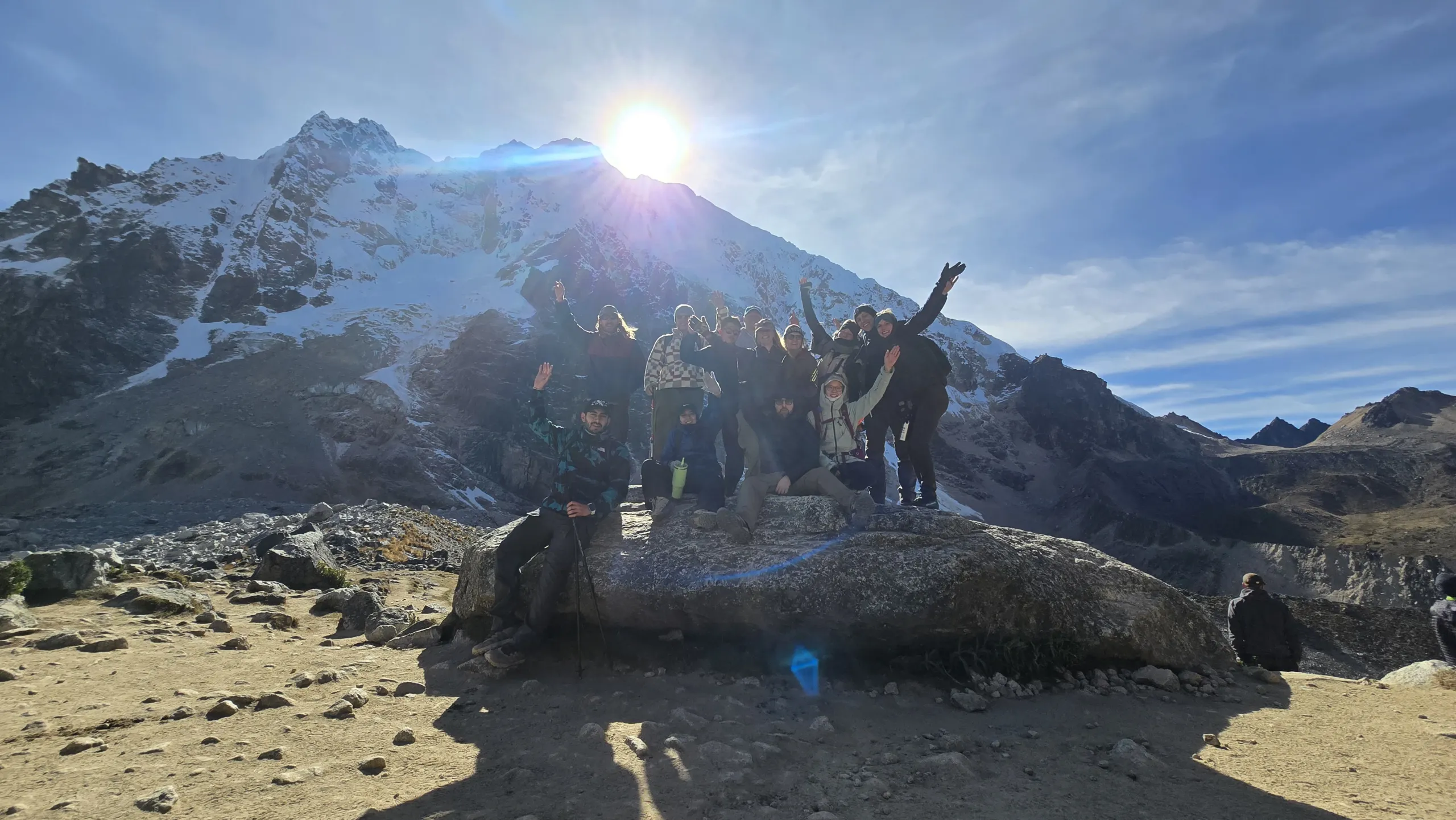
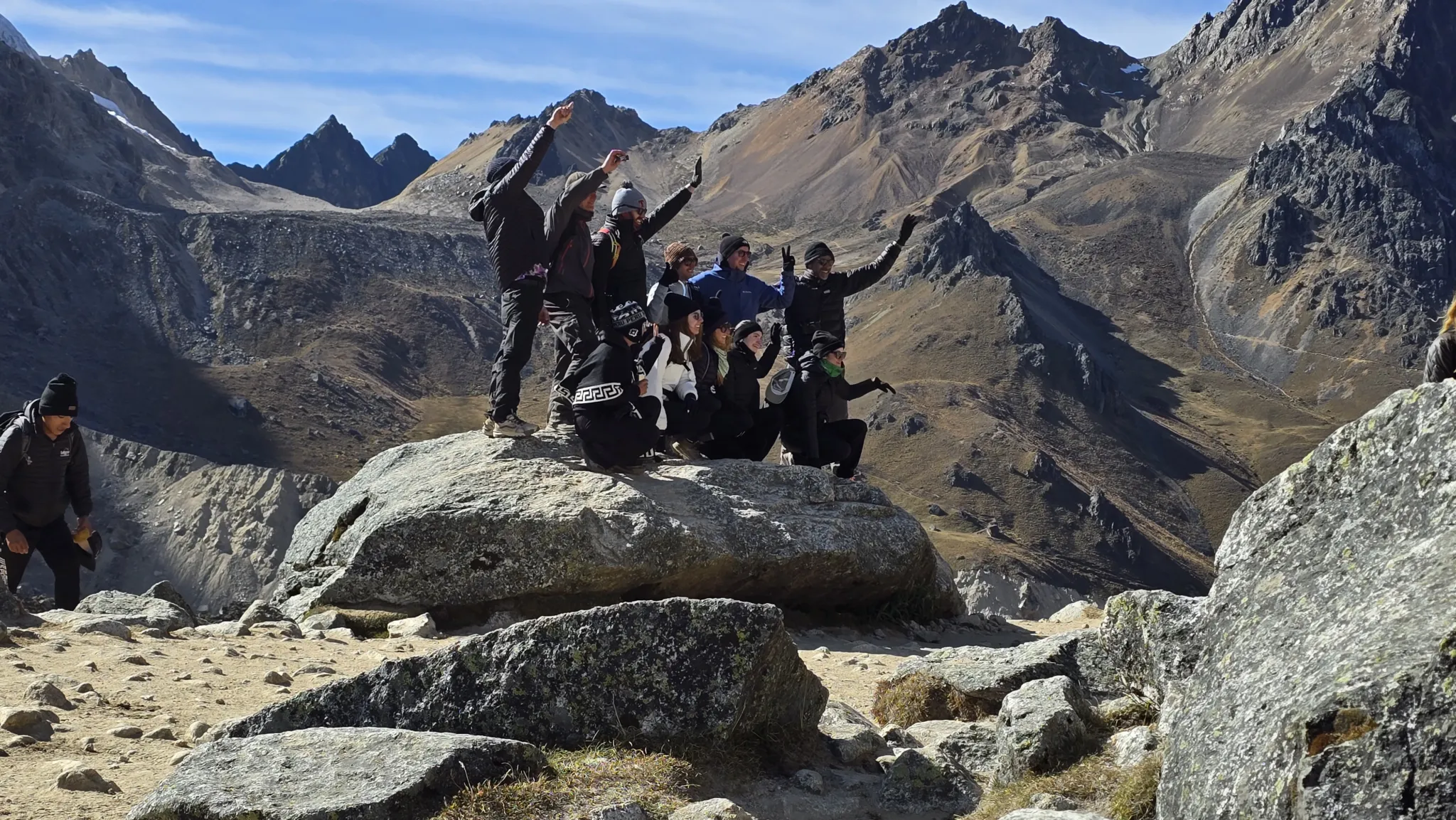
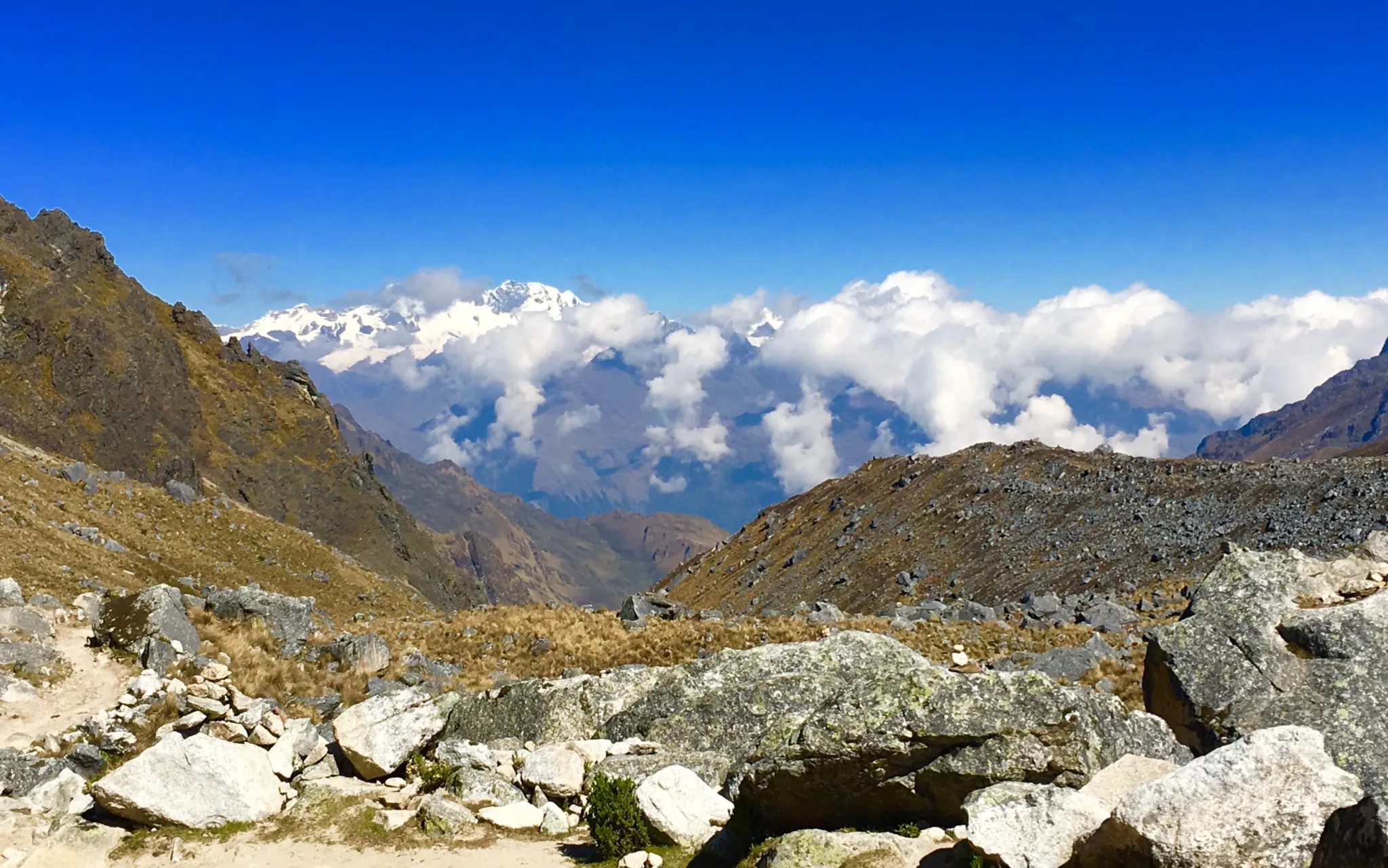
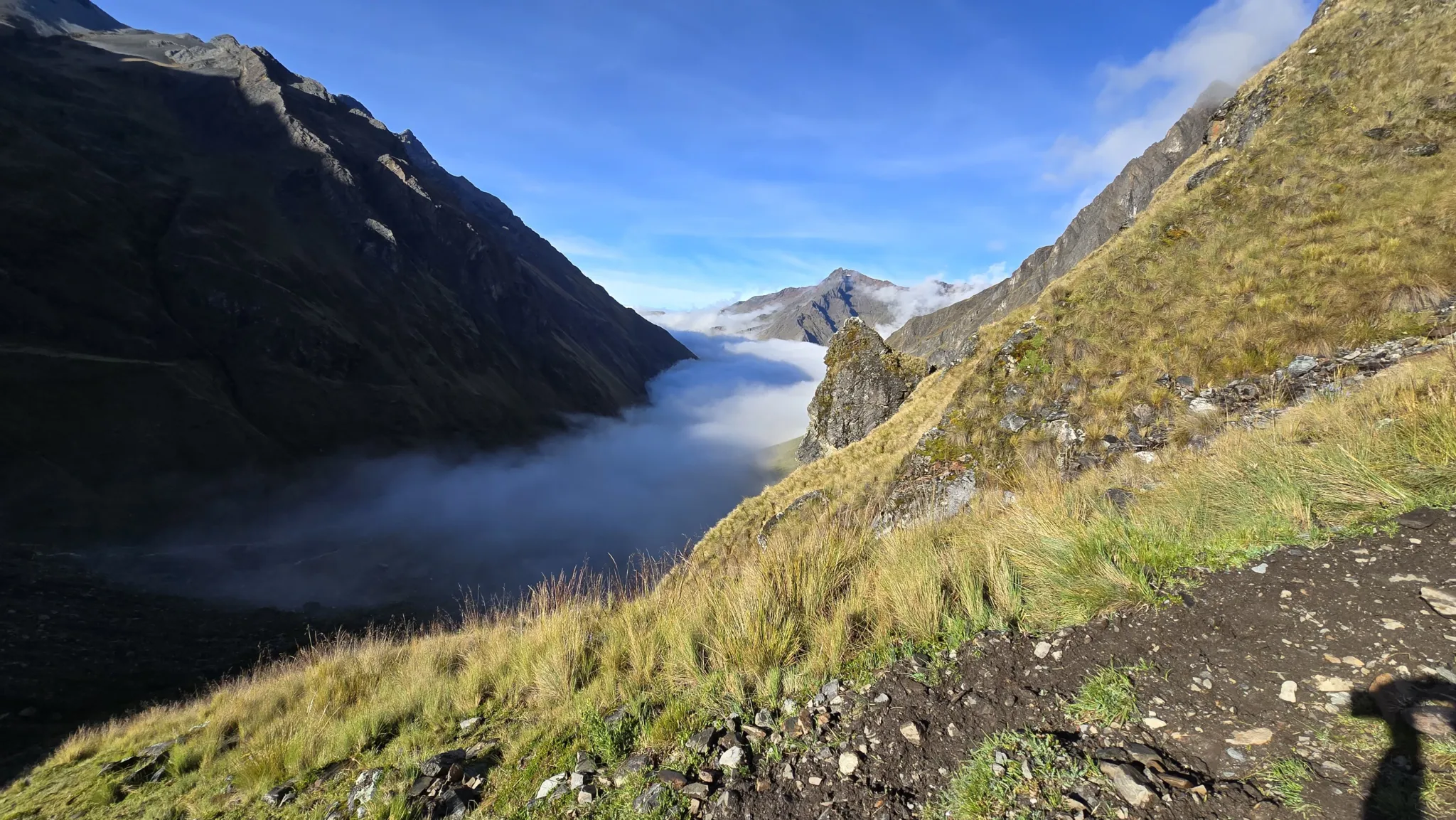
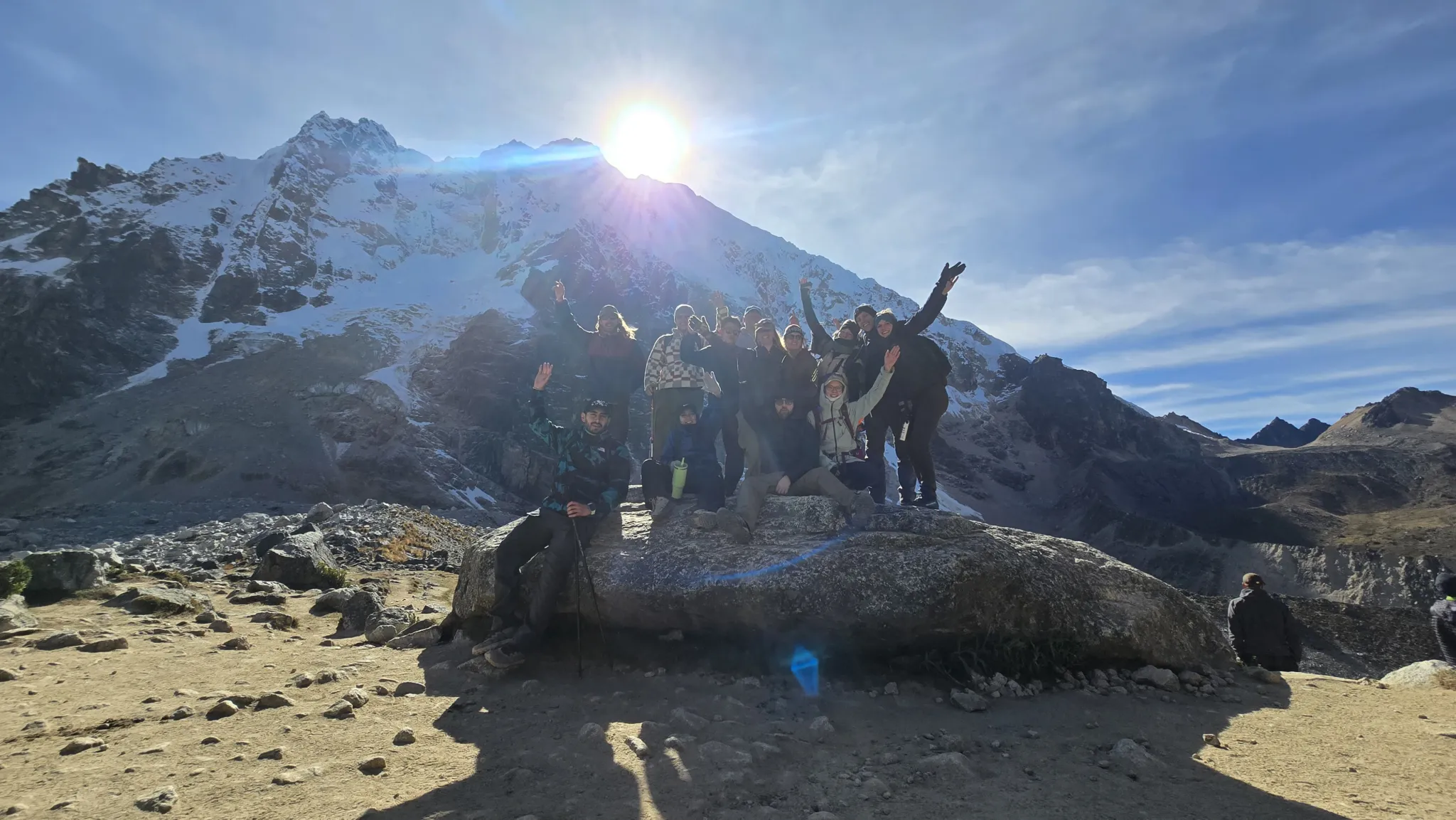
The return to the main trail leads to the Salkantay Pass at 4,630 meters — the highest point of the entire trek and one of the most significant geographical thresholds in the Andes. The Inka considered this pass a portal: a place where the world above and the world below communicated. Standing at the top with the glacier immediately above and the cloud forest valley beginning its descent below, the cosmological logic of that interpretation becomes, however briefly, accessible.

The descent to Huayracmachay camp moves through a landscape in rapid transition — the vegetation changing with every hundred meters of altitude lost, the air thickening, the temperature beginning its long rise toward the subtropical valley days ahead.

  • Distance: 18 km
  • Maximum altitude: 4,630 m at Salkantay Pass
  • Overnight: Camp at Huayracmachay

Huayracmachay → Cloud Forest → Santa Teresa → Cocalmayo Springs | 19 km + 16 km transport | Moderate to Difficult

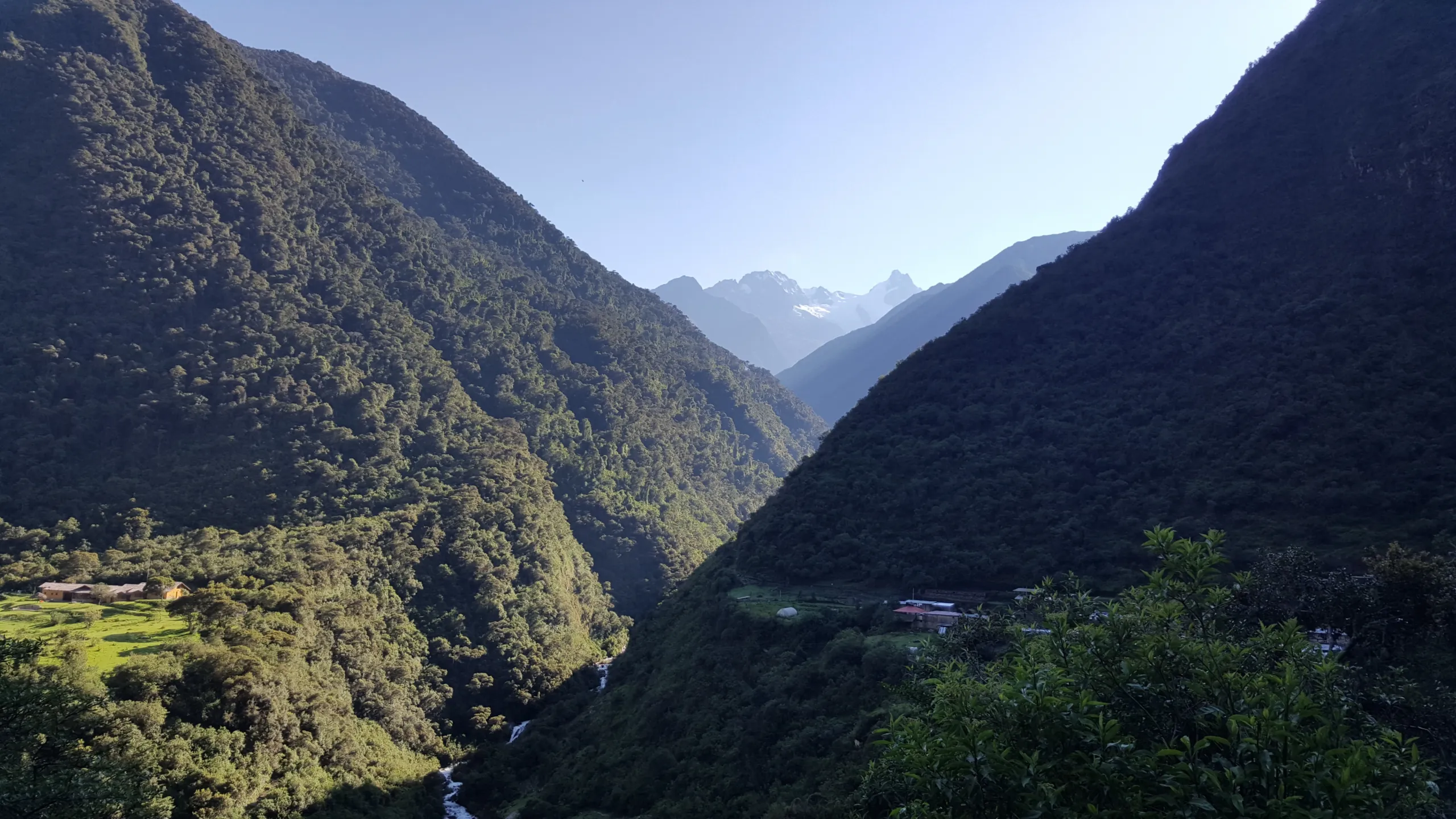
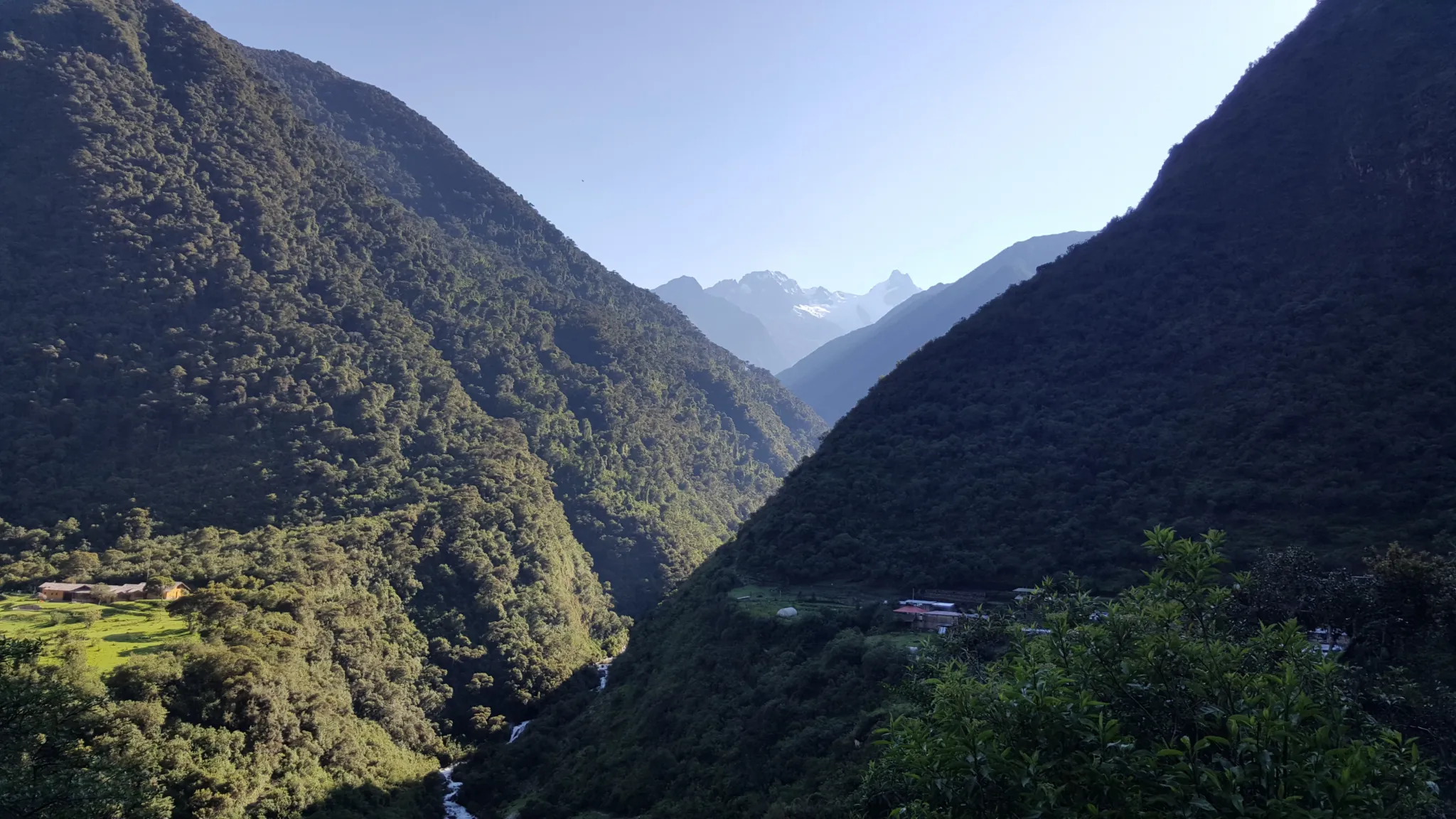
A sunrise between glaciers opens a day that covers more ecological ground than most people traverse in a year of ordinary life. The descent from Huayracmachay moves continuously through cloud forest into subtropical vegetation into tropical rainforest — the air warming and moistening with every kilometer, exotic fruits appearing on the trail depending on the season, the mountain world of the previous two days receding into a different atmosphere entirely.

The thermal springs of Cocalmayo close the day — mineral-rich water at the base of the Santa Teresa valley, fed by the same geological forces that produced the Salkantay massif above. The contrast between the Salkantay Pass at 4,630 meters yesterday morning and hot springs in the jungle tonight is not incidental. It is the experience.

  • Distance: 19 km on foot + 16 km by transport
  • Altitude range: 1,433 m – 3,860 m
  • Overnight: Camp at Santa Teresa

Santa Teresa → Zip-line → Lucmabamba → Llactapata | 8 km | Moderate to Difficult

The zip-line crossing opens the morning — a flight above the cloud forest canyon with the Urubamba audible below and the mountains of the Machu Picchu sanctuary visible ahead. Then Lucmabamba at 2,000 meters: the coffee valley where the beans are harvested and prepared using methods that the Inka agricultural system established and that specialty coffee culture has only recently rediscovered. You will make your own cup. The altitude and the effort of the previous three days give it a flavor that cannot be replicated at sea level.

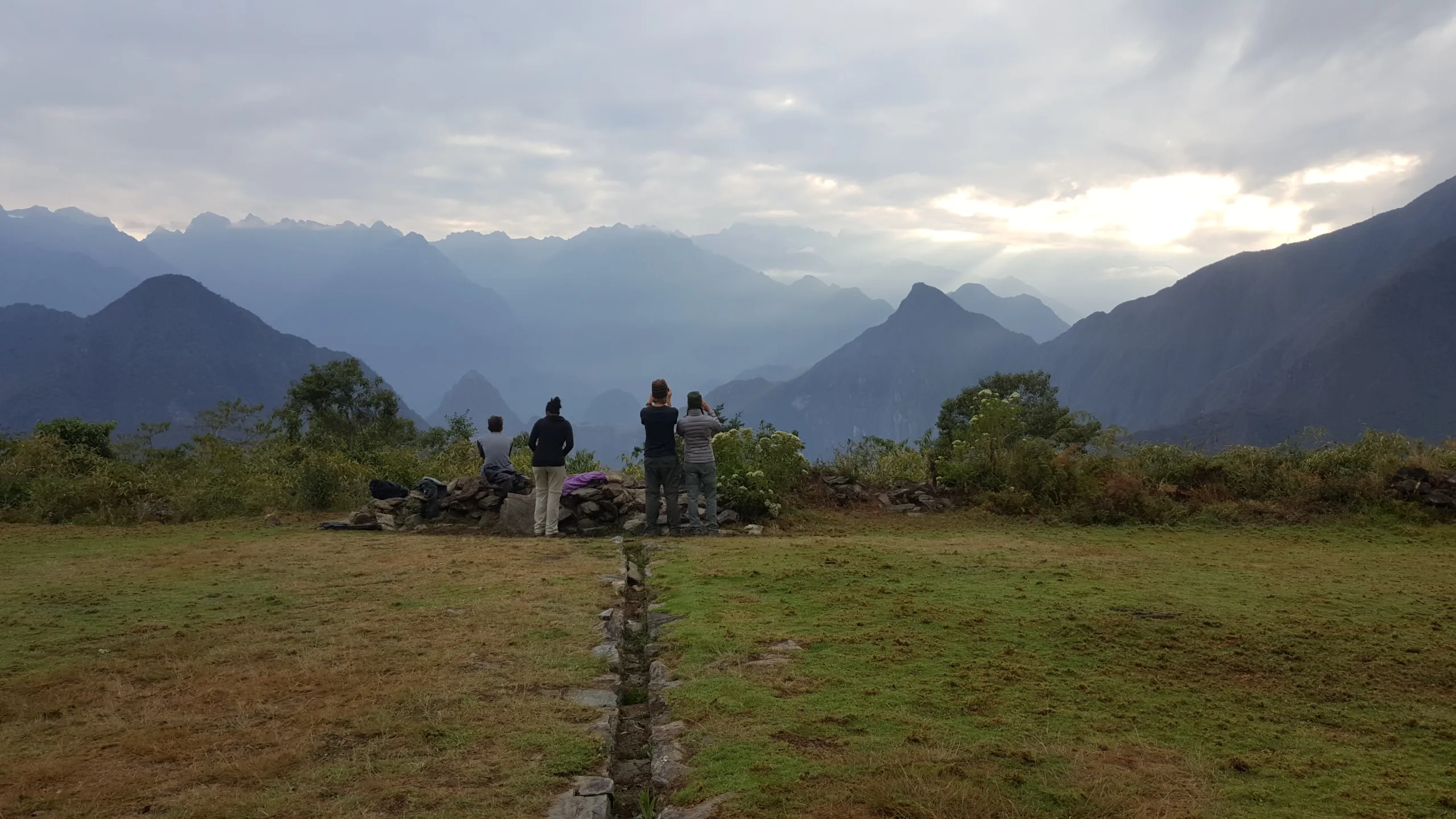
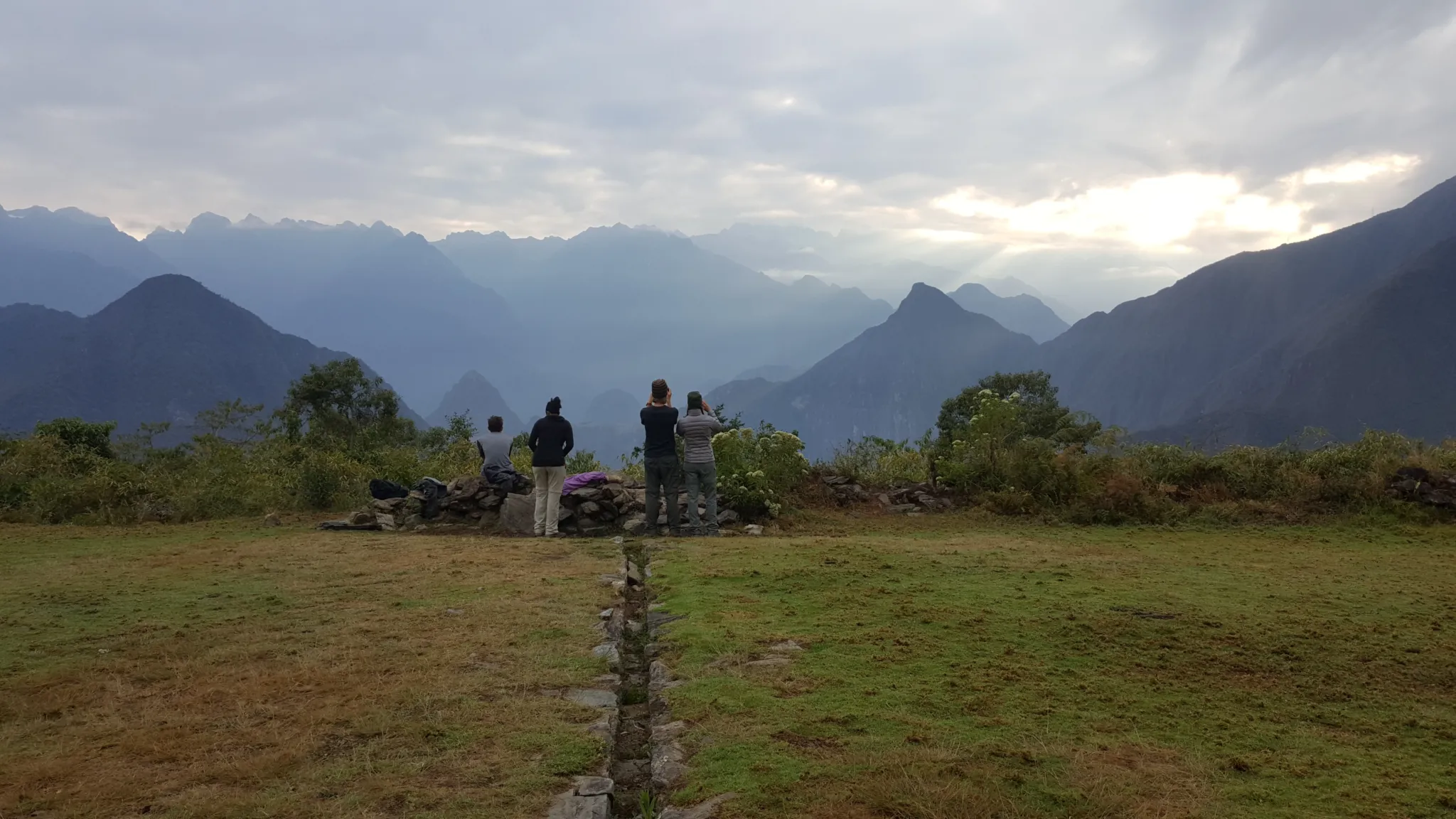
The afternoon ascent to Llactapata is the day’s final demand — a climb through original Inka trail to the ceremonial site above, where Machu Picchu appears across the valley for the first time. The view from the lodge at Llactapata, with the citadel visible in the distance and the cloud forest below catching the last light, is the night that the previous four days have been building toward.

  • Distance: 8 km
  • Altitude range: 1,550 m – 2,740 m
  • Overnight: Lodge at Llactapata

Llactapata → Aobamba River → Aguas Calientes | 14 km | Moderate

A morning descent through cloud forest following the Aobamba River as it joins the Urubamba and the trail borders the base of Machu Picchu mountain itself. The walking is gradual and unhurried — a physical decompression after four demanding days, the body moving easily through a landscape it has learned to read.

Aguas Calientes by afternoon. Hotel. Rest. Tomorrow requires nothing physical — only presence.

  • Distance: 14 km
  • Altitude range: 1,800 m – 2,650 m
  • Overnight: Hotel, Aguas Calientes

Aguas Calientes → Machu Picchu → Cusco | Easy

Five days through the full range of Andean landscape — from the savage mountain’s glacier to the coffee valley to the ceremonial viewpoint where this place was already visible — have prepared you for Machu Picchu in ways that a direct arrival cannot produce. The citadel is the same for every visitor. What you bring to it is not.

Your guide moves through the site through the Inka method lens — completing a conversation about Andean cosmology, agricultural intelligence, and the relationship between landscape and human purpose that began at the condor viewpoint five days ago.

Lunch at the Tinkuy Belmond Restaurant. Train back to Cusco in the afternoon.

  • Maximum altitude: 2,430 m
  • Difficulty: Easy
Mollepata - Santa Teresa

Reviews

Reviews

There are no reviews yet.

Be the first to review “Salkantay Trek 6 days”

Your email address will not be published. Required fields are marked *

Included/Excluded

  • Incluido All transportation.
  • Incluido Guide service.
  • Incluido Food as described (breackfast=B, Lunch=L, dinner=D).
  • Incluido Entrance fees and permits for the detailed visit sites.
  • Incluido Chef for the trek.
  • Incluido Cooking equipement.
  • Incluido Camping equipement.
  • Incluido Transport mules.
  • Incluido Horseman – mule driver.
  • Incluido Accomodation 5 stars hotel as detailed.
  • Incluido Zip-line.
  • Incluido Boiled or purified water.
  • No Included Entrance fees to Waynapicchu Mountain and Machupicchu Mountain and others are optional.
  • No Included Bottle of water or sports drink.
  • No Included Tipping for staff.
  • No Included Travel ensurance.
  • No Included Flight tickets.
  • No Included Sleeping bag.

Attractions

Humantay lake, Llactapata, Machupicchu, Salkantay

Activities

Camping, Culinary, Discoveries, Experiential tourism, Full nature, Glaciers, Hot springs, Lakes, Picnic, Rural house, Trekking, Viewpoint of Condors, Zipline

FAQs

Nothing to show, please go to blogs.

Application Process

Contexto personal
Estado mental actua
Preferencias y límites
Datos de contacto

Book This Tour

Top Trending

You may like

Cart0
Cart0