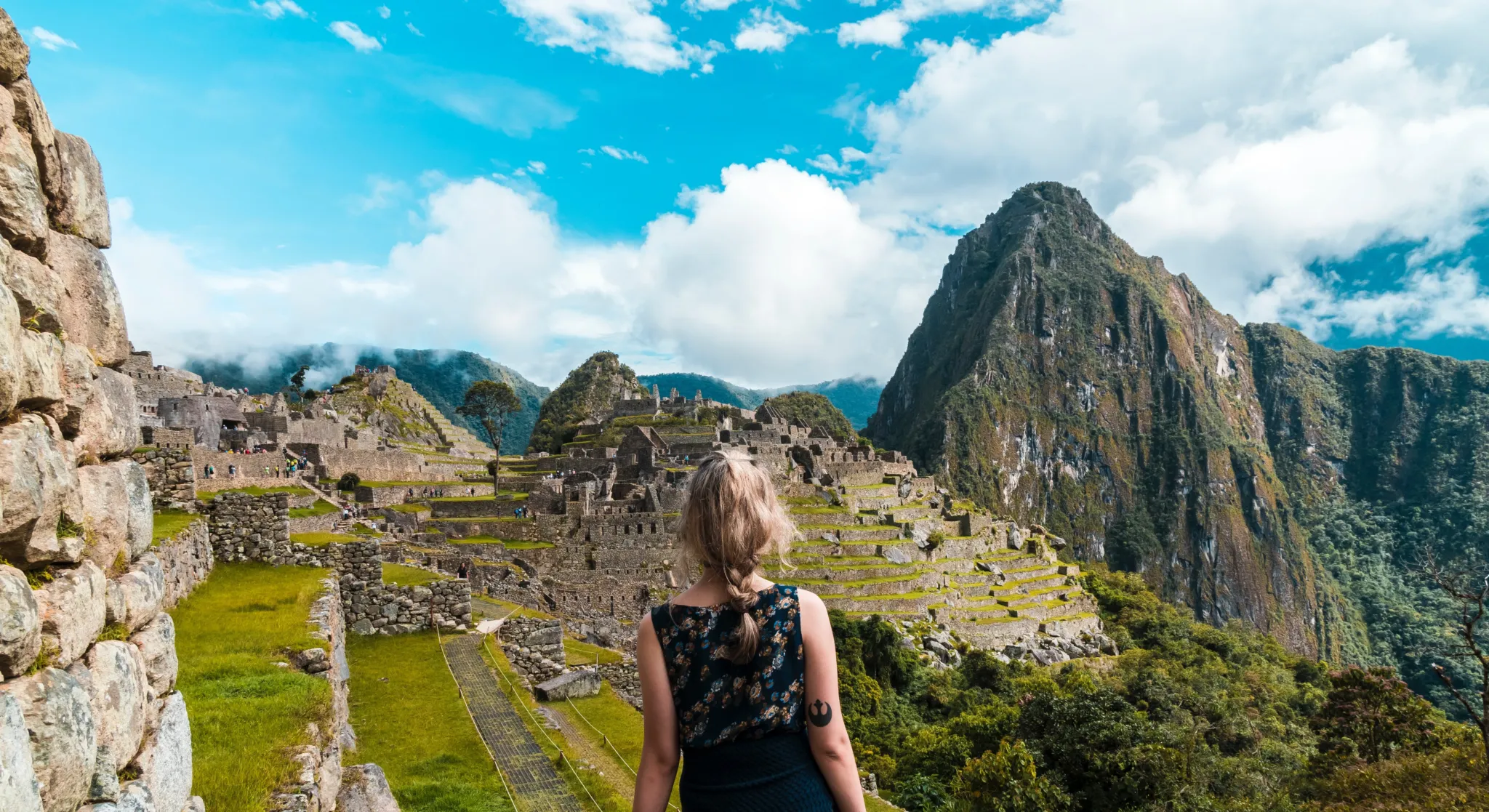
Andes Machu Picchu

Price

From: $10,522.00

Duration

10 days

Max People

10

Tour Type

Packages

Attractions

21

Activities

14

Min Age

7


Overview


Ten Days. Nothing Left Out.

Every other program in this collection makes choices — which sites to include, which to leave for another trip. The Andes Machu Picchu makes none of those choices. It is the complete version: the forgotten plateau of Huchuy Qosqo, the sacred stretch of the Inka Trail through Wiñayhuayna to Intipunku, the glacial silence of Humantay Lake, the condor viewpoint above the Salkantay massif, Rainbow Mountain at 5,200 m / 17,060 ft from the approach that reveals the Red Valley alongside it, the southern valley’s hydraulic engineering at Tipon and the gold interior of Andahuaylillas, and Q’osqo itself decoded from Qoricancha through Sacsayhuaman to San Pedro market.

This journey isn’t just something you do—it’s something you experience. Let the mountain speak to you in its own way.


7 wonders of Cusco 


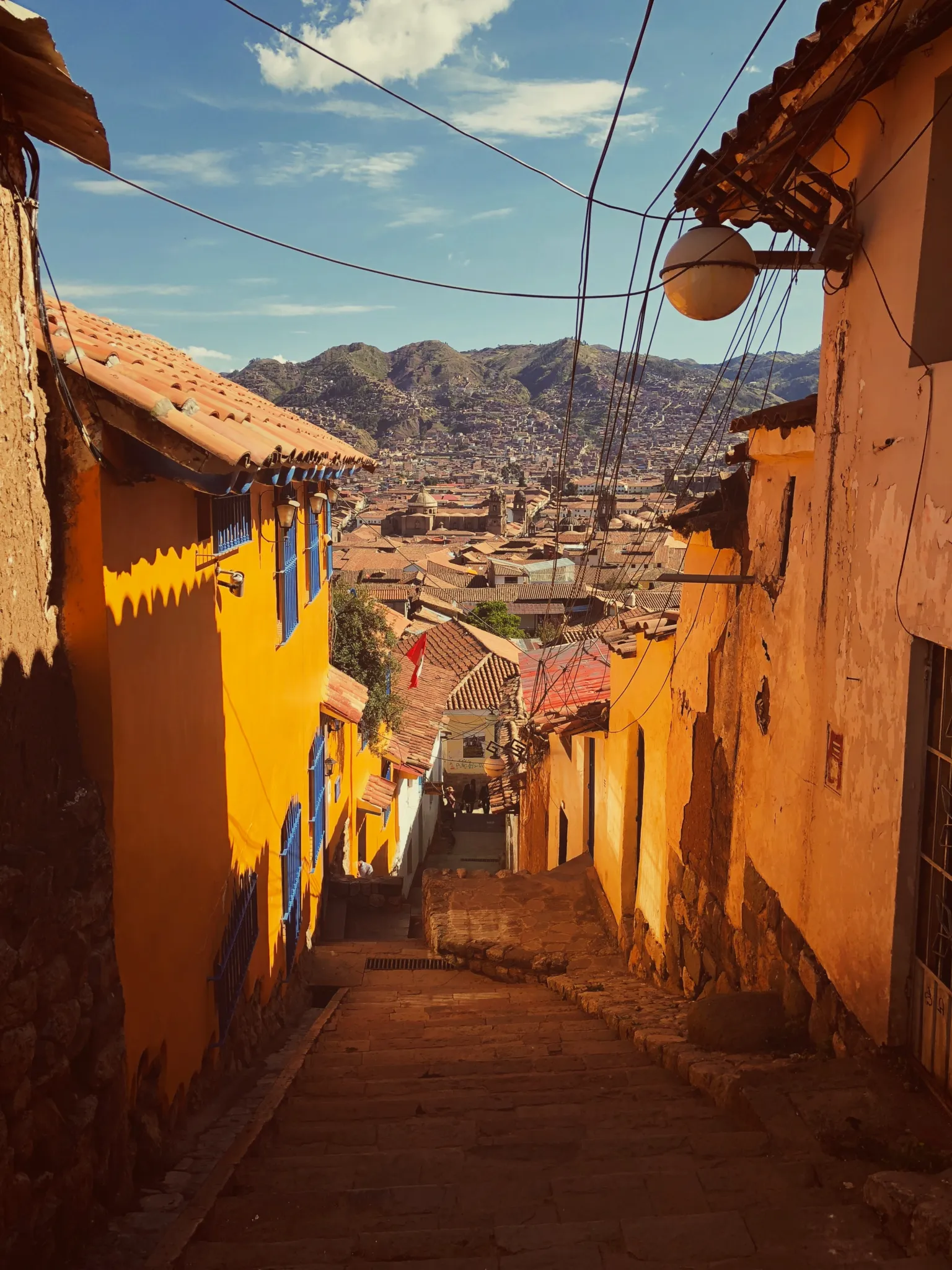
  • Cusco’s cobblestones glow with the patina of centuries underfoot, each step releasing whispers of processions past.
  • The Sacred Valley unfolds as an open-air reliquary—Ollantaytambo’s fortress walls still radiate the strategic brilliance of Pachacuti’s generals.
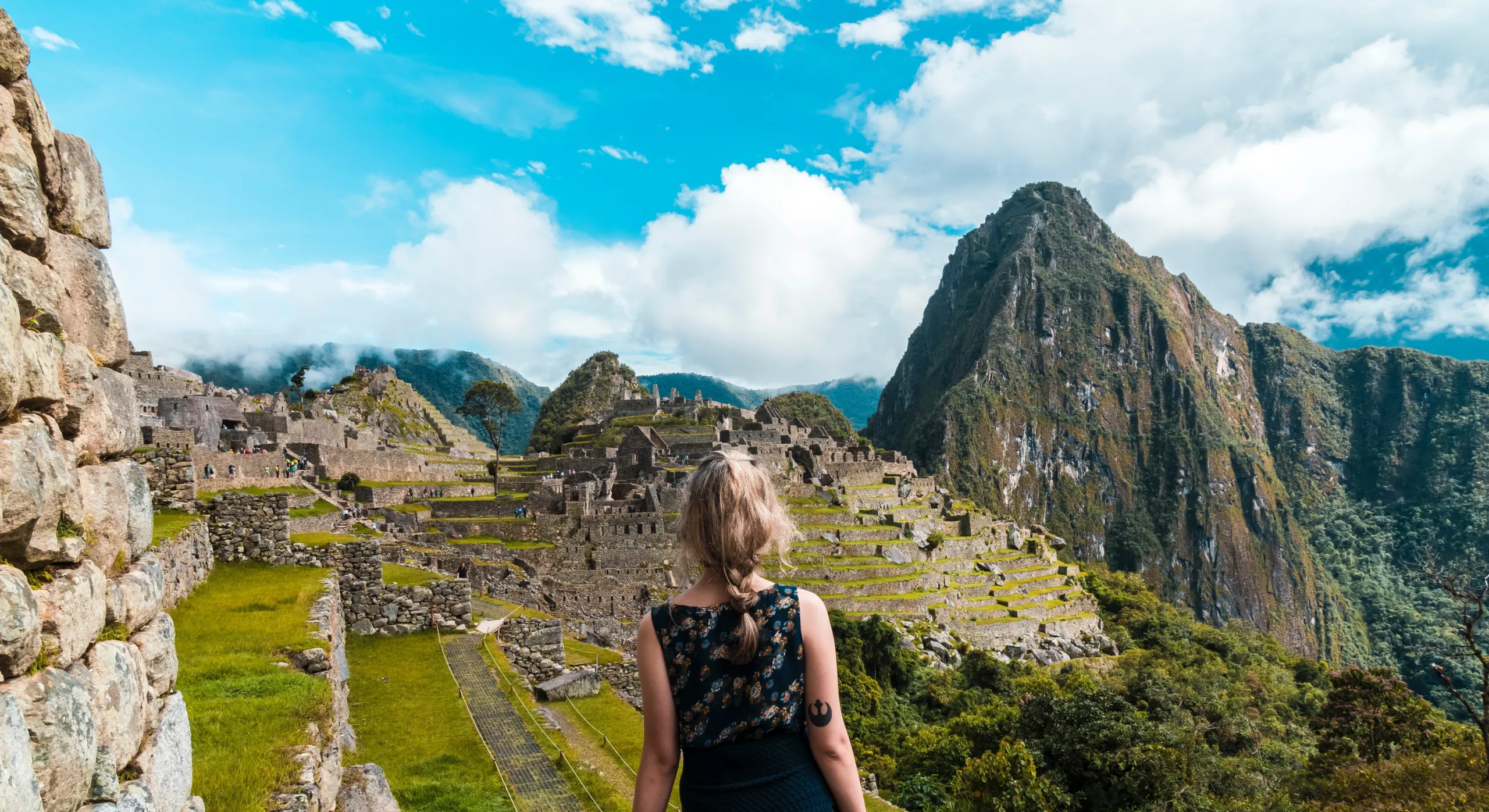
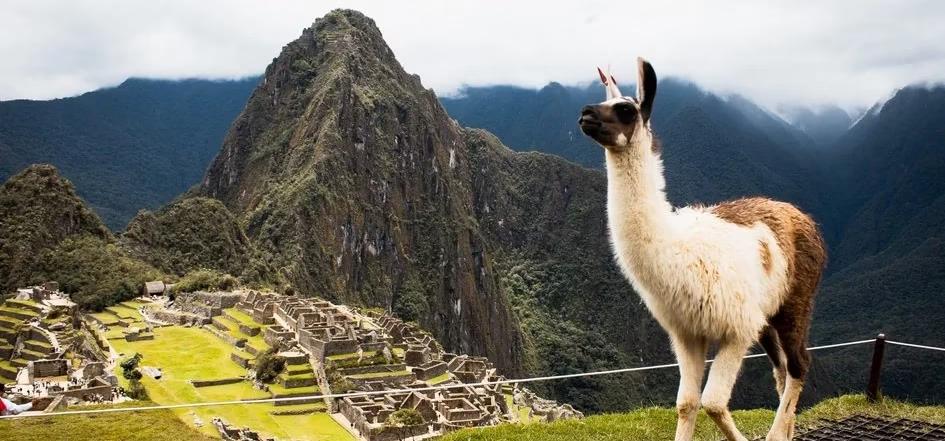
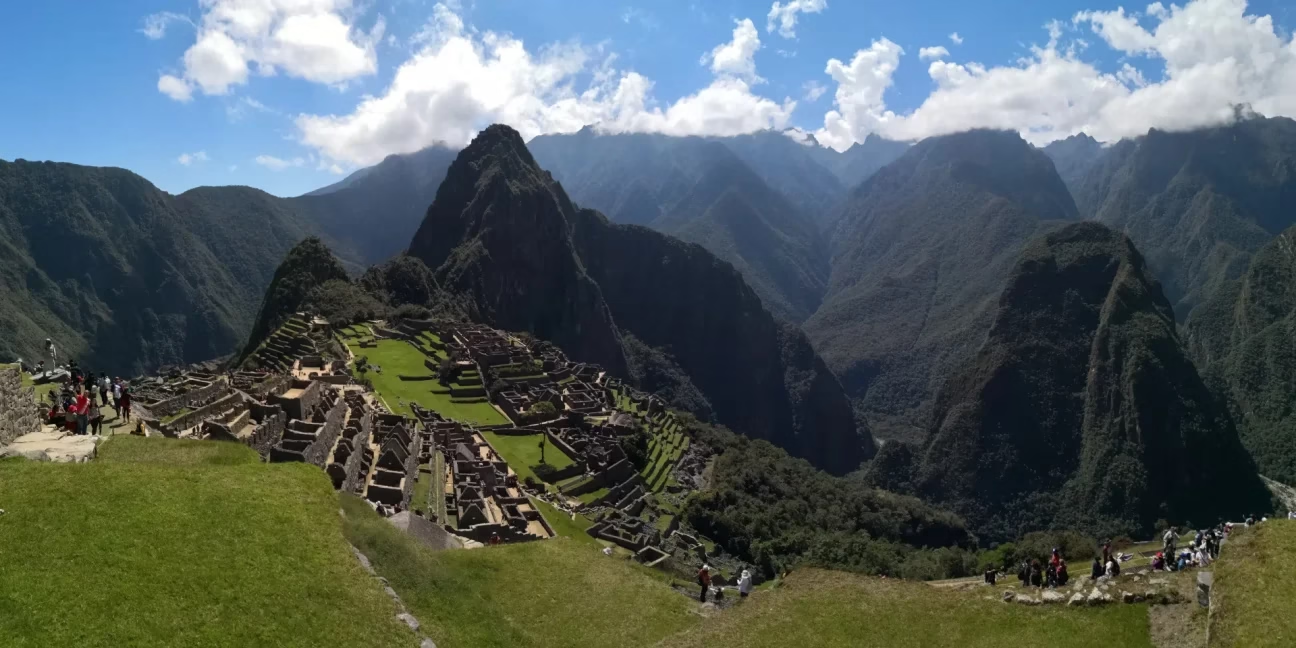
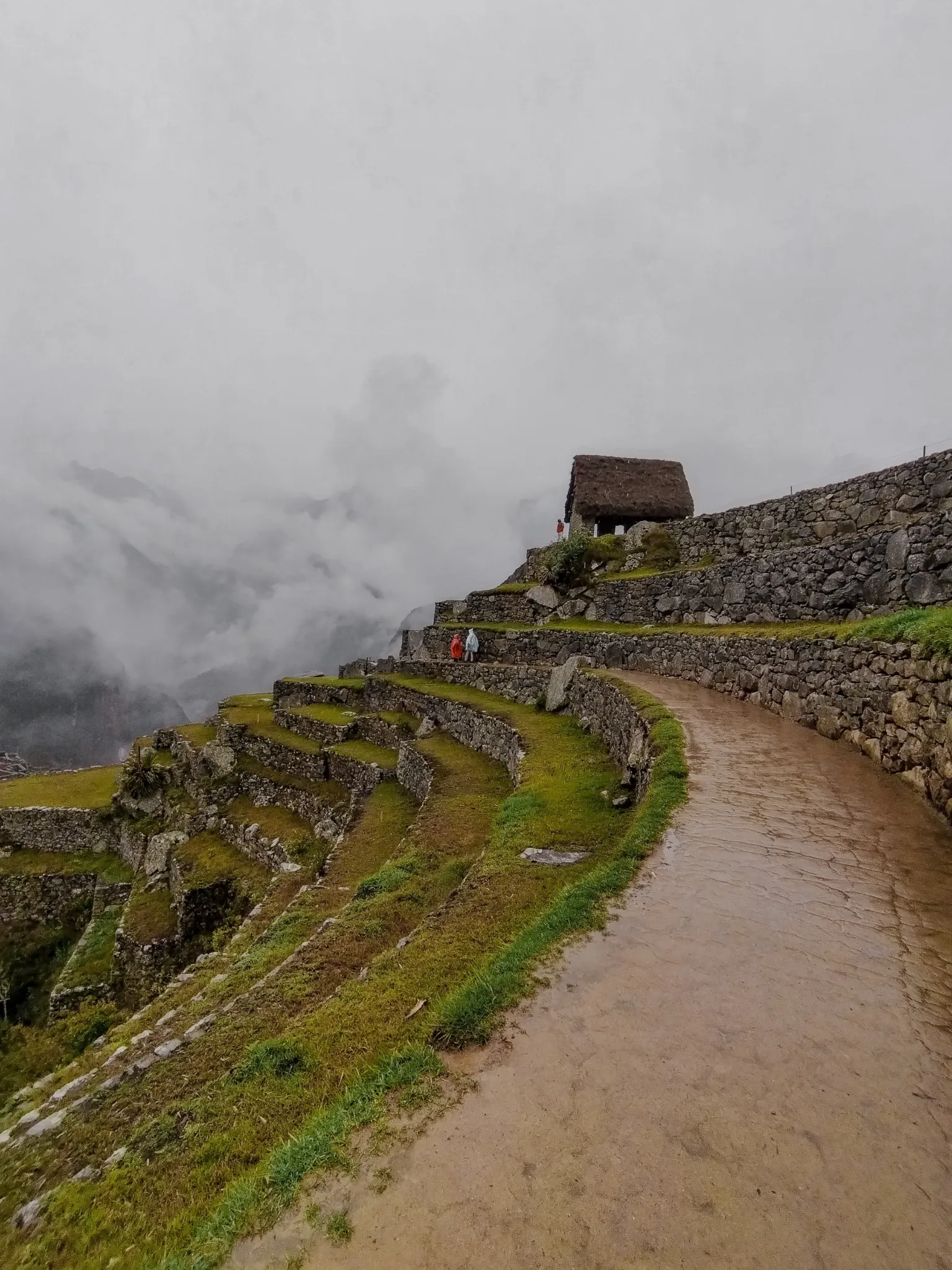
  • Machu Picchu emerges through the mist not as ruins but as a vibrating instrument, its stones still resonating with the harmonic frequencies of celestial observation.
  • Maras’ salt wells glitter like shattered mirrors reflecting a thousand suns, while Moray’s circular terraces descend like a stone mandala revealing the Incas’ agricultural genius.
  • Rainbow Mountain’s chromatic fury.
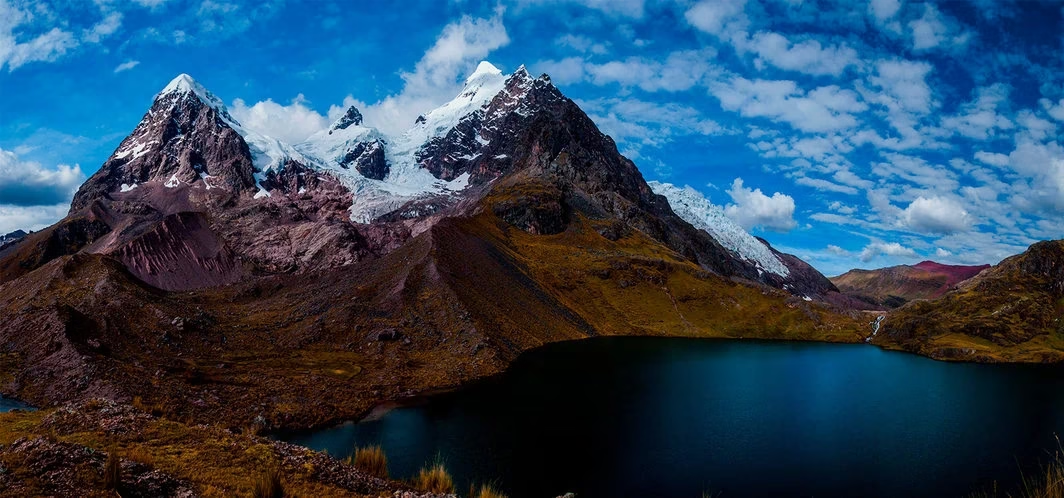
  • Humantay’s turquoise silence form the perfect counterpoint—a dialogue between fire and water written across the Andes’ spine.


Andes Machu Picchu
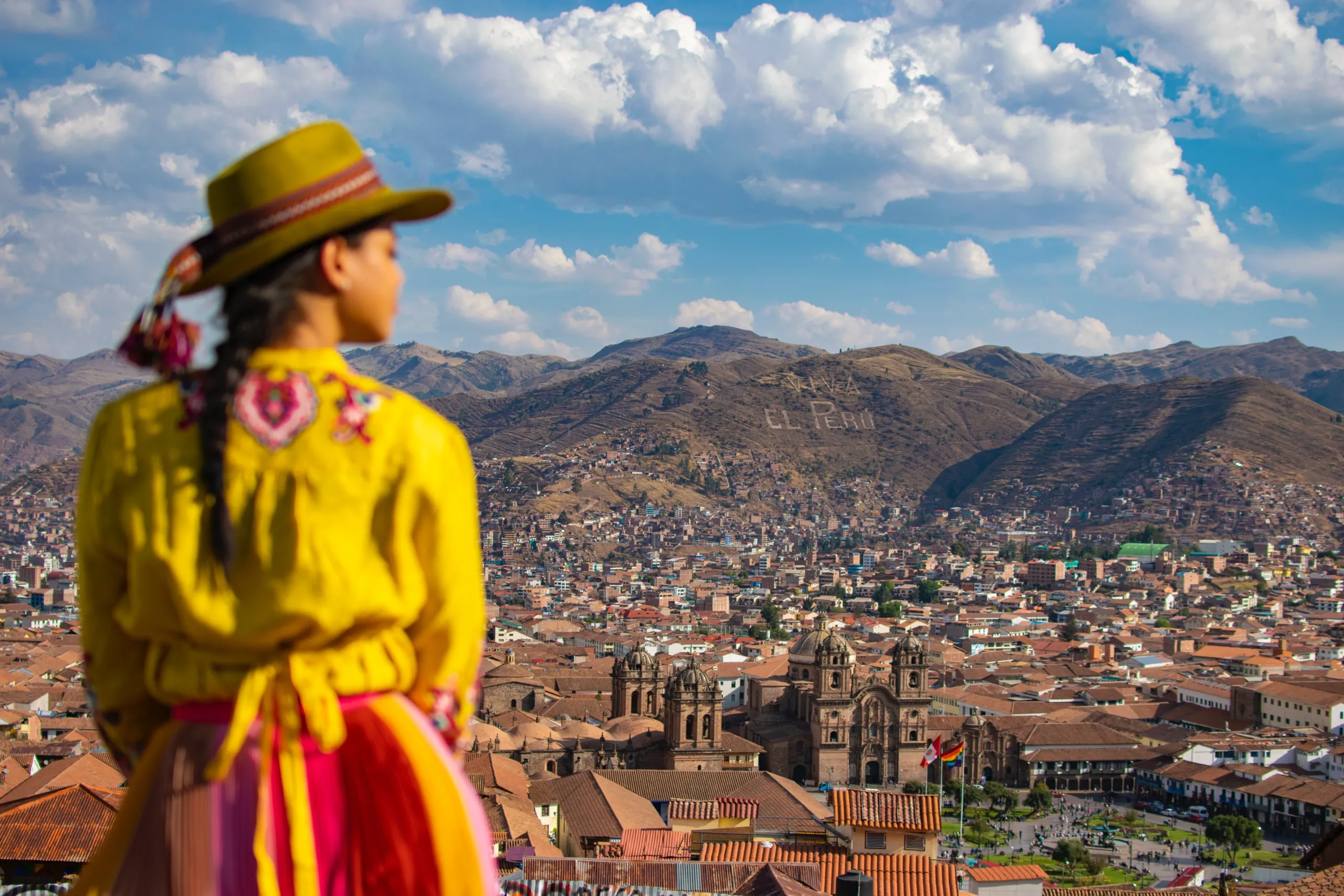
 

Ten days. Every dimension of what the Inka built, positioned, and connected across the Cusco region — encountered in a sequence designed to build each day on the previous one until the civilization that produced all of it has assembled itself into something that no single site, however magnificent, could have communicated alone.

The Inka method runs through all of it — not as a separate therapeutic program inserted into an archaeological tour, but as the interpretive framework that transforms ten extraordinary sites into one coherent document. By Day 9, the streets of the capital read differently than they would have on Day 1. That difference is the program.

Dare to redefine travel. This is not a vacation; it’s a rebirth. Let the Andes rewrite your story.

Airport → Sacred Valley → Camelid Center → Pisac → Overnight Sacred Valley | Easy

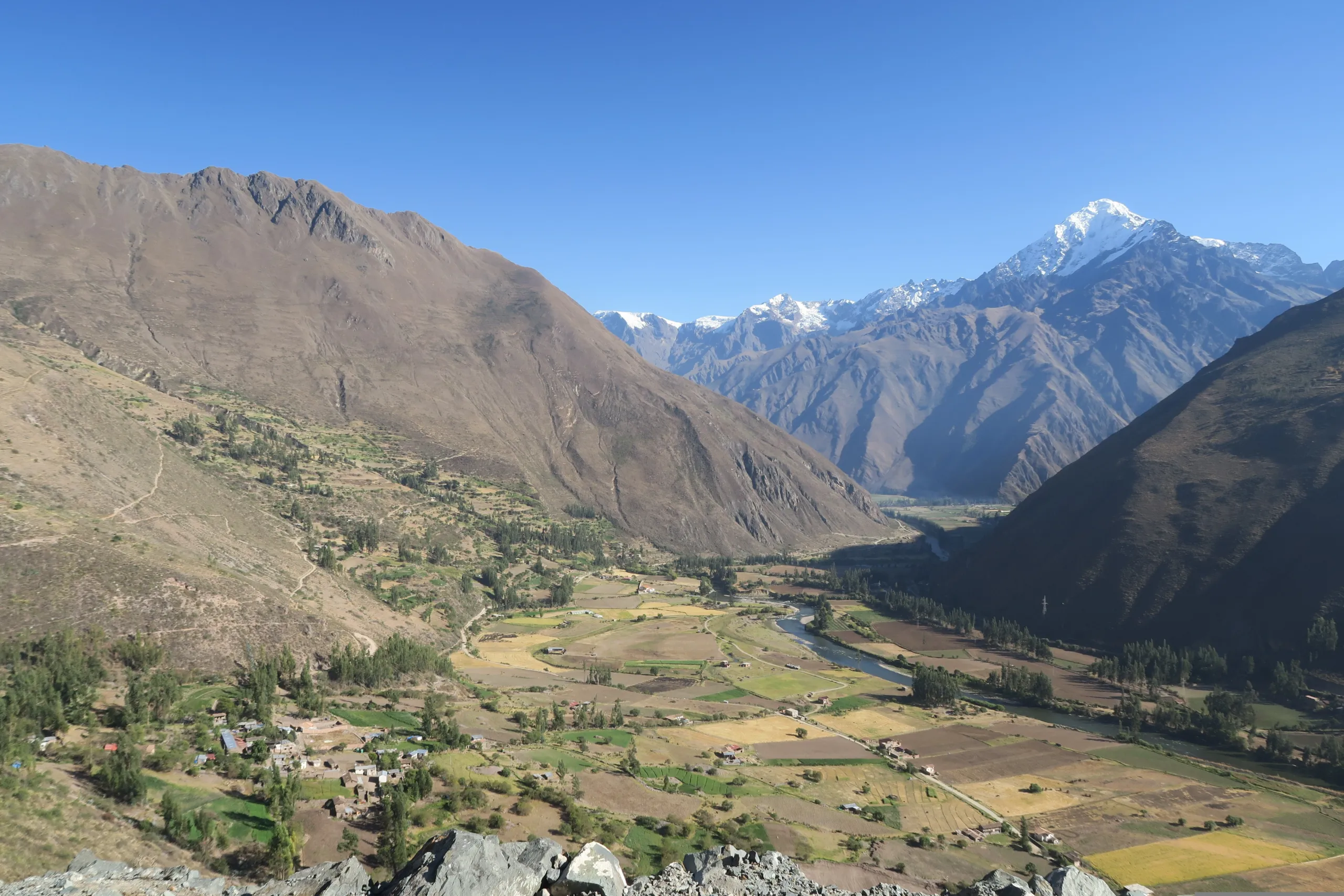
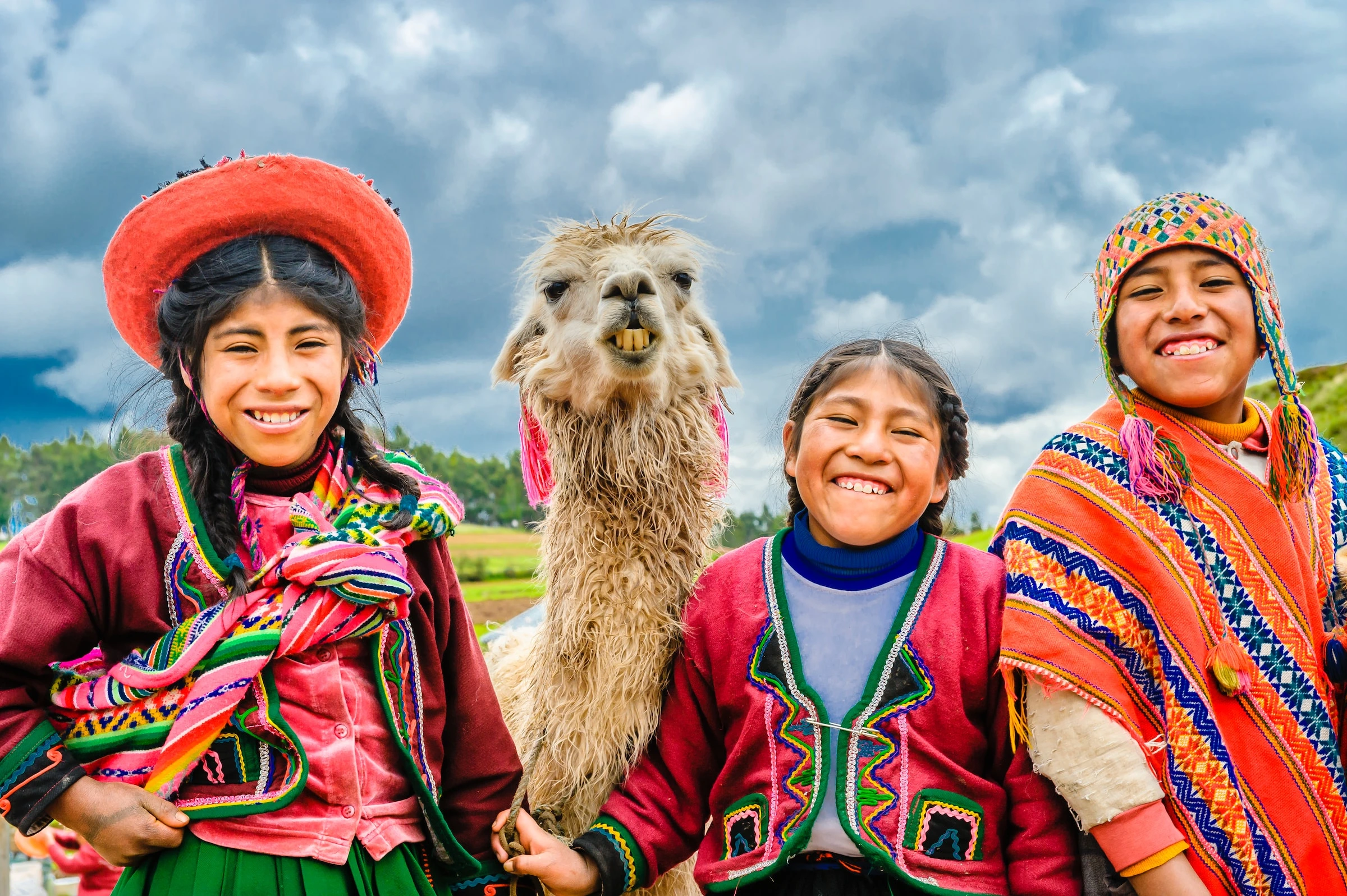
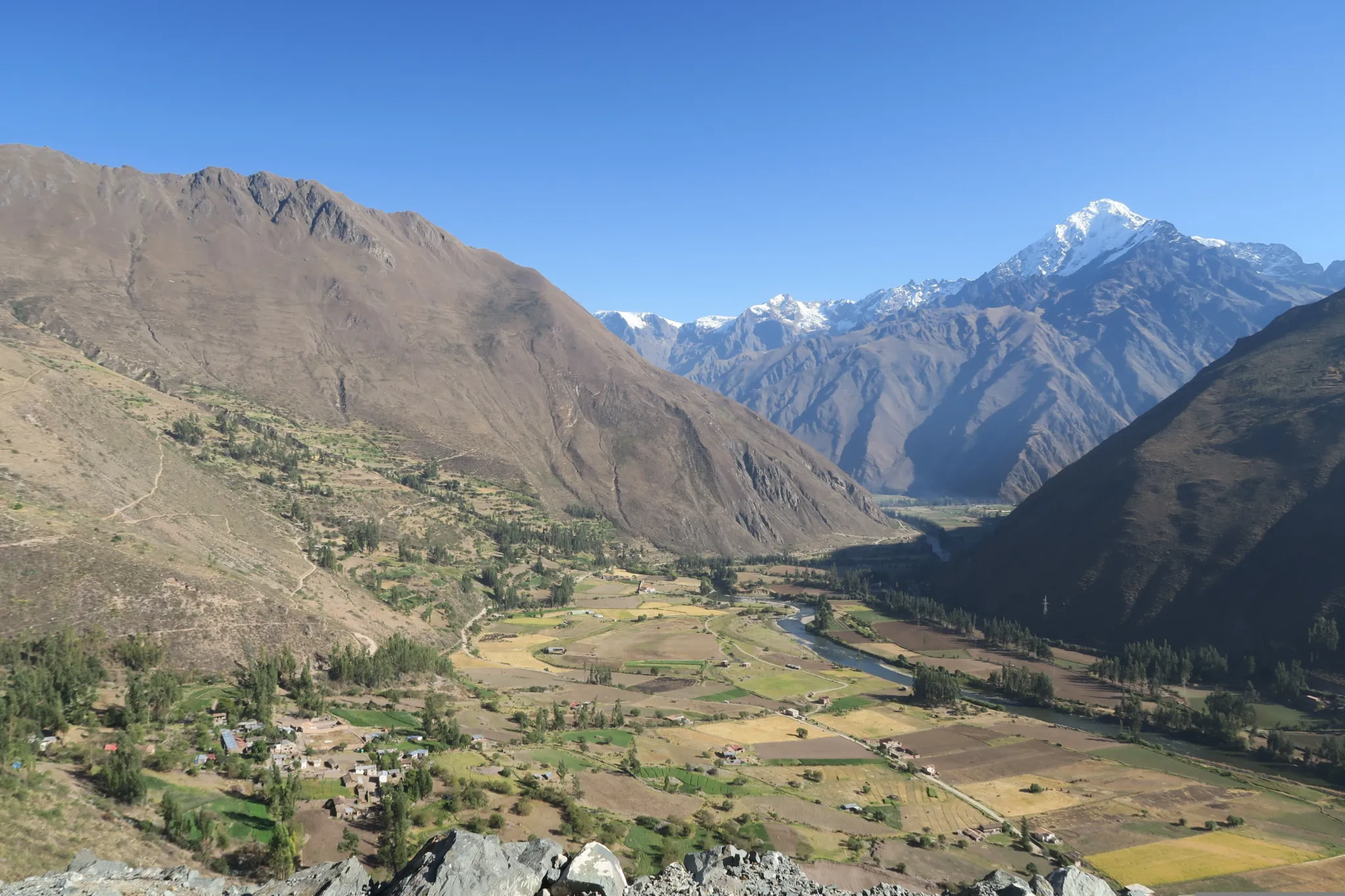
The arrival moves directly into the Sacred Valley at 2,900 m / 9,514 ft — the altitude beginning gently, the mountains opening around the route, the Inka heartland establishing itself in the first afternoon. The camelid center introduces the four Andean species whose roles in Inka civilization extended far beyond the decorative. Pisac at 3,399 m / 11,151 ft — the archaeological complex above the market town, the program’s first layer of context laid unhurriedly in the afternoon light.

  • Distance: 33 km by road
  • Altitude range: 2,900 m / 9,514 ft – 3,399 m / 11,151 ft
  • Overnight: Hotel in the Sacred Valley

Sacred Valley → Ciwar → Pumapunku Canyon → Huchuy Qosqo (3,600 m / 11,811 ft) → Bike Descent → Ollantaytambo | Moderate to Difficult

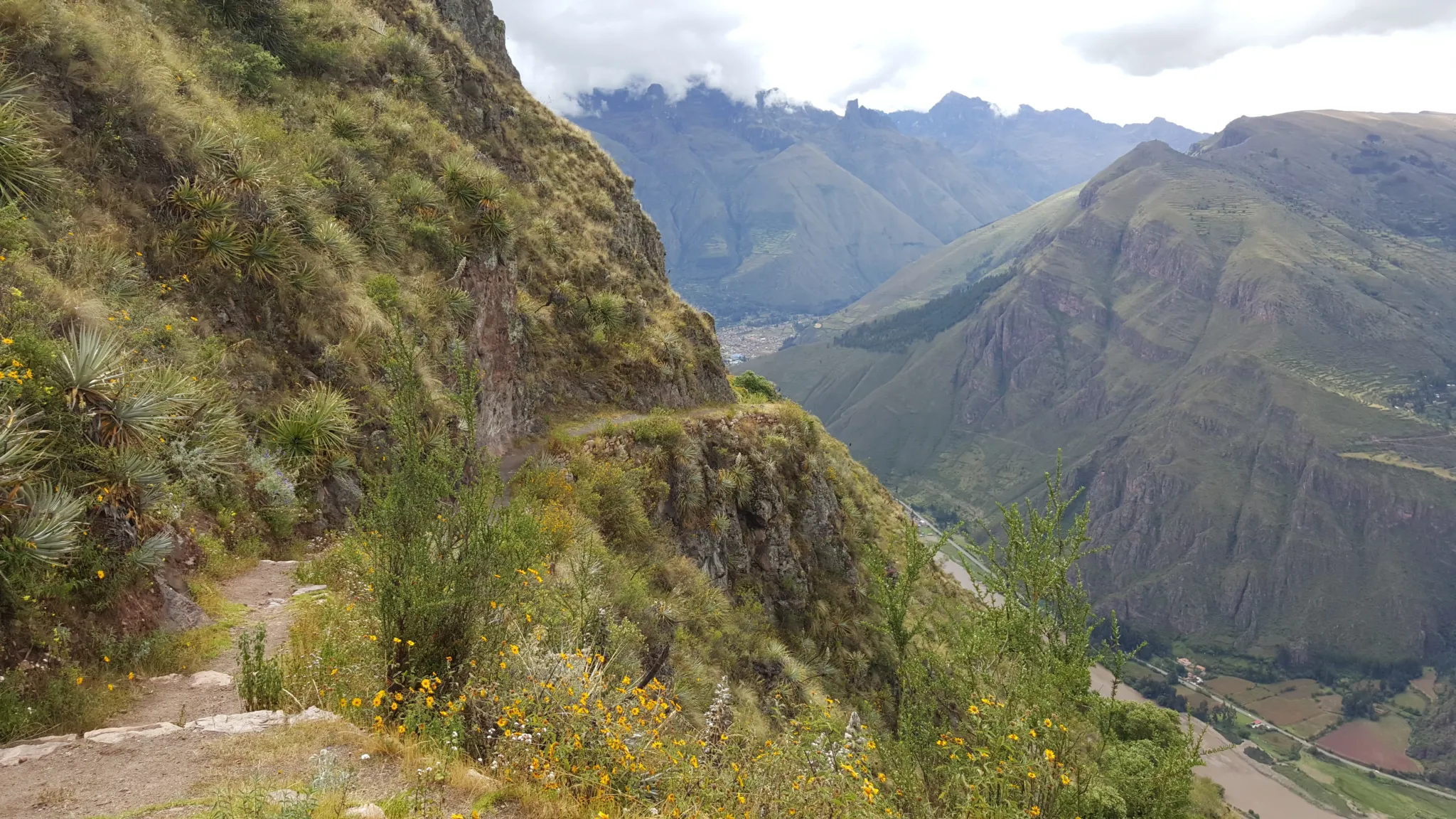
The drive to Ciwar begins a day that moves through three distinct worlds. The trek from the village enters the Pumapunku Canyon — the Door of the Puma, a gorge whose name the Inka gave with their characteristic precision — following a stream through terrain that most visitors to Cusco never reach, to Huchuy Qosqo at 4,200 m / 13,780 ft pass.

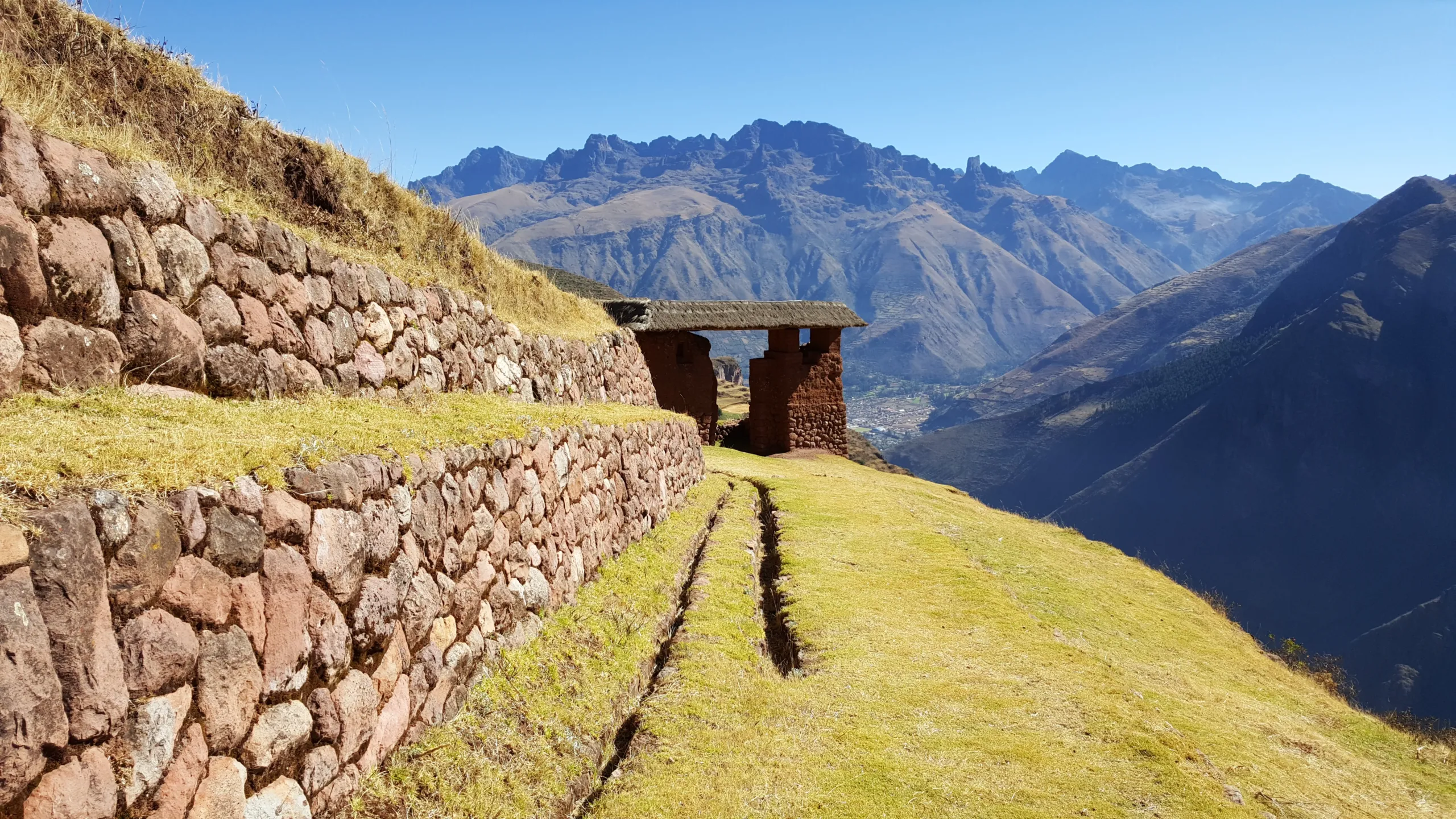
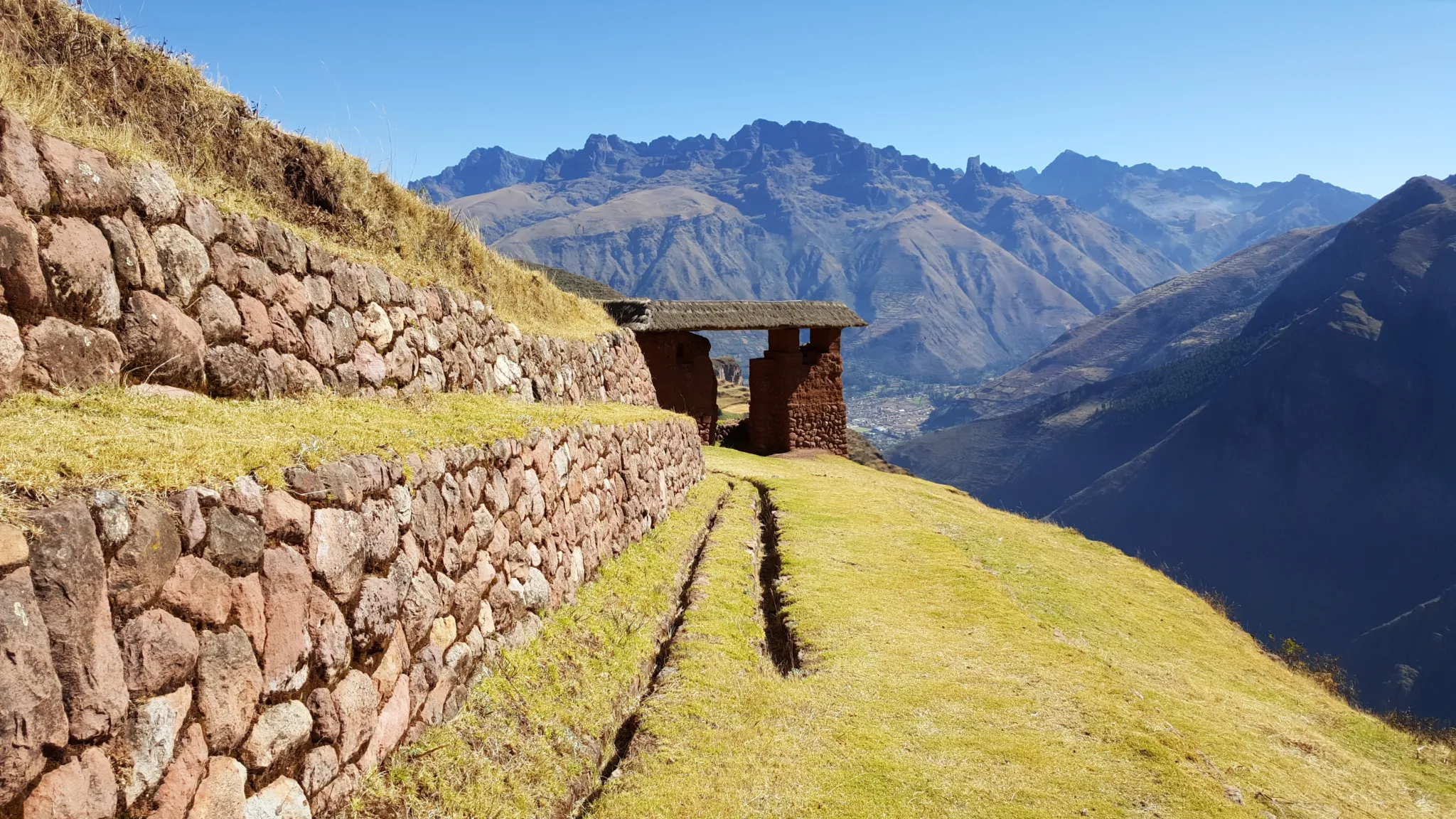
Little Cusco. A plateau above the Sacred Valley with views extending its full length in both directions, and a complexity of Inka structures — palaces, colcas, kallancas — that most travelers in Cusco have never heard of. Your guide decodes it not as a ruin but as a document of administrative and cosmological intelligence, positioned here deliberately in relationship to the capital and the valley below.

The optional mountain bike descent to Calca at 2,926 m / 9,600 ft — 10 kilometers through altitude-shifting terrain — delivers a picnic at the viewpoint before transportation carries the group to Ollantaytambo at 2,792 m / 9,160 ft for the evening visit to the living Inka town and its unfinished fortress.

  • Distance: 82 km by road + 8 km hiking + 10 km biking
  • Altitude range: 2,792 m / 9,160 ft – 4,200 m / 13,780 ft
  • Overnight: Hotel in Ollantaytambo

Ollantaytambo → Train → KM 104 → Chachabamba → Wiñayhuayna (2,650 m / 8,694 ft) → Intipunku (2,720 m / 8,924 ft) → Aguas Calientes | Moderate

The train from Ollantaytambo to KM 104 — the checkpoint where the Inka Trail begins and the modern world steps back. The suspension bridge crossing over the Urubamba marks the threshold.

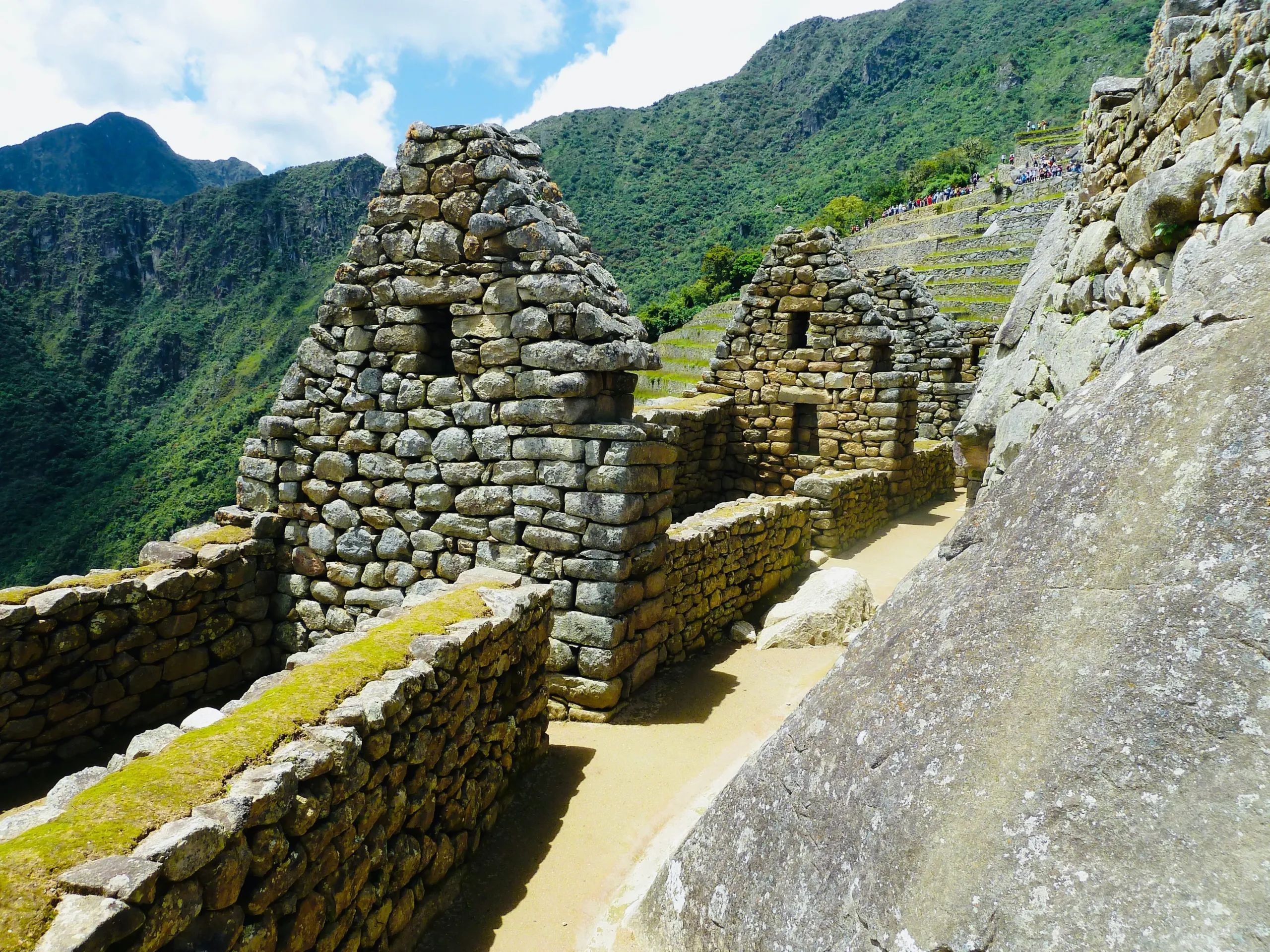
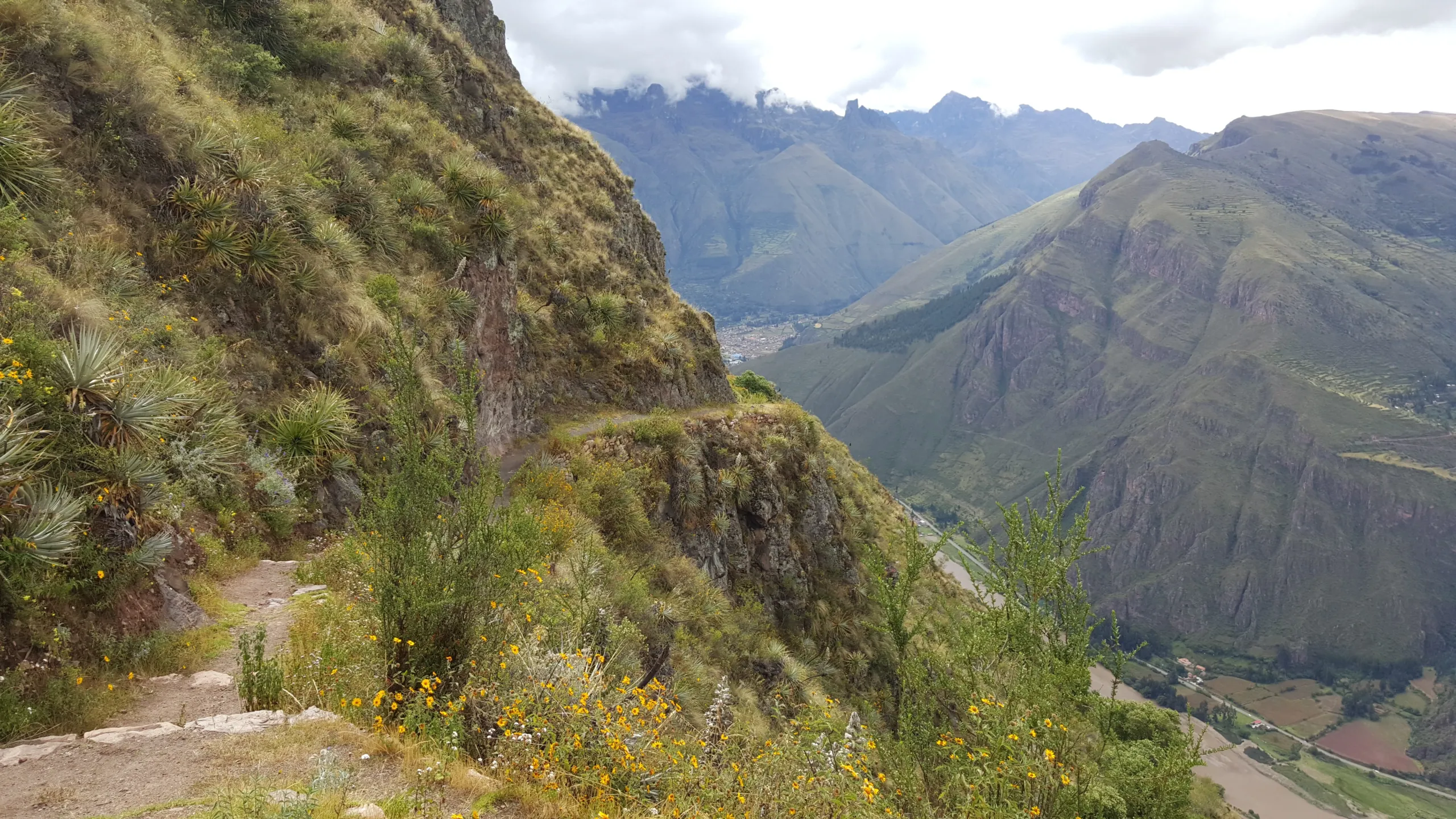
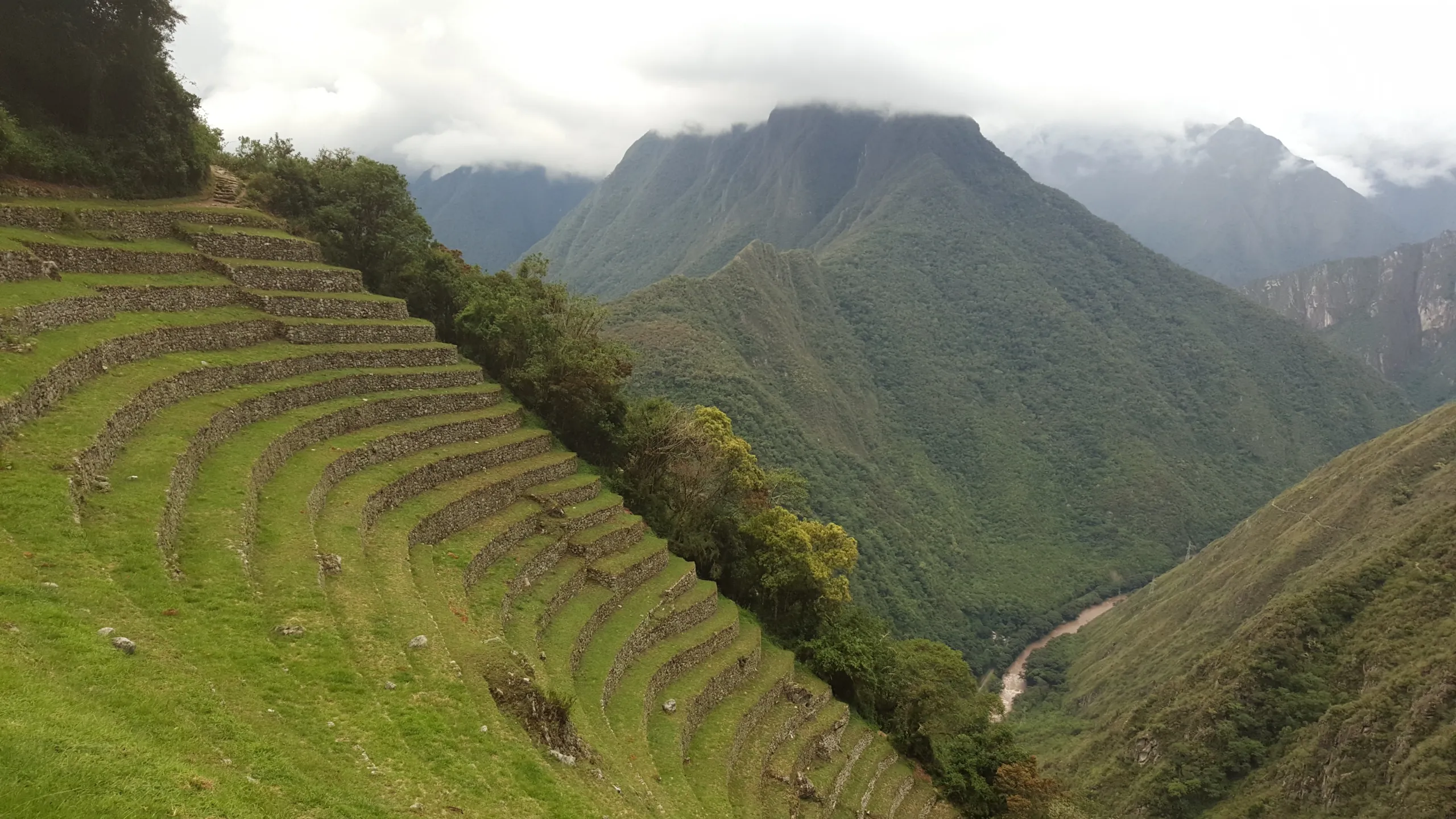
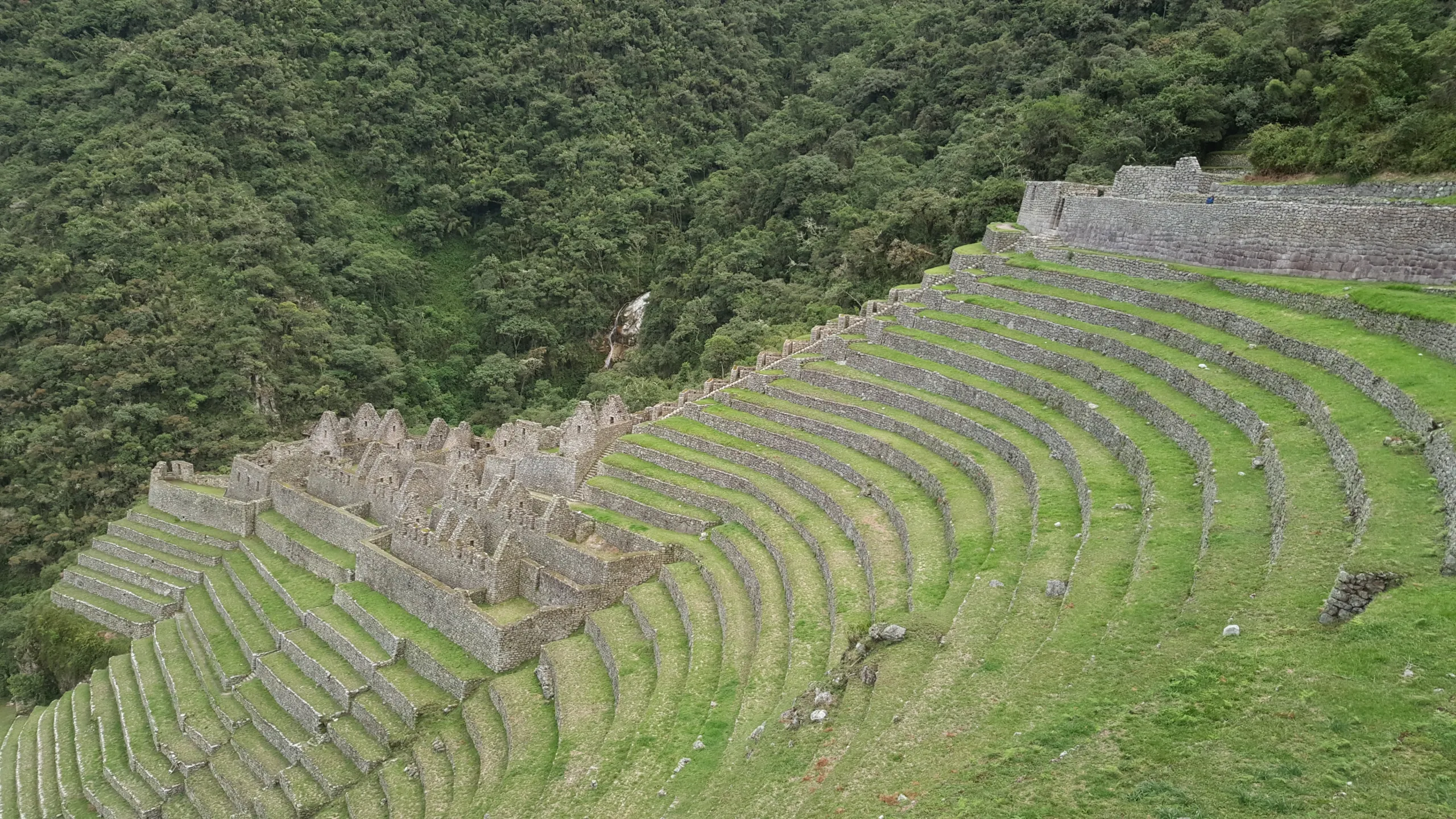
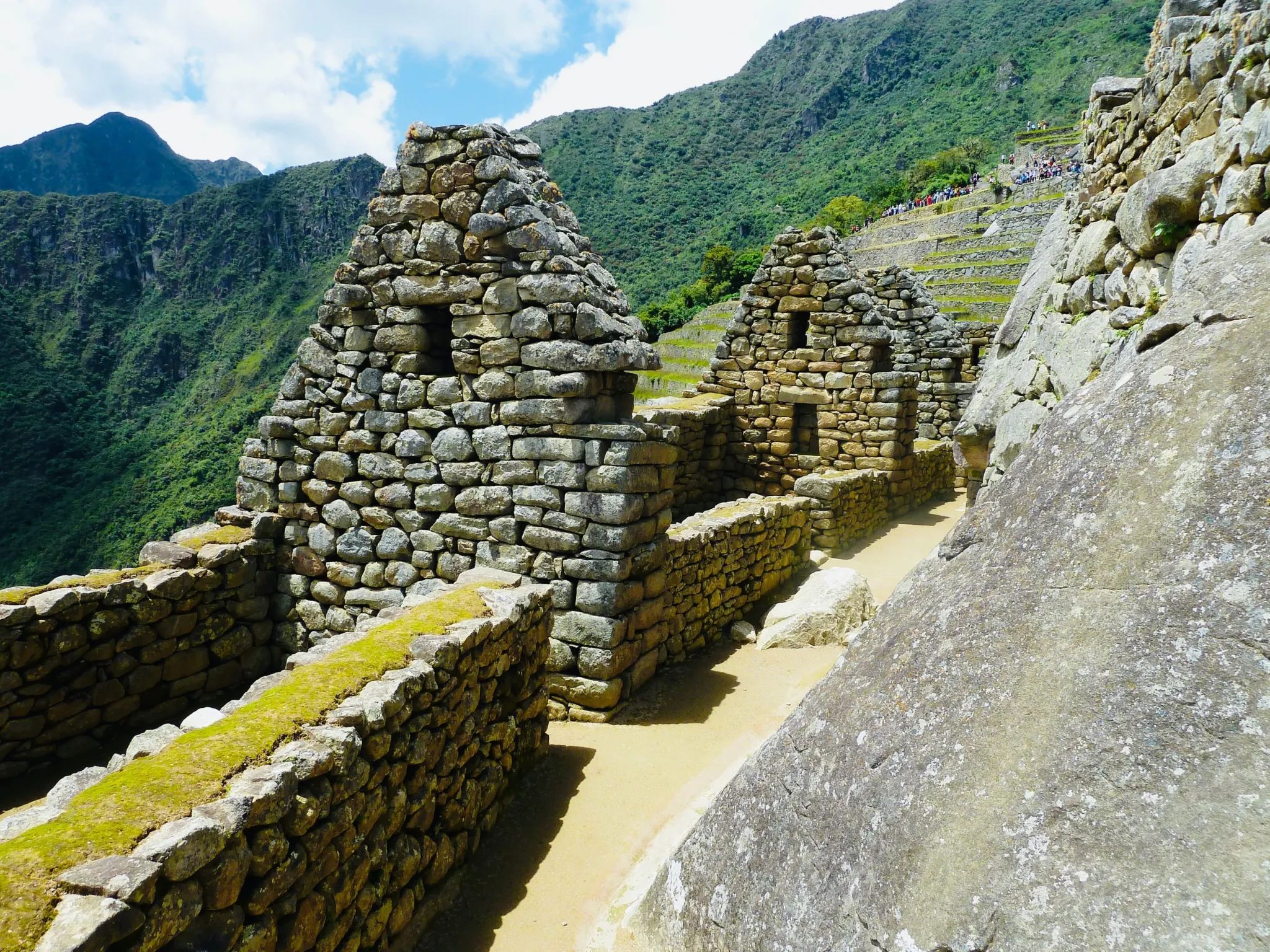
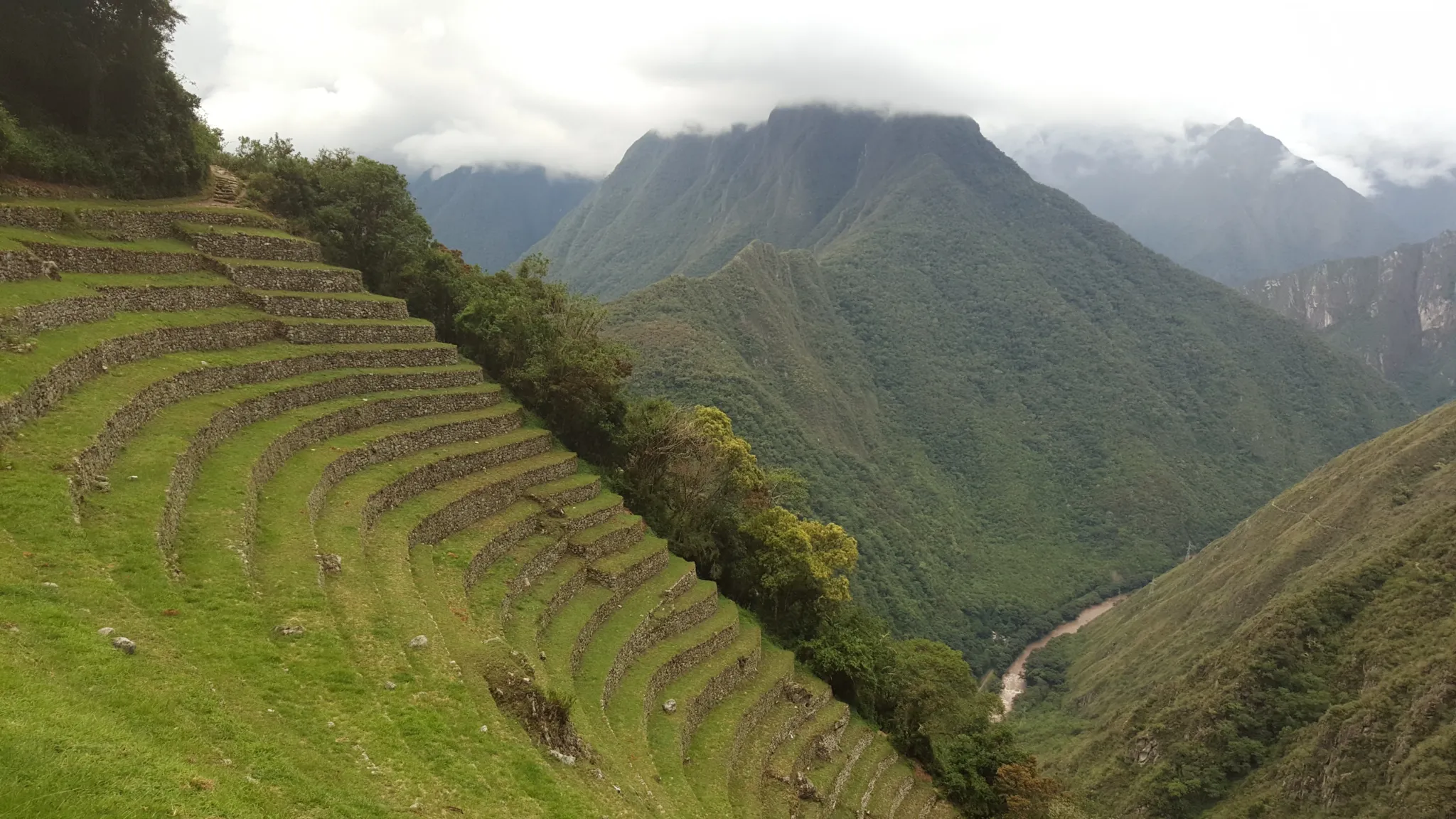
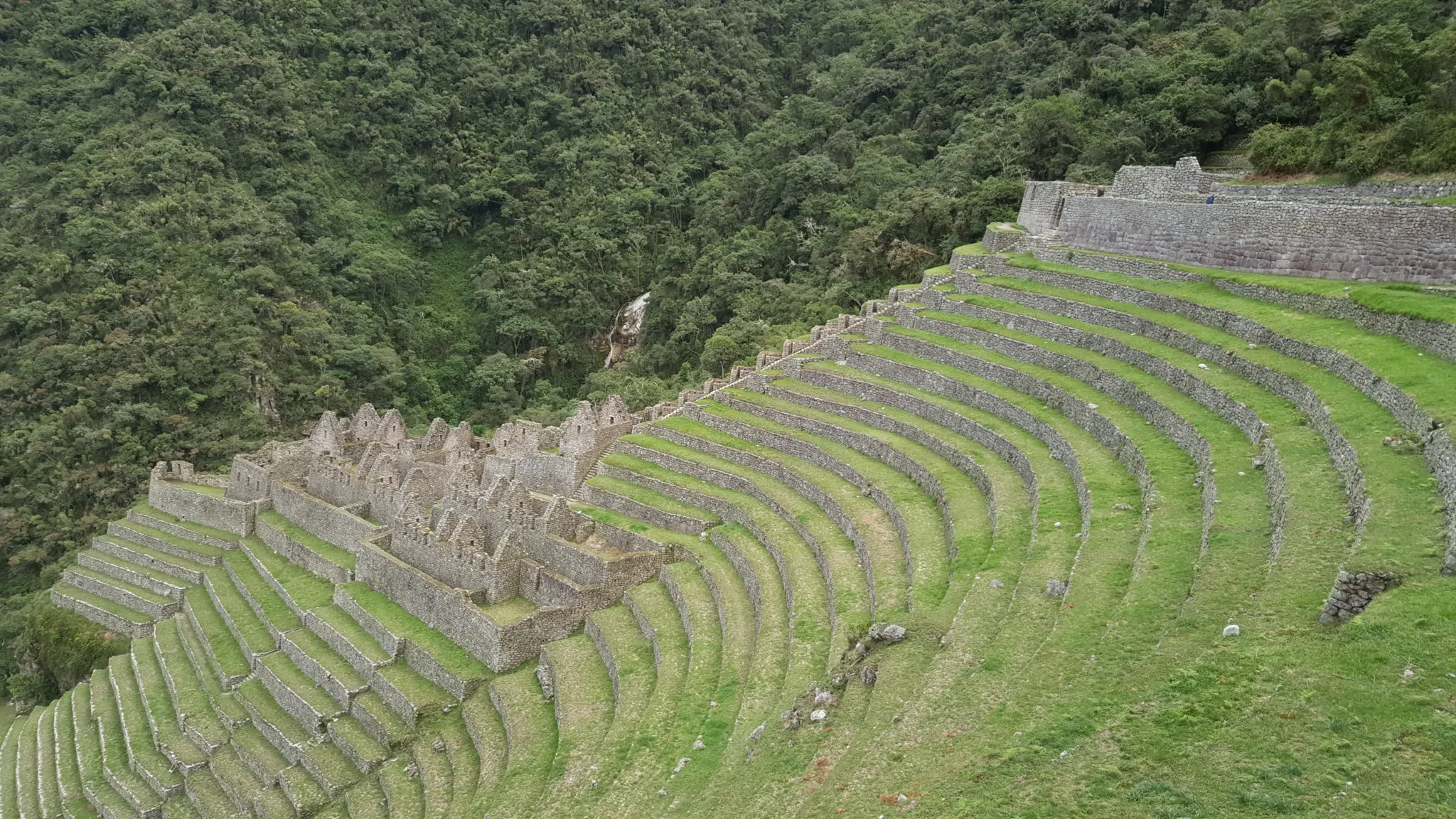
The path climbs through cloud forest past Chachabamba — a ceremonial complex beside the river — to Wiñayhuayna: a cascading complex of temples, terraces, and ritual baths built into a near-vertical mountainside above the canyon. Forever young in Quechua. The site earns its name.

Intipunku — the Sun Gate at 2,720 m / 8,924 ft — delivers Machu Picchu below in the valley exactly as the Inka designed it to be first seen: framed, earned, and impossible to be indifferent to. The bus descends to Aguas Calientes at 2,040 m / 6,693 ft as the day’s light closes.

  • Distance: 36 km by train + 11 km on foot
  • Altitude range: 2,040 m / 6,693 ft – 2,720 m / 8,924 ft
  • Overnight: Hotel in Aguas Calientes

Aguas Calientes → Machu Picchu (2,430 m / 7,972 ft) → Train → Cusco | Easy

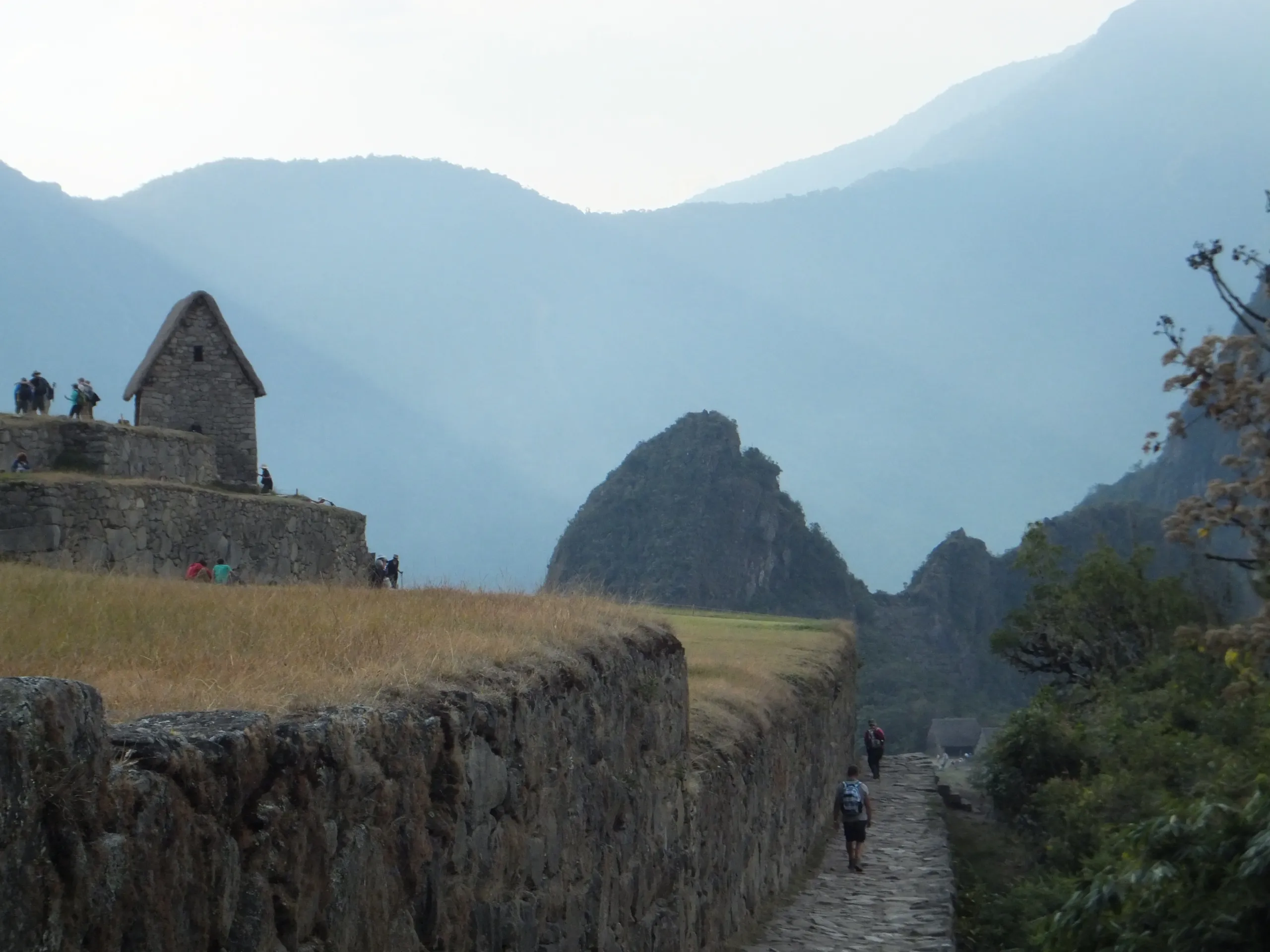
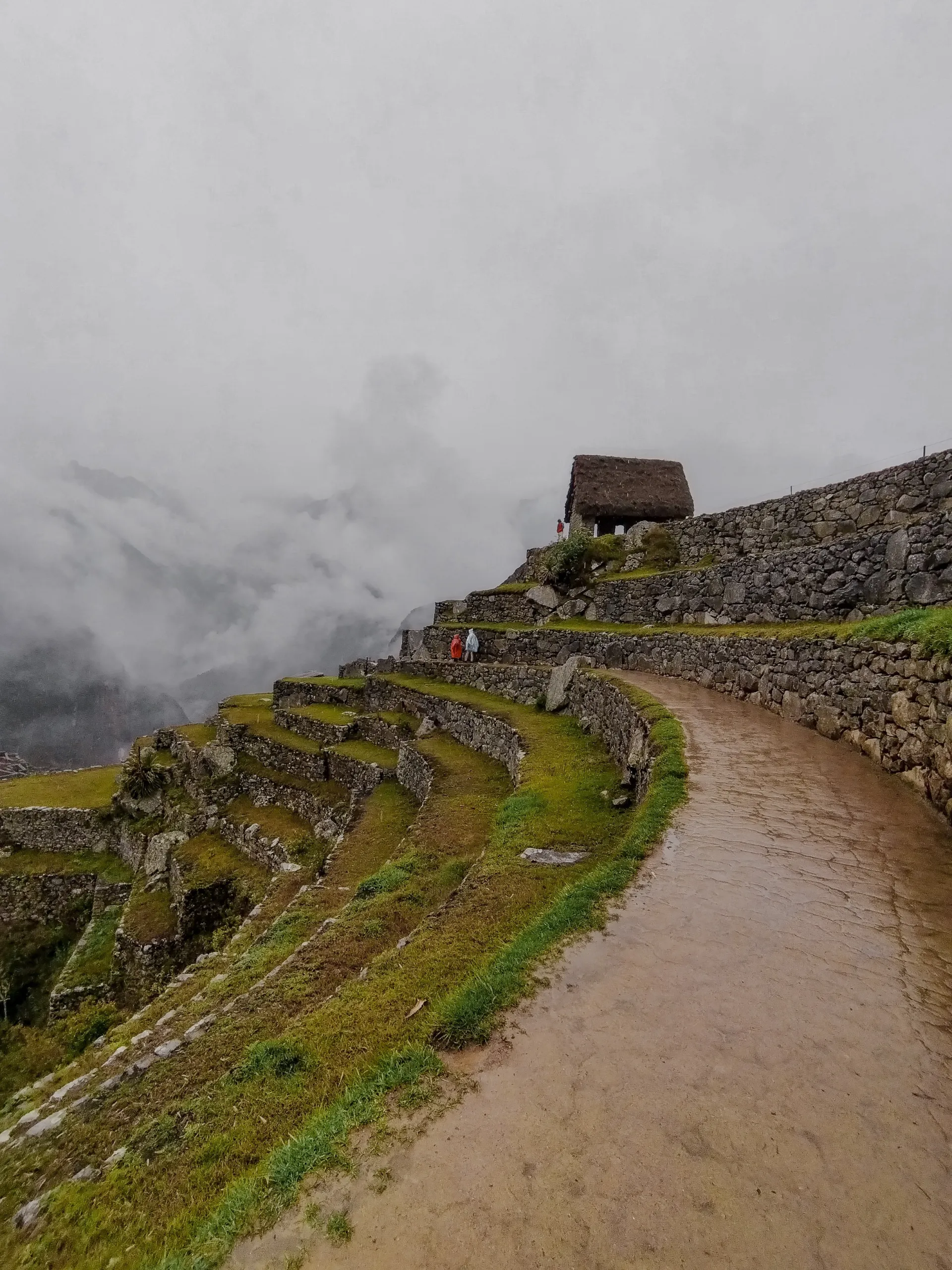
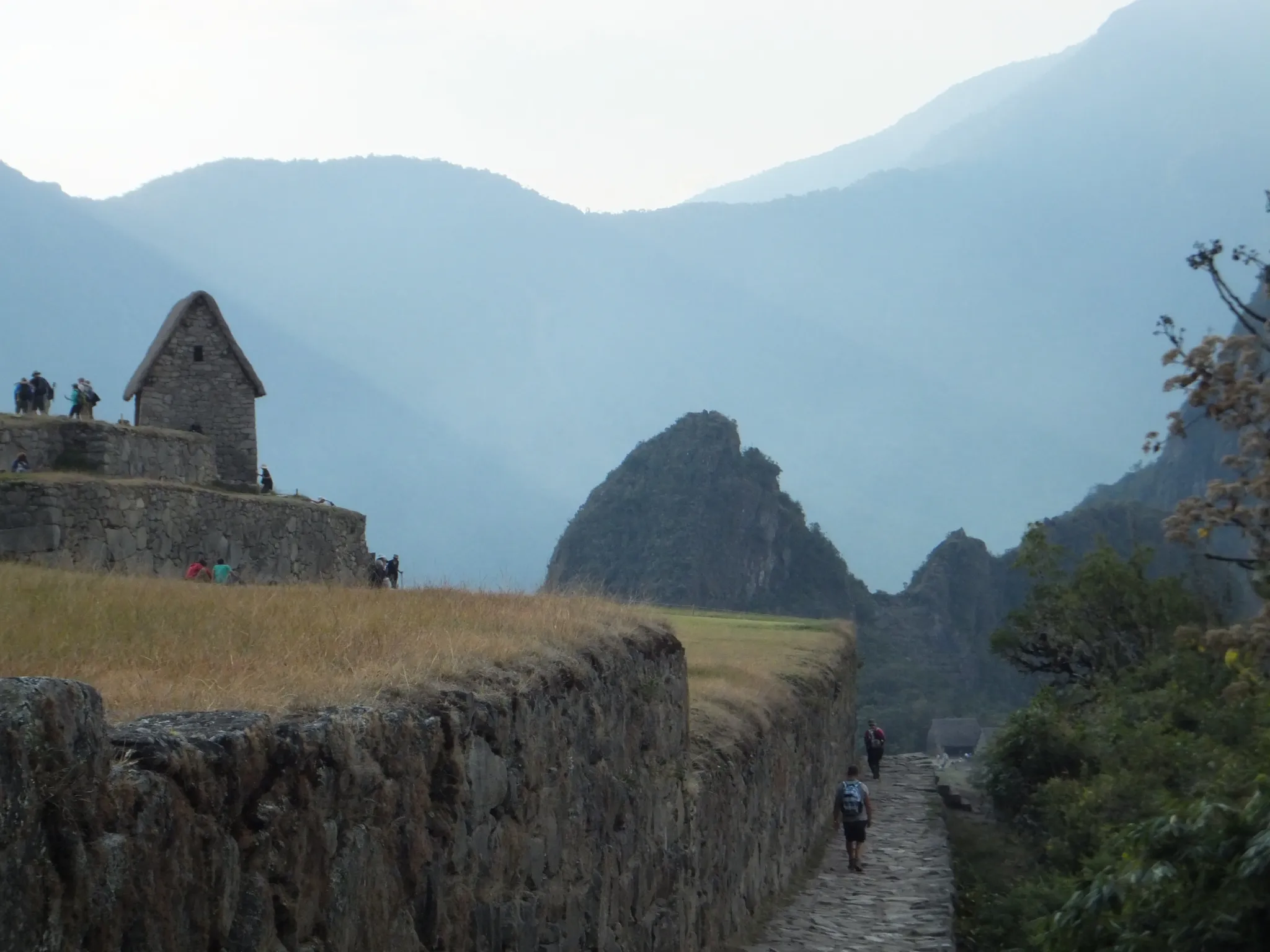
Three days of accumulated context — Huchuy Qosqo’s administrative intelligence, the Inka Trail’s ceremonial approach, Wiñayhuayna’s ritual architecture — make Machu Picchu a different place from the one that unprepared visitors encounter. The Inka method guide moves through the Temple of the Sun, the Intihuatana stone, the water systems, and the message encoded into the mountain names that frame the citadel: the young must learn from the old.

Lunch beside the sanctuary. The train back to Cusco at 3,399 m / 11,151 ft in the afternoon. Six days remain.

  • Maximum altitude: 2,430 m / 7,972 ft
  • Overnight: Hotel in Cusco

Cusco → Chonta Condor Viewpoint (3,400 m / 11,155 ft) → Killarumilloq (3,500 m / 11,483 ft) → Tarawasi (2,654 m / 8,707 ft) → Soraypampa (3,900 m / 12,795 ft) | Easy to Moderate

The day moves through three sites before reaching the base camp — each one a different dimension of the Salkantay territory that tomorrow’s lake will complete.

Chonta at 3,400 m / 11,155 ft: the condor viewpoint where the thermal columns above the Apurímac watershed carry the birds at eye level — not distant specks but close, sustained encounters with South America’s largest raptor in its primary flight corridor. Killarumilloq — Stone Moon — at 3,500 m / 11,483 ft: an archaeological complex named for its relationship to lunar cycles. Tarawasi at 2,654 m / 8,707 ft: the House of Tara, an Inka complex in the warm valley below the glacier system.

Camp at Soraypampa at 3,900 m / 12,795 ft as evening arrives, the Humantay glacier visible above and the night sky at this altitude containing more stars than most people have seen in one place.

  • Distance: 152 km by road + 7 km on foot
  • Altitude range: 2,654 m / 8,707 ft – 3,900 m / 12,795 ft
  • Overnight: Camp at Soraypampa

Soraypampa → Humantay Lake (4,200 m / 13,780 ft) → Cusco | Moderate to Difficult

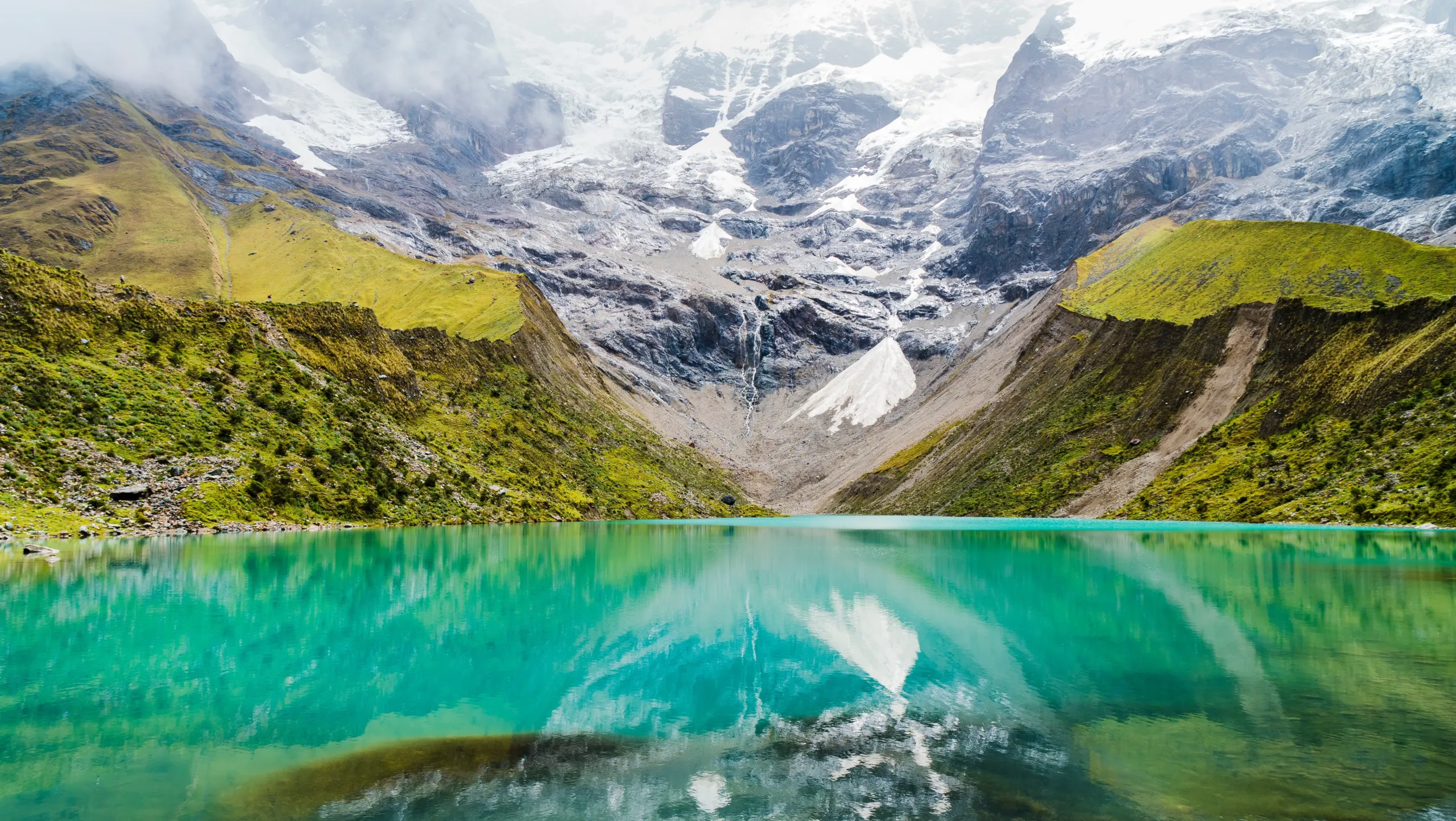
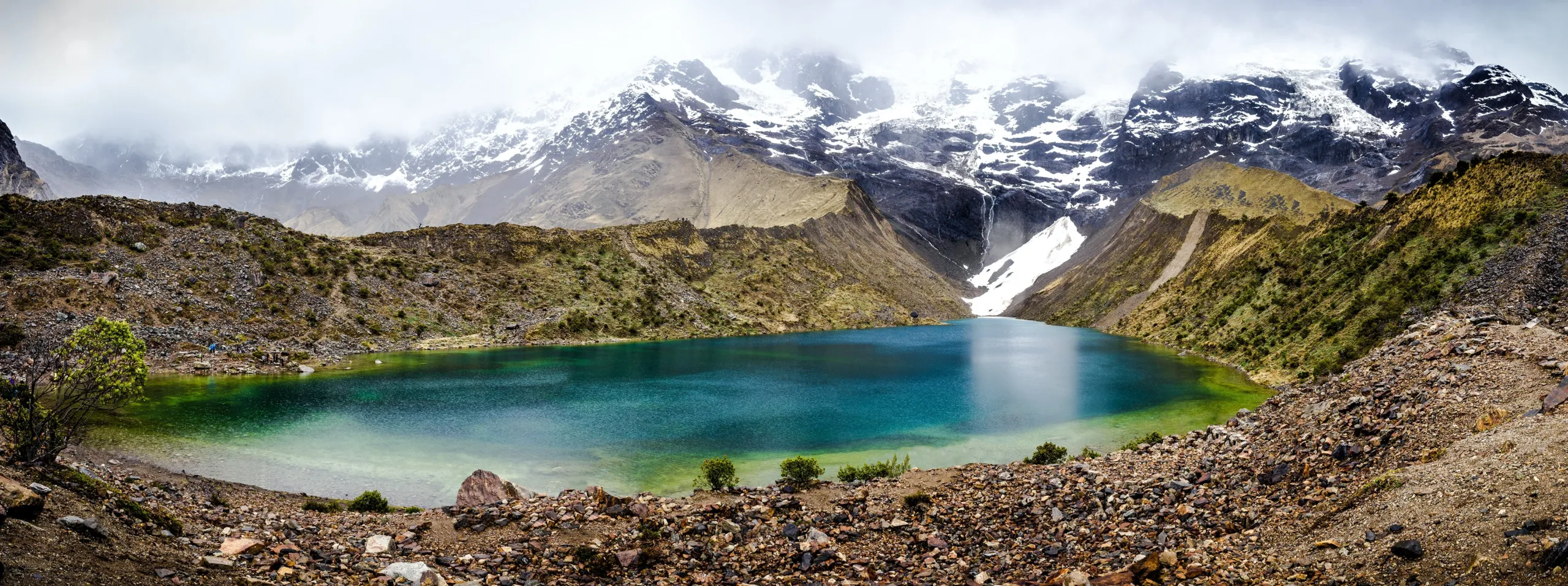
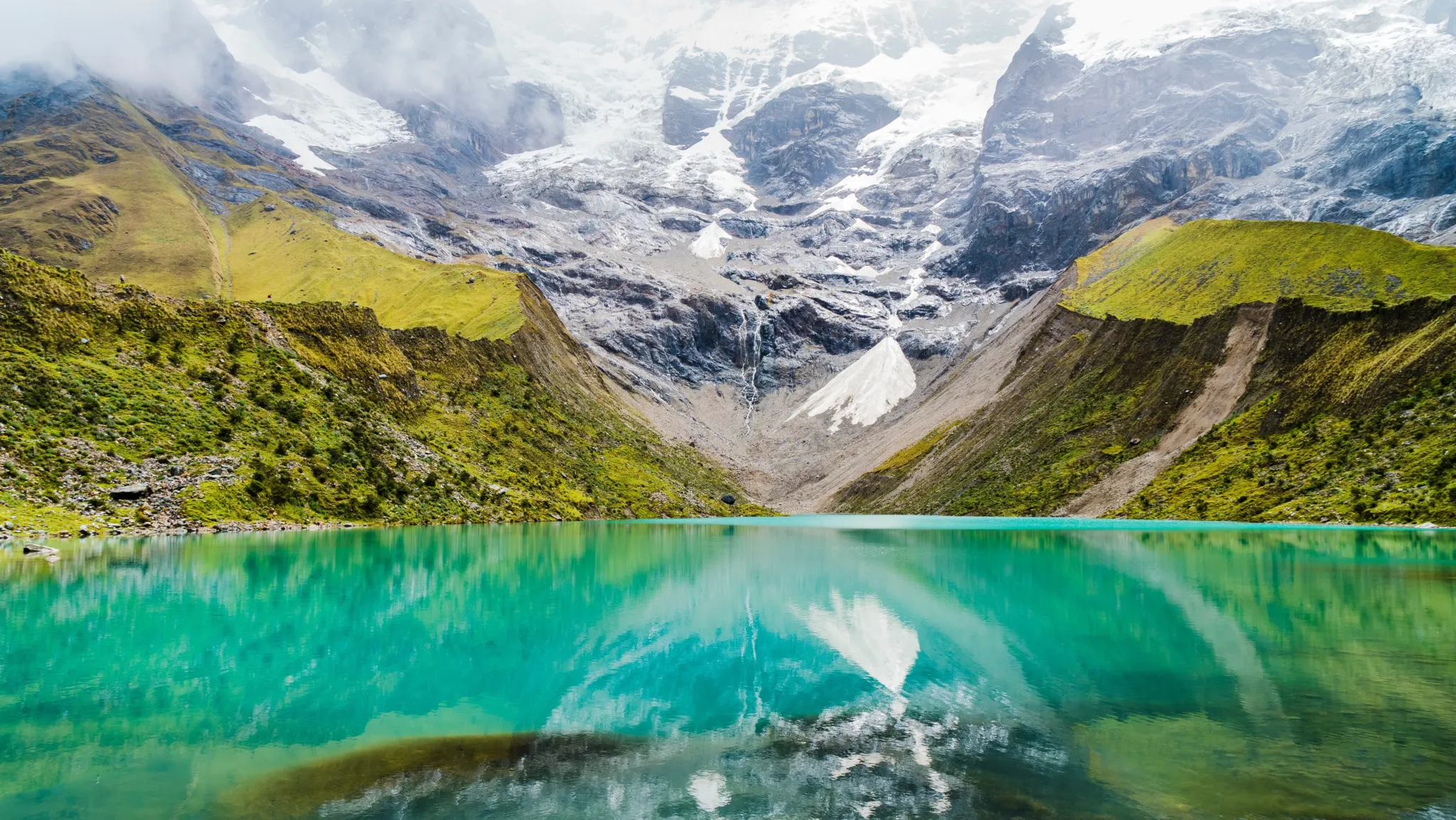
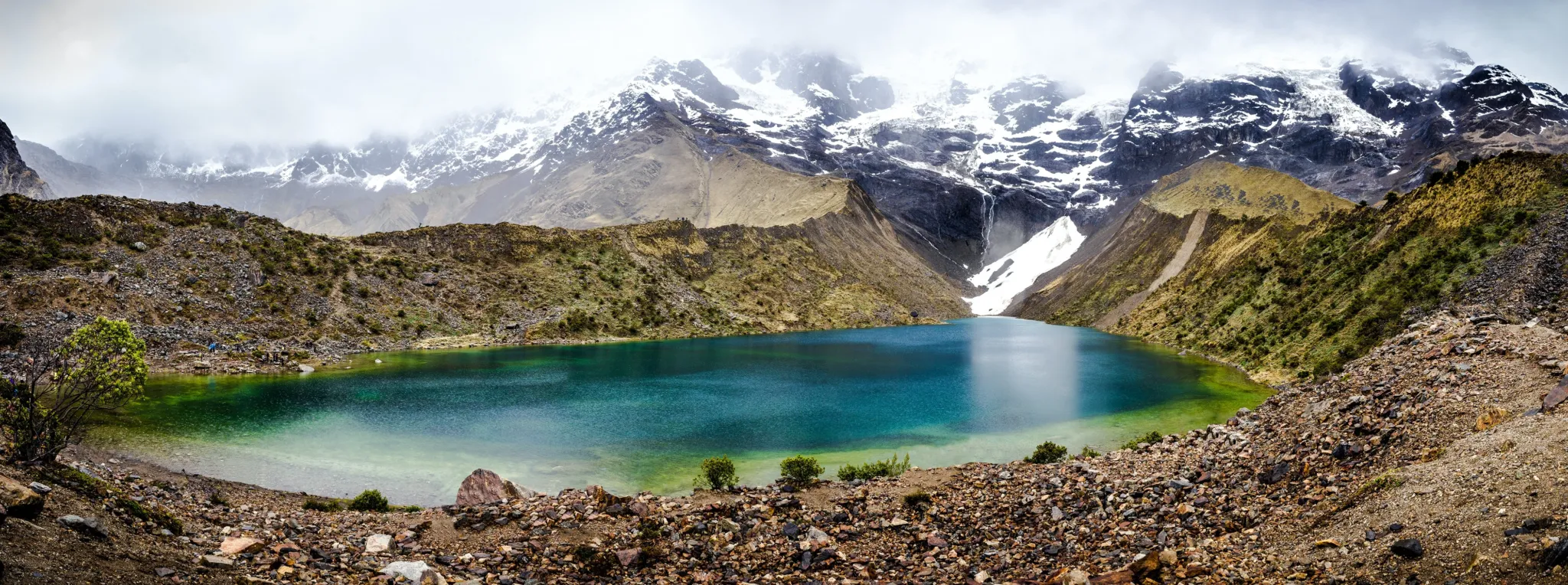
The ascent from Soraypampa to Humantay Lake is the program’s most concentrated physical demand — a sustained climb of approximately 300 vertical meters to the glacial lake at 4,200 m / 13,780 ft. Five days of acclimatization make it achievable. What waits at the top consistently defies photographic capture — the turquoise shifts with the light and the angle, the Humantay glacier reflected above in a combination that most people describe as the most beautiful single thing they encountered in Peru.

The return passes through a mysterious stop on the way back — a site your guide has chosen for its particular relationship to what the morning produced. Transportation returns to Cusco at 3,399 m / 11,151 ft by afternoon.

  • Distance: 7 km on foot + road to Cusco
  • Maximum altitude: 4,200 m / 13,780 ft
  • Overnight: Hotel in Cusco

Cusco → Qoricancha → Tipon → Huacarpay Lake → Andahuaylillas → Oropesa → Pitumarka | Easy

The day moves through the southern valley — a corridor that most Cusco itineraries never enter, containing sites whose sophistication rivals anything in the Sacred Valley.

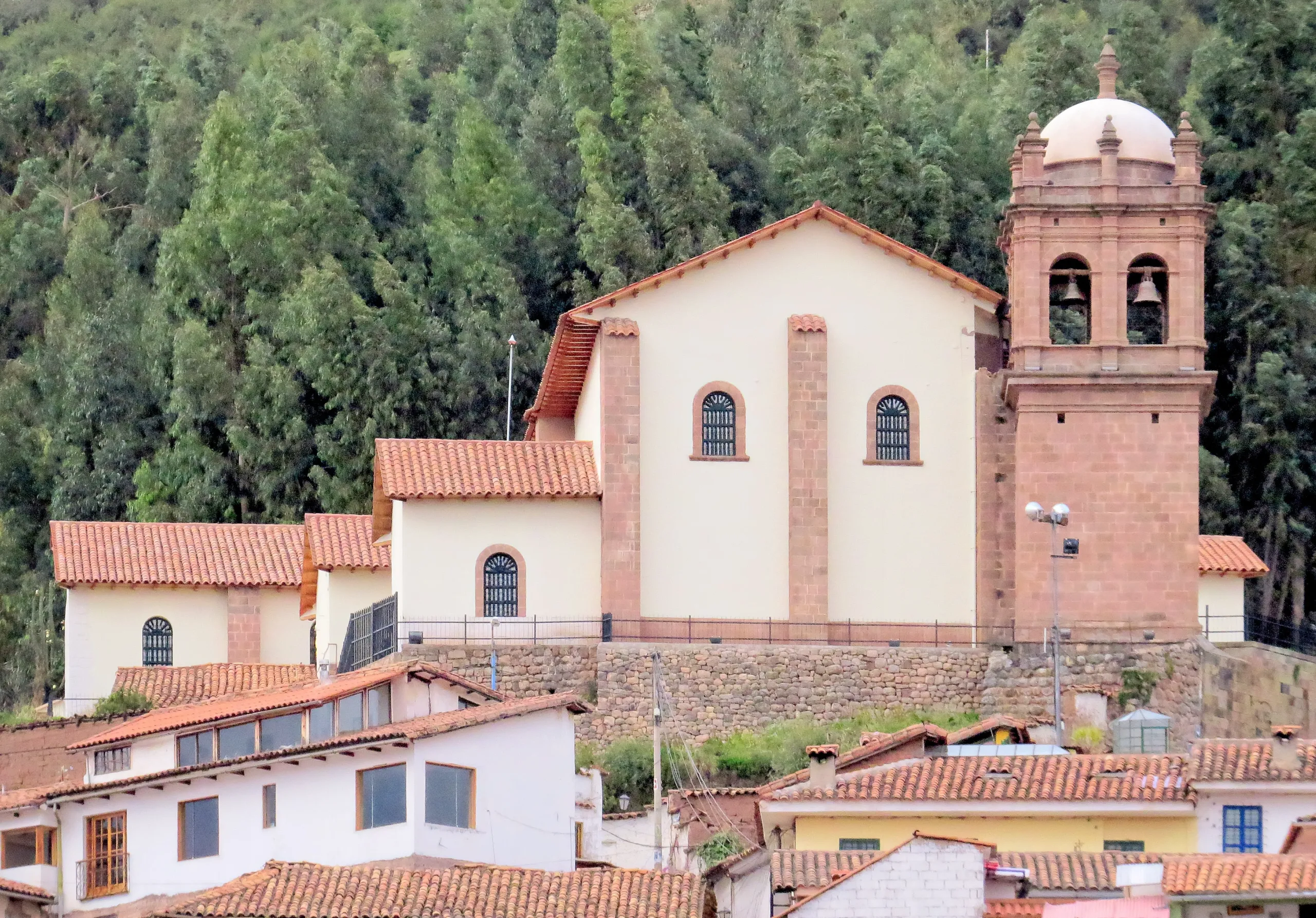
Qoricancha at 3,399 m / 11,151 ft: the spiritual axis of the empire, its stonework the most refined in the Americas, the colonial church built on top of it now visibly cracking while the Inka walls beneath remain perfectly intact.

Tipon at 3,260 m / 10,696 ft: the Inka hydraulic engineering center — a system of water channels, fountains, and agricultural terraces fed by a single spring with a precision that modern hydraulic engineers find remarkable. Less visited than Moray, more technically extraordinary in its water management.

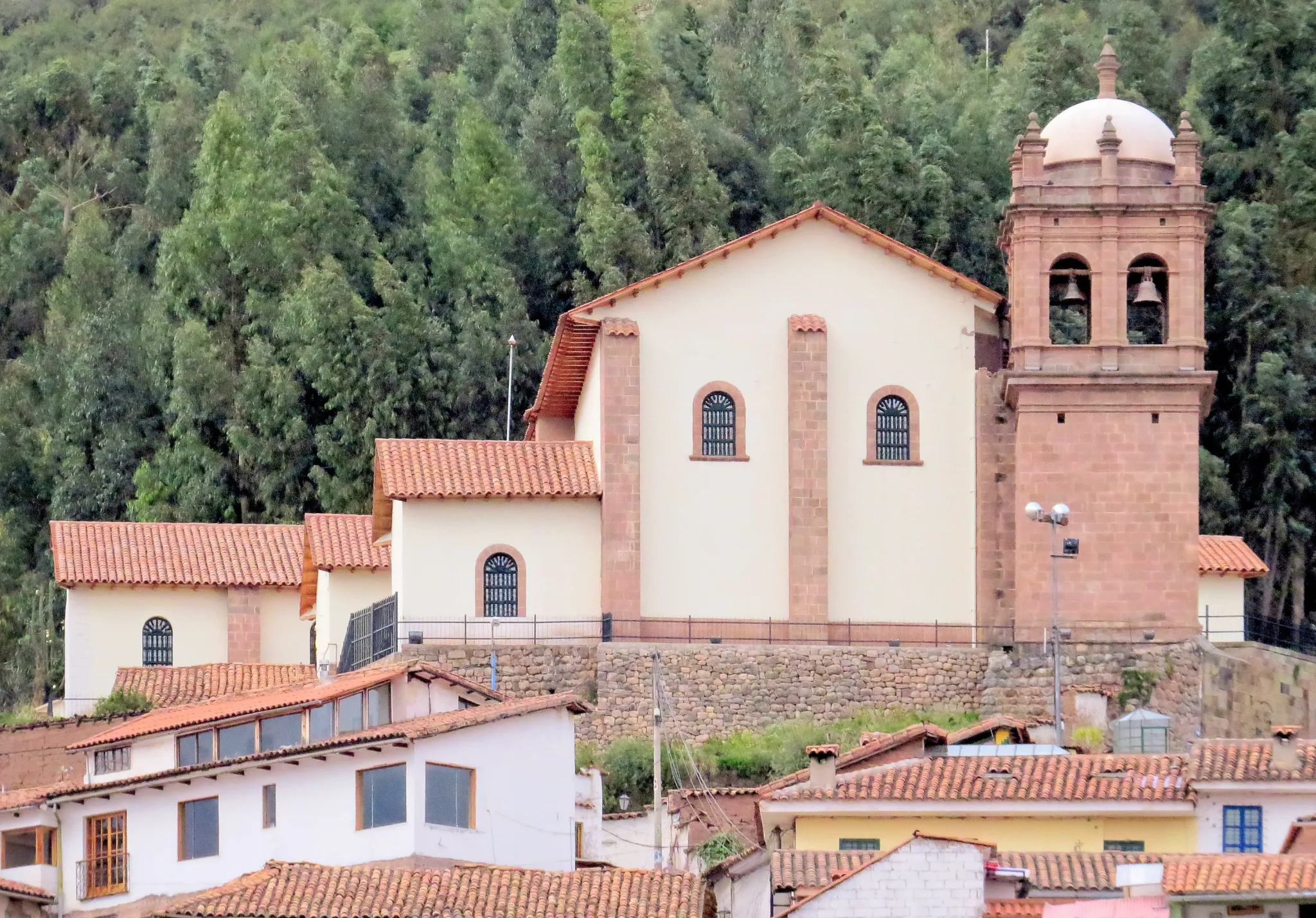
Traditional lunch beside Huacarpay Lake at 3,020 m / 9,908 ft. Andahuaylillas — the colonial church whose gold interior artwork earned it the name the Sistine Chapel of the Americas. Oropesa — the traditional bread-baking village where the process of preparing chuta in traditional stone ovens is the kind of living cultural encounter that no archaeological site can replicate.

Overnight in a local house in Pitumarka — the community closest to tomorrow’s trailhead, and an experience of rural Andean hospitality that closes the day with the same human warmth that began the program.

  • Distance: 83 km by road
  • Altitude range: 3,020 m / 9,908 ft – 3,399 m / 11,151 ft
  • Overnight: Local house in Pitumarka

Pitumarka → Rainbow Mountain (5,200 m / 17,060 ft) → Red Valley → Cusco | Moderate

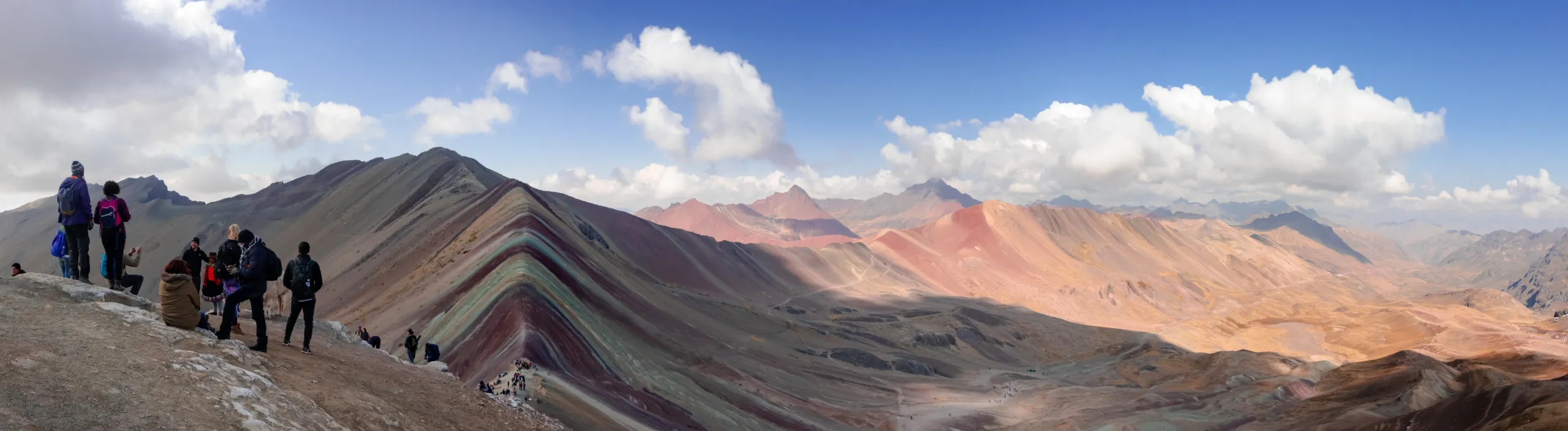
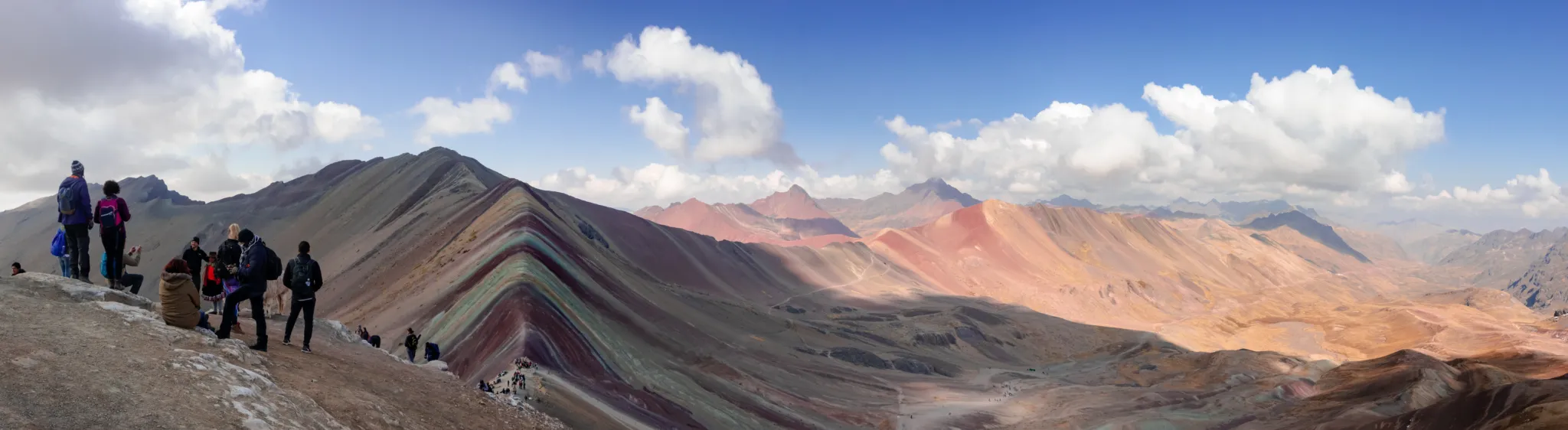
From Pitumarka, the trailhead is approximately one hour away — the closest approach to Rainbow Mountain available, eliminating the three-hour drive from Cusco that day-trippers endure. Seven days of Inka cosmological context give the mountain’s mineral striations a significance that geology alone cannot provide — the rainbow as the Andean representation of universal harmony, a decomposition of light revealing the photons that constitute every living thing.

The Red Valley adjacent to the summit extends the day’s chromatic landscape — rust, deep ochre, amber, jade — before the descent and return to Cusco at 3,390 m / 11,122 ft.

  • Distance: 110 km by road + 7 km on foot
  • Maximum altitude: 5,200 m / 17,060 ft
  • Overnight: Hotel in Cusco

Cusco → Sacsayhuaman → Q’enqo → Pucapucara → Qoricancha → San Pedro Market | Easy

Eight days of accumulated context make the capital’s archaeological ring speak in a language it cannot offer to visitors who arrive without preparation.

Sacsayhuaman at 3,701 m / 12,143 ft — limestone blocks of impossible size fitted without mortar to earthquake tolerances that modern construction has not replicated. Q’enqo — tunnels carved into living rock encoding Andean knowledge of the relationship between the world above and the one below it. Pucapucara at 3,580 m / 11,745 ft — the Red Fort positioned above the valley with the mountain guardians of Cusco visible in every direction. Qoricancha at 3,399 m / 11,151 ft — the empire’s spiritual axis, its contrast with the colonial church above it the clearest single image the Cusco region offers of what happened here in the sixteenth century, and what proved stronger.

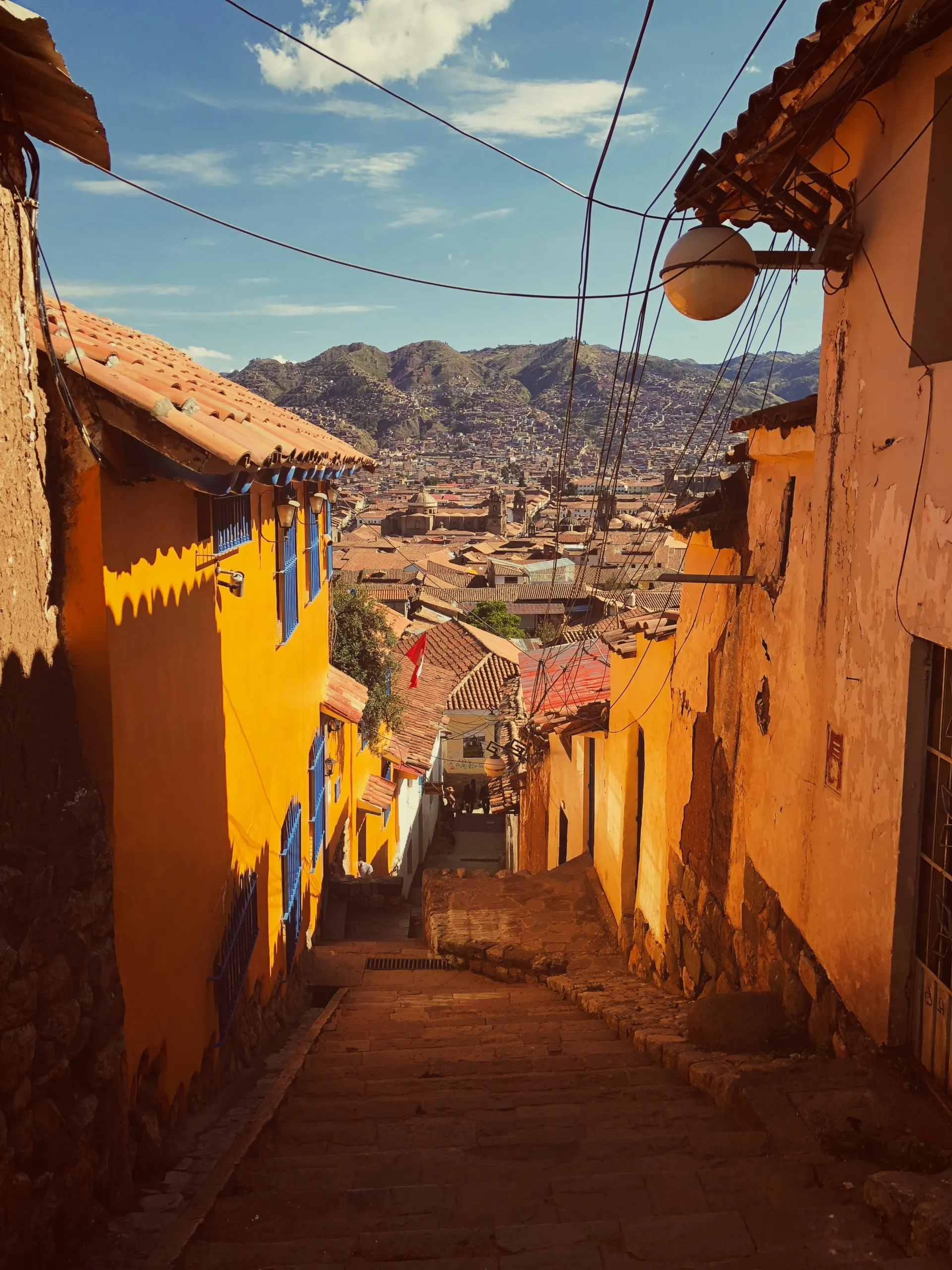
The Inka streets of Q’osqo on foot. San Pedro market closing the final afternoon — the full sensory range of Andean life in one space, the program’s last hours in the navel of the world.

  • Distance: 45 km by road
  • Altitude range: 3,399 m / 11,151 ft – 4,089 m / 13,415 ft
  • Overnight: Hotel in Cusco

Cusco → Airport

Transfer to the airport. Ten days. The complete arc of what the Inka built — from the forgotten plateau of Huchuy Qosqo to the sacred trail to the citadel to the glacier lake to the mineral mountain to the hydraulic engineering of the southern valley to the streets of the capital — has been walked in the sequence that makes it fully legible.

What the Andes gave you over ten days travels with you. The rest is encoded in the DNA, waiting for the conditions to continue the work.

Humantay Lake & Rainbow Mountain camping - Huchuyqosqo - Inca Trail - Machupicchu - Full hikes

Reviews

Reviews

There are no reviews yet.

Be the first to review “Andes Machu Picchu”

Your email address will not be published. Required fields are marked *

Included/Excluded

  • Incluido All transportation.
  • Incluido Guide service.
  • Incluido Food as described (breackfast=B, Lunch=L, dinner=D).
  • Incluido Entrance fees and permits for the detailed visit sites.
  • Incluido Round trip train tickets.
  • Incluido Chef for the hikes.
  • Incluido Cooking equipement.
  • Incluido Camping equipement.
  • Incluido Accomodation 4 stars hotel as described.
  • Incluido Boiled or purified water.
  • No Included Entrance fees to Waynapicchu Mountain and Machupicchu Mountain and others are optional.
  • No Included Bottle of water or sports drink.
  • No Included Tipping for staff.
  • No Included Travel ensurance.
  • No Included Flight tickets.
  • No Included Sleeping bag.

Attractions

Andahuaylillas, Chinchero, Coricancha, Cusco, Huchuyqosqo, Humantay Lake, Inca Trail, Inti Punku, Machu Picchu, Maras & Moray, Ollantaytambo, Pachar, Pikillacta, Pisac, Pucapucara, Quillarumiyoc, Rainbow mountain, Sacred Valley, Sacsayhuaman,Salkantay, Tambomacha

Activities

Biking, Camping, Cooking classes, Culinary, Discoveries, Experiential tourism, Full nature, Glaciers, Hiking, Lakes, Lama experience, Picnic, Viewpoint of Condors, Hot springs

FAQs

Dare to Redefine Travel

The Premiun we offer is measured in silences—the hush that falls when our private guide unlocks Machu Picchu’s eastern gate at moonrise, the stillness between your heartbeats as you realize the mountain before you is also within you.
We don’t provide translators for Quechua—we arrange encounters where language becomes unnecessary, where a shaman’s coca leaf reading bypasses cognition to speak directly to your cells. Your final descent won’t feel like departure but mitosis—the Andes remaining alive in your marrow as you return to sea level.
This isn’t souvenir tourism; it’s cellular archaeology. When people ask what you brought back, you’ll simply smile—knowing some transformations resist vocabulary.

Application Process

Contexto personal
Estado mental actua
Preferencias y límites
Datos de contacto

Book This Tour

Top Trending

You may like

Cart0
Cart0