Every account of the past has to explain the physical evidence. When the account and the evidence agree, the account is probably sound. When they disagree, something is wrong — and the evidence is the party without a motive. Across the world, and conspicuously in the Andes, there are constructions that do not fit comfortably into the story we were taught about primitive ancestors and linear progress. This is worth examining honestly, without either dismissing it or leaping to conclusions.
The Stones That Should Not Exist
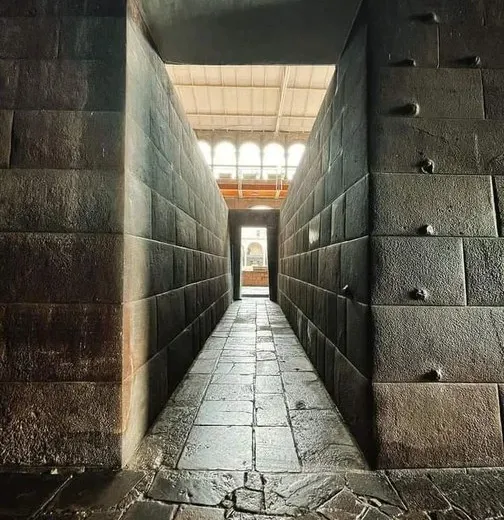
Consider Inka stonework. Massive blocks, irregularly shaped, fitted together so precisely that a blade cannot pass between them — assembled without mortar, and still standing after centuries of seismic activity that has toppled later structures built on top of them.
The account says primitive. The stonework says otherwise — and stones do not have a narrative to protect.
This is not a mystery of interest only to enthusiasts. Engineers continue to study these constructions, and the dry-stone technique that allows them to absorb seismic energy remains a subject of genuine research. Whatever produced them was not primitive by any coherent definition of the word.
The Uncomfortable Question of Replication
Here is where honesty requires care. It is often claimed that such constructions could not be replicated today. That overstates the case — with modern equipment and unlimited budget, much could be reproduced.
But the harder question survives: how were they produced by a society we are told lacked the wheel, iron tools, and written language? The conventional answers exist, and some are reasonable. Yet the gap between what the account says these people were and what they demonstrably achieved remains uncomfortably wide. That gap is the thing worth sitting with, rather than explaining away in either direction.
Not Only the Andes
What makes this more than a local curiosity is that it recurs. Around the world, in places that had no contact with one another, there are constructions of precision and scale that sit awkwardly in the story of steadily improving human capability.
The pattern is the point. If one anomaly existed, it would be a puzzle. When the same category of anomaly appears across continents, it suggests the framework being used to interpret them may be inadequate.
The Accounts of Previous Ages
Many ancient cultures carried accounts of earlier world ages — cycles of rise and collapse rather than a single line of progress. The Mesoamerican tradition of the suns describes several prior ages, placing the present as one among a sequence rather than the culmination of one.
Nearly every ancient culture described history as cyclical. Only modern culture insists it is a straight line pointing at us.
Whatever one makes of these accounts, their consistency is notable. Cultures that never met described history as cyclical. Modernity describes it as linear — rising from primitive beginnings to the present peak. It is worth noticing that the linear version is the one that flatters the people telling it.
What This Suggests Without Proving
Being precise matters here. The physical evidence does not prove any particular alternative history. It does not establish lost civilizations or vanished technologies. What it does is expose that the conventional account has gaps it does not acknowledge — and that the confidence with which it dismisses ancestral sophistication is not earned by the evidence.
Something else follows. If knowledge was held and then lost — as it demonstrably was after the conquest, when the systems sustaining Inka knowledge were dismantled — then history is not a story of accumulation. It is a story of gain and loss, in which societies that maintained understanding flourished and those that abandoned it did not.
Why This Belongs to the Method
The Inka Method treats history as evidence rather than narrative, and this is what that means in practice: when the account and the stones disagree, take the stones seriously.
Not to construct a rival mythology, but to hold the inherited story loosely enough to think. Because a person who accepts without question that their ancestors were primitive has also accepted, without noticing, that the way they live now must be the best available.
The evidence does not tell us what really happened. It tells us the story we were given is not big enough to hold what is standing in front of us.