History is usually treated as a record of the past — a collection of dates, names, and events to be memorized and set aside. Within the Inka Method, history is something entirely different. It is treated as evidence: a record of what has actually worked for human minds and human societies across thousands of years. Approached this way, history stops being about the past and becomes a way of understanding life in the present.
History is not nostalgia. It is evidence of results at a mental and biological level.
Civilizations as Long-Term Experiments
Across thousands of years, successful societies developed ways of life based on natural rhythm, community, meaningful roles, and direct relationship with the environment. Many of these societies endured for far longer than the modern industrial model, which is only about two hundred years old. From a historical perspective, modernity is a recent experiment — while older societies were stable, tested models of long-term human organization.
This reframing matters. When modern life is understood not as the pinnacle of progress but as a very recent and largely untested experiment, its assumptions become open to question. The societies that lasted millennia were doing something that worked. History allows us to study what that was.
The Problem of Who Writes History
There is a deeper reason to approach official history critically. Throughout human history, the record has largely been written by those who conquered — and conquest has always required controlling not only territory but the story a population believes about itself. This is not a modern insight. Ancient strategic texts, including Sun Tzu’s writing on the art of war, recognized that to subdue a people, one must first conquer their understanding of themselves.
Invasions were never only about the present moment. They were about controlling the future — and to control a population’s future, you must first conquer its mind.
Modern education taught many people to view ancestral cultures as primitive or barbaric. That framing was not neutral. It served the interests of those who displaced these cultures. Today, that framing is collapsing, as knowledge once dismissed as myth is reexamined through neuroscience, behavioral science, and modern physics — and increasingly found to contain coherent understanding.
Evidence That Doesn’t Fit the Story
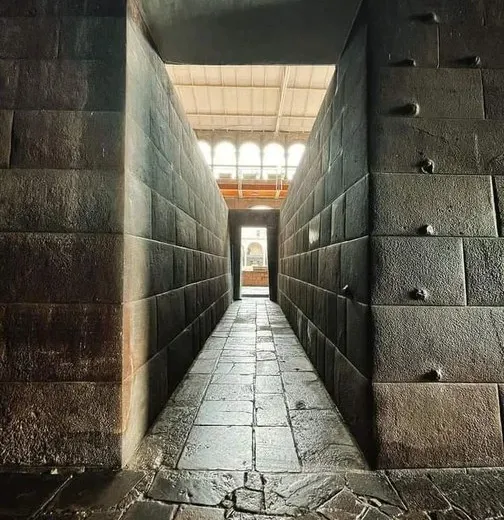
Around the world, there is architectural and engineering evidence that does not fit neatly into the conventional historical narrative. Structures built with a precision difficult to replicate even with modern technology raise legitimate questions about what earlier civilizations understood and achieved. The civilización inka left constructions of extraordinary sophistication — stonework of such precision that it continues to be studied by engineers today.
Many ancient cultures also carried accounts of previous world ages or cycles — the idea that humanity has risen and fallen more than once. Whatever one makes of these accounts, they suggest a view of history as cyclical rather than a simple story of linear progress from primitive past to advanced present. History approached honestly leaves room for these questions rather than dismissing them.
What History Reveals About Human Needs
The most practical value of history is what it reveals about unchanging human needs. Modern humans are not fundamentally different from humans thirty thousand years ago. We still need sleep, movement, real food, purpose, social belonging, and direct contact with the natural environment. These needs did not change because technology did.
History allows us to distinguish what genuinely sustains human life from what distorts it. It shows which conditions supported stable, coherent societies over millennia, and which recent departures have produced the stress, disconnection, and mental fatigue characteristic of modern life.
History is a functional map — not a way to return to the past, but a way to restore what sustains human life in the present.
History as a Pillar of the Inka Method
This is why history is one of the three pillars of the Inka Method. It is not studied for its own sake, but as a source of evidence about how human beings can live well. Combined with science, which explains why these conditions matter, and simplicity, which restores direct relationship with life, history provides the reference point for genuine human realignment.
Understood this way, history is not behind us. It is a guide available in the present — a record of what worked, waiting to be read by anyone willing to question the assumption that the newest way of living is necessarily the best.
Those who do not understand their history are condemned to repeat it. Those who do can choose differently.