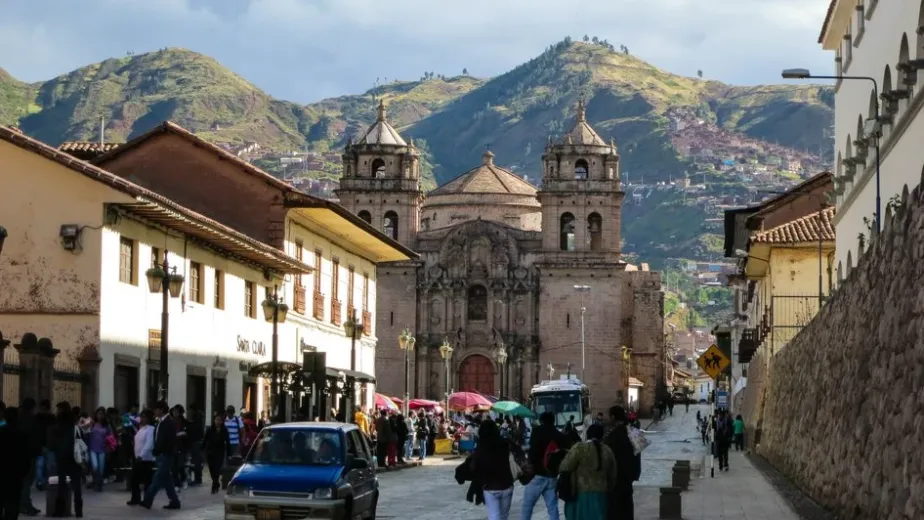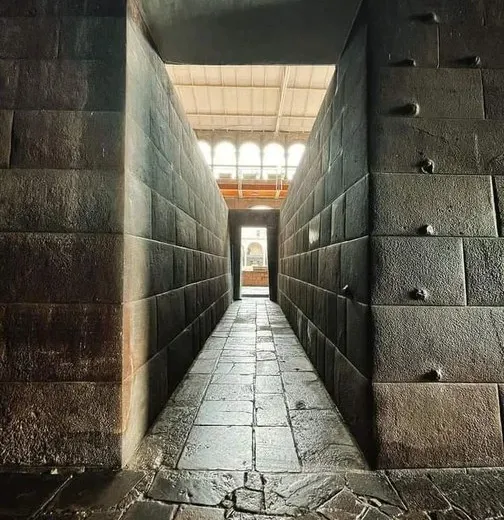
The language of the civilización inka is universally called Quechua. It appears that way in dictionaries, academic papers, government documents, and every language course offered to travelers. The name is so established that questioning it seems pedantic. But there is a problem with it, and the problem is not trivial: quechua is not the name of a language. It is the name of a place.
What the Word Actually Denotes
In the Andes, qheswa or quechua refers to a geographic and ecological zone — one of the vertical ecological floors that stack up the Andean slopes. It describes a specific altitude band with a particular climate, particular soils, and particular crops that grow there.
Quechua is not a people or a language. It is an ecological zone — an altitude band on the side of a mountain.
The Andes are organized by these floors. Each zone has its own conditions, its own agriculture, its own name. The quechua zone is one of them — a temperate valley band, agriculturally productive, distinct from the higher puna and the lower yunga. It is a description of terrain, not of a nation.
How a Zone Became a Language
The transformation happened after the conquest. Colonial administrators and missionaries needed to categorize the population they now governed, and they needed a name for the language they had to learn in order to evangelize.
They took a word they encountered — one describing where many speakers lived — and applied it to the language itself, then to the people. This is a common colonial pattern: outsiders name a group after something incidental, and the name sticks because it is the outsiders who write the documents. The people did not choose this name. It was applied to them.
Why This Is More Than Pedantry
It might seem like a footnote. It is not, because of what the naming replaced.
A language named after its own people carries their identity. A language named after an altitude band carries nothing — it is a filing label. The renaming detached the language from the civilization that produced it, which is precisely what makes it possible to speak of Quechua as a regional dialect rather than as the language of a sophisticated society that engineered the Qhapaq Ñan and built stonework engineers still study.
Name a people after their achievements and you preserve them. Name them after the altitude they live at and you have already made them smaller.
The Same Pattern, Again
What makes this significant is that it is not an isolated error. It is the same operation visible throughout the account of the civilización inka.
Pachamama rendered as Mother Earth, when the word for earth is allpa and pacha means time, space, universe. The three pacha mapped onto heaven, earth and hell by chroniclers with no other framework. The Inka Law flattened into prohibitions when ama means never. Each translation made the civilization legible to its conquerors, and each made it smaller in the process.
The naming of the language is the same operation applied to identity itself.
What Happens When a People Loses Its Own Name
There is a deeper consequence. When speakers of the language are asked basic questions about their own tongue — how do you say a plain no? what does ama actually mean? — many find they cannot answer. Not because they lack fluency, but because the language was taught back to them through the framework of those who documented it.
This is what extreme manipulation of a people looks like in practice. Not the destruction of a language, but its return in a diminished form, with an imposed name and translations that erase what it originally carried.
Why This Belongs to the Method
The Inka Method treats history as evidence rather than inherited narrative, and this is a compact example of why that matters. The name Quechua is not a neutral fact. It is a colonial artifact that has been repeated so long it now appears to be simply true.
Recovering the observation is not about demanding a different name. It is about recognizing that even the most basic categories a person inherits about the past may have been assigned by someone with an interest in the result.
Even the name is not theirs. That is how completely a story can be rewritten — and how invisible the rewriting becomes once enough time passes.