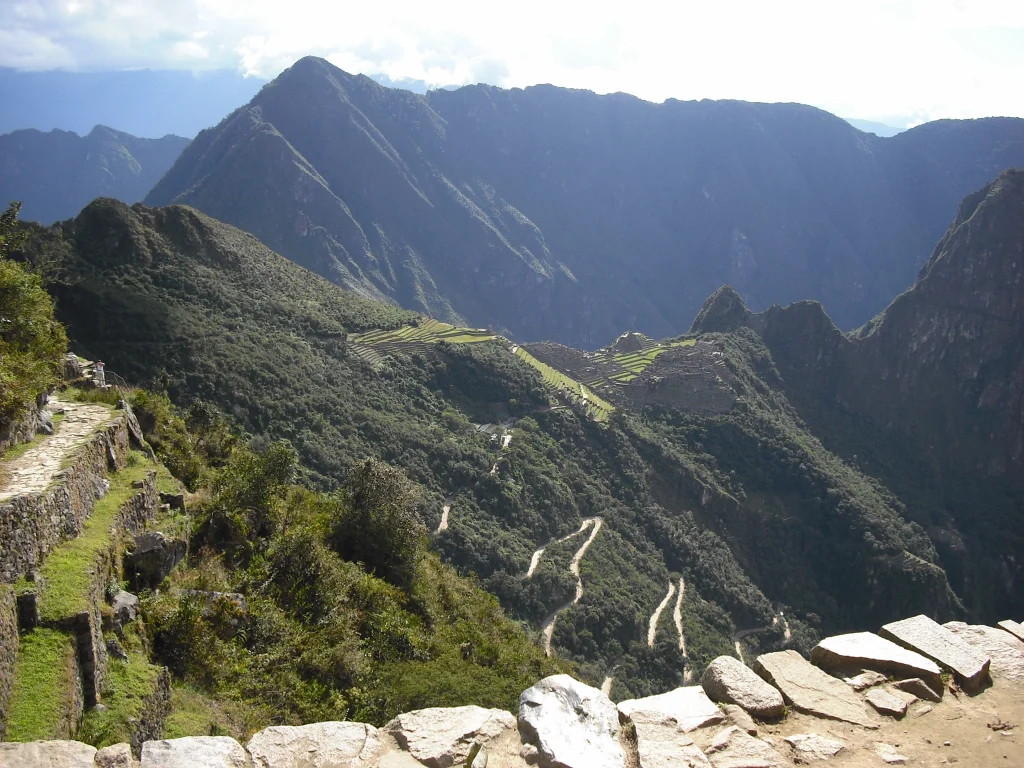
The calming effect of natural environments is so familiar that it is easy to take for granted. A walk among trees, the sight of mountains, the sound of water — these reliably reduce tension. But this is not merely a pleasant subjective impression. It is a measurable physiological response, rooted in how the human nervous system evolved and documented across decades of research. Understanding why natural environments reduce stress explains why they are so central to genuine recovery.
A Nervous System Built for Nature
For the overwhelming majority of human history, natural environments were simply where humans lived. The nervous system evolved within them, calibrated to their signals. Only in the last few thousand years — and overwhelmingly in the last two hundred — have humans spent most of their time in built, artificial environments. From the nervous system’s perspective, the natural world is home, and it responds to it as such.
The body does not experience nature as an escape from normal life. It experiences it as a return to the conditions it was built for.
The Cortisol Evidence
The most direct measure of stress reduction is cortisol, the primary stress hormone. Multiple studies, many catalogued by the National Library of Medicine (NCBI), have measured cortisol before and after time in natural environments and found consistent reductions. Research on forest environments, in particular, has documented lower cortisol levels, reduced blood pressure, and decreased activity in the sympathetic nervous system — the branch responsible for the fight-or-flight response.
These findings have been replicated across cultures and settings, from Japanese research on shinrin-yoku to studies conducted at universities across Europe and North America. The consistency of the effect points to something fundamental about the human response to natural settings.
The Attention and Overload Factor
Part of the stress reduction comes from what natural environments remove. Built environments, especially urban ones, bombard the brain with stimuli that demand constant processing: traffic, signage, crowds, noise, and the endless visual complexity of human-made spaces. This constant demand keeps the nervous system in a state of low-grade alertness.
Natural environments have a different sensory quality — lower in artificial information, more coherent, and less demanding. Research building on Attention Restoration Theory, developed at the University of Michigan, shows that this allows the mind’s overtaxed attention systems to rest. When the brain is no longer forced into constant filtering, one significant source of chronic stress simply disappears.
Much of modern stress is not caused by any single problem. It is the accumulated cost of an environment that never lets the nervous system stand down.
Biophilia: An Innate Connection
The biologist E.O. Wilson of Harvard University proposed the biophilia hypothesis — the idea that humans have an innate, evolved affinity for living systems and natural environments. This framework helps explain why natural settings do not merely fail to stress us, but actively soothe us. Features such as flowing water, greenery, and expansive natural views appear to signal safety and abundance to deep, ancient systems in the brain.
This innate connection means the stress-reducing effect of nature is not learned or cultural. It is built into human biology, which is why it appears so consistently across different people and different parts of the world.
Why This Requires Real Immersion
The depth of the stress-reduction effect depends on the depth of exposure. A photograph of nature produces a small effect. A brief walk produces a larger one. But the most profound reductions in stress come from sustained immersion — enough time in a natural environment for the nervous system to fully recognize that the demands and threats of modern life are genuinely absent.
This is why structured therapeutic travel emphasizes extended time in natural settings rather than brief exposure. The nervous system needs time to fully downshift, and the stress that accumulated over months or years does not release in an afternoon. Given genuine immersion, however, the reduction is real, measurable, and restorative in a way little else can match.
Nature reduces stress not by distracting from it, but by removing the conditions that produce it — and giving the body time to remember what calm actually feels like.