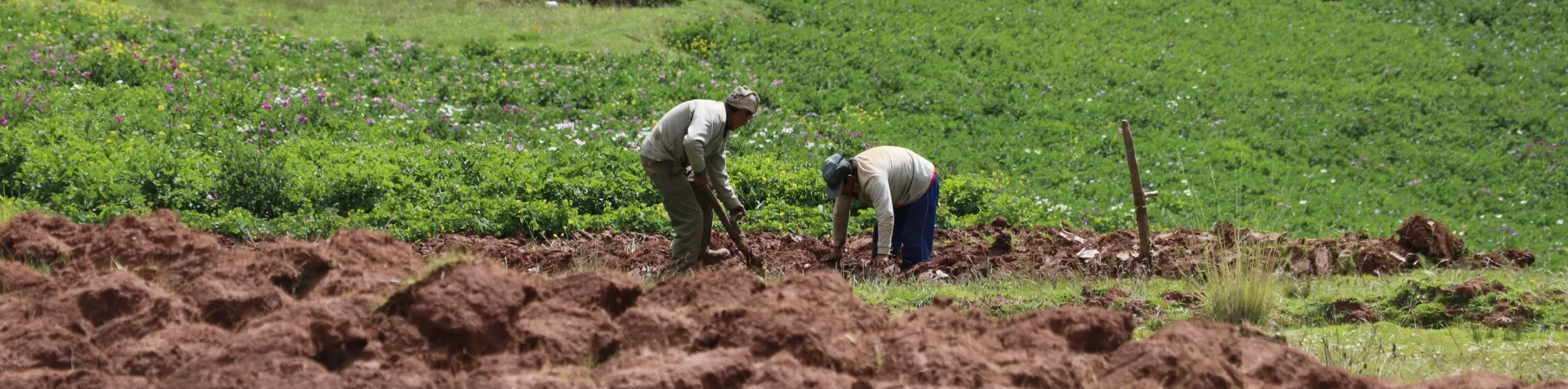
What is time? It may be the oldest question humans have asked, and philosophy has never settled it. But there is an answer that emerges not from theory but from how human beings actually function — and it resolves the question in a way that changes how a person lives. Time is not for counting. It is for doing, and for continuing to do. Everything about the human organism confirms this, and almost everything about modern life denies it.
The Modern Obsession With Measuring
Modern life is organized entirely around counting time. Hours are tracked, days scheduled, minutes optimized. Productivity systems slice time into units to be managed. The entire relationship is one of measurement — as though time were a substance to be counted, budgeted, and spent carefully.
Modern life counts time obsessively and uses it badly. Ancient people counted it barely at all and lived it fully.
The result is strange: a civilization that measures time with unprecedented precision while experiencing it as constantly scarce. The more carefully time is counted, the less of it anyone seems to have. Something in the framing is wrong.
Time Is Oro — But Not for the Reason You Think
The old saying holds that time is gold. It is usually taken as a productivity instruction: do not waste time, extract value from every hour. But read differently, it says something else entirely.
Time is valuable not because it can be converted into money, but because it is the medium in which a human being is made. It is the only thing that cannot be recovered, and its value lies in what it is used to do — not in what it is exchanged for. Those who understood this were not saying be efficient. They were saying be alive.
The Body Confirms It
Here is the evidence that settles the matter. The human body regenerates when it does something physically. Movement triggers repair, adaptation, and neuroplasticity — processes documented extensively by institutions including the National Institutes of Health (NIH). Time spent in genuine physical activity does not consume a person. It rebuilds them.
Time spent doing rebuilds the body. Time spent seated producing for someone else does not. The organism has already answered the question.
Contrast this with time spent seated — producing for industries and individuals who already have more than they can spend and still want more. That time does not regenerate anything. The body degrades in it. The same hours, spent two ways, produce opposite biological results. The organism is telling us what time is for.
The Inka Law Understood This
The first principle of the Inka Law is Ama Q’ella — never idle. Read superficially, it sounds like an instruction to be productive. Read properly, it is a statement about time.
A person who is never idle is continuously doing — and continuous doing produces achievement, which produces the neurochemistry of genuine satisfaction. But more than that, it means a life spent in the mode the body was built for. The Inka were not demanding labor. They were describing a relationship with time in which time is used rather than counted, and in which the using is what makes a person whole.
Why Cultures Built Toward the Sky
This understanding explains something that recurs across the world. Cultures everywhere, with no contact between them, built structures aligned to celestial events — solstices, equinoxes, stellar positions. The conventional reading is religious. But these alignments track cycles, and cycles govern when to plant, when to harvest, when to move.
These civilizations were not counting time. They were locating themselves within it — aligning human activity with the rhythms that actually govern life on this planet. That is a fundamentally different relationship: not measurement, but participation.
What Changes When You Stop Counting
The practical consequence is direct. A person who counts time experiences scarcity, pressure, and the constant sense of falling behind. A person who uses time — who spends it doing, moving, engaging — experiences something else entirely: a life in which the hours produce a person rather than consume one.
This is why time belongs to simplicity. The recovery of a direct relationship with what sustains life is, necessarily, a recovery of what time is for. Not a resource to be optimized. The medium in which a human being regenerates, achieves, and becomes.
The question was never what time is. It was what time is for. And the answer was written into the body all along: time is for doing, and the doing is what makes you.