Wacrapucara
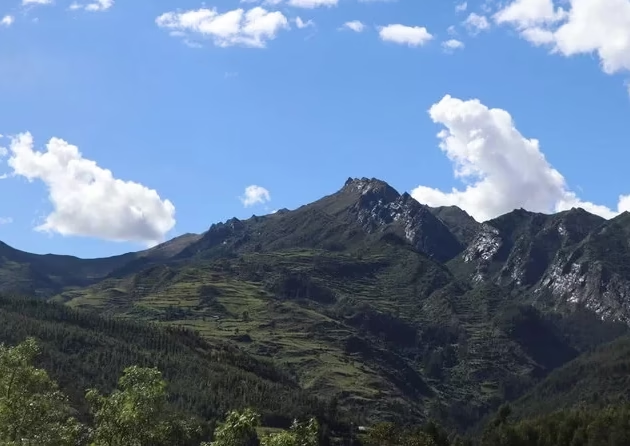
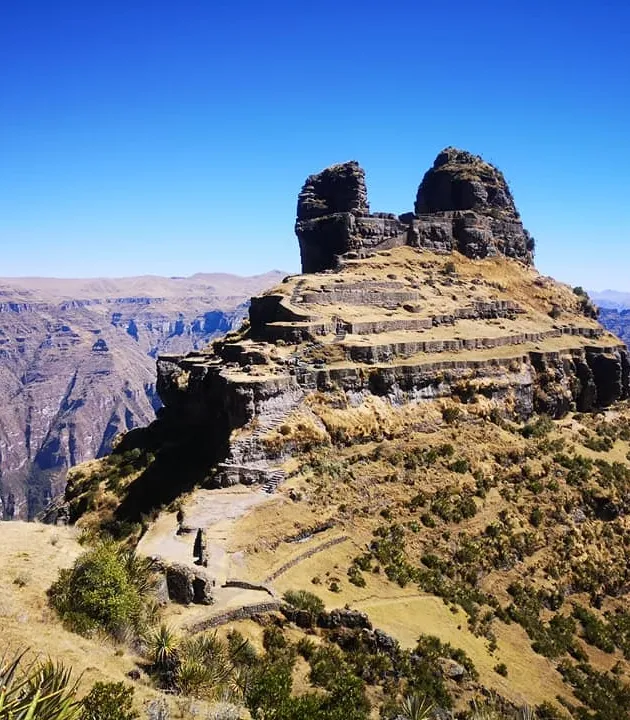
Wacrapucara — "horn-shaped fortress" in Quechua — is one of the least visited significant archaeological sites in the Cusco region. Perched on twin rock formations above the Apurímac canyon at 4,300 meters, it sees a fraction of the visitors that better-known sites receive. For those who reach it, the combination of dramatic natural setting and genuine remoteness produces an encounter with Andean history on entirely different terms.
Where solitude is still possible
Wacrapucara is used in journeys where the participant needs a site that has not been processed by mass tourism — where the encounter with history is direct, unmediated, and physically earned. The approach is demanding. The site rewards that effort with a quality of silence and presence that more accessible sites can no longer offer.
Wacrapucara sits above everything. And in that elevation — physical and psychological — something essential becomes visible.
Twin horns above the canyon
The site consists of ceremonial platforms, storage structures, and defensive walls built on and between two natural rock formations that rise dramatically above the surrounding terrain. The views of the Apurímac canyon and the mountains beyond are among the most striking in the region.
For those ready for the unmarked path
Within the Inka Method, Wacrapucara is reserved for participants who have demonstrated readiness for a genuinely challenging and off-the-beaten-path experience. It is not an introductory destination. It is one that rewards the participant who has already done significant internal work during the journey.
Routes and access
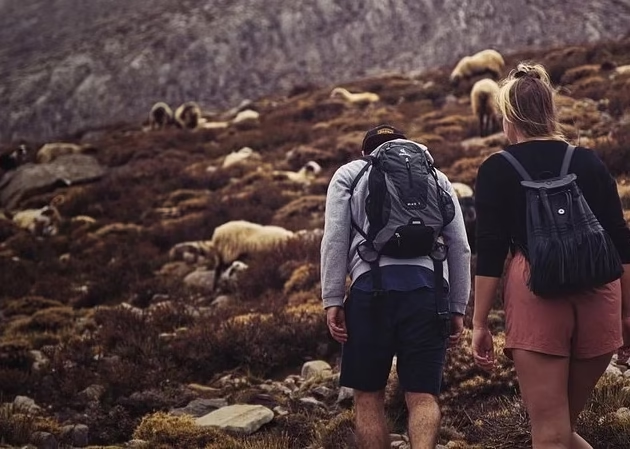
Wacrapucara is reached from Quehue, a small community approximately 3.5 to 4 hours from Cusco. From there, a 3 to 4-hour round-trip hike reaches the site. Road conditions vary seasonally — the route is more reliable in dry season (May to October). We assess access conditions and physical requirements during the application process and can combine the visit with nearby environments in the Apurímac canyon region.
Wacrapucara is most frequently included in journeys that already involve the Apurímac region or as an extension of an Ausangate or Choquequirao journey.
Showing all 6 results