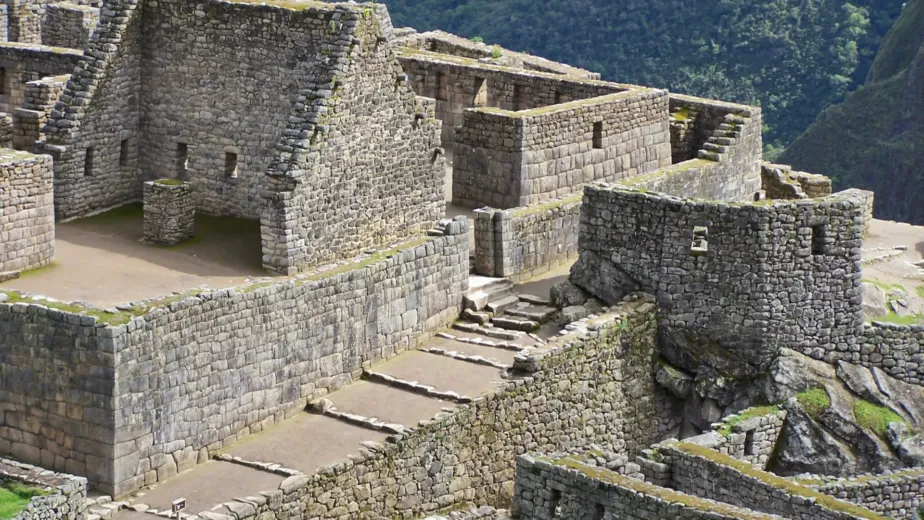
Three pillars sound like three separate things — History, Science, and Simplicity, each with its own domain. Presented that way, they resemble a curriculum: study some history, learn some science, practice some simplicity. But that is not how the Inka Method works, and understanding why reveals what the framework actually is. The pillars are not three subjects. They are three questions about a single reality, and their convergence is where the entire method lives.
Three Questions, One Reality
Each pillar answers a different question about the same thing: how a human being is meant to live.
History asks: what has actually worked? It examines the evidence of societies that endured for millennia and identifies the conditions that sustained them. Science asks: why did it work? It explains, in the language of the present, what those conditions do to the brain and body. Simplicity asks: what does this require of me now? It translates the evidence and the explanation into a way of living.
History provides the evidence. Science provides the explanation. Simplicity provides the application. Alone, each is incomplete.
Why Each Fails Alone
The necessity of convergence becomes obvious when you remove any single pillar.
History alone is nostalgia. It shows that ancient societies lived differently and endured longer, but without science it cannot explain why those conditions mattered, and without simplicity it offers no path forward. It becomes an interesting story about the past with no bearing on the present.
Science alone is fragmentation. It can measure cortisol, document neuroplasticity, and explain circadian rhythm — research from institutions including the National Institutes of Health (NIH) has done exactly this. But science produces findings, not coherence. It can tell you natural light regulates your rhythm while offering no framework for a life organized around that fact.
Simplicity alone is a lifestyle choice. Without history, it has no evidence that this way of living has ever worked. Without science, it cannot explain why it should. It collapses into preference — indistinguishable from minimalism or any other trend.
What Happens When They Meet
Together, they produce something none of them contains. History reveals that human beings lived for millennia with movement, natural rhythm, real food, belonging, and purpose. Science explains that these conditions regulate the HPA axis, drive neuroplasticity, and restore attention — confirming, in modern terms, what those societies knew through experience. Simplicity then makes it actionable: recover the direct relationship with what sustains life.
The convergence produces something no pillar contains alone: knowledge that is simultaneously proven by history, explained by science, and livable now.
Notice what this does. The historical claim stops being romantic because science verifies it. The scientific finding stops being fragmentary because history gives it a coherent context. The lifestyle stops being arbitrary because both evidence and explanation support it. Each pillar rescues the others from their characteristic failure.
Convergence Produces Realignment
When the three interact within an immersive environment, they create the conditions for what the Inka Method calls Human Realignment — a process in which a person temporarily steps outside habitual cognitive patterns and reconnects with fundamental aspects of experience: perception, identity, environment, and perspective.
This is not something any pillar delivers. It emerges from their interaction, in an environment that permits it. The pillars are not the destination; realignment is what happens when they meet inside a person whose nervous system has been restored enough to receive them.
Why This Structure Was Not Chosen
The three pillars were not selected from a menu of appealing concepts. They are what remained when everything unnecessary was stripped away — because they are the minimum required for understanding to be complete.
Remove any one and the structure collapses into something familiar and inadequate: nostalgia, fragmentation, or lifestyle. Keep all three and you have something rare — a framework in which ancient knowledge, modern evidence, and present-day living finally point at the same thing.
The pillars are not three subjects to study. They are three angles on one question — and only where they meet does the answer appear.