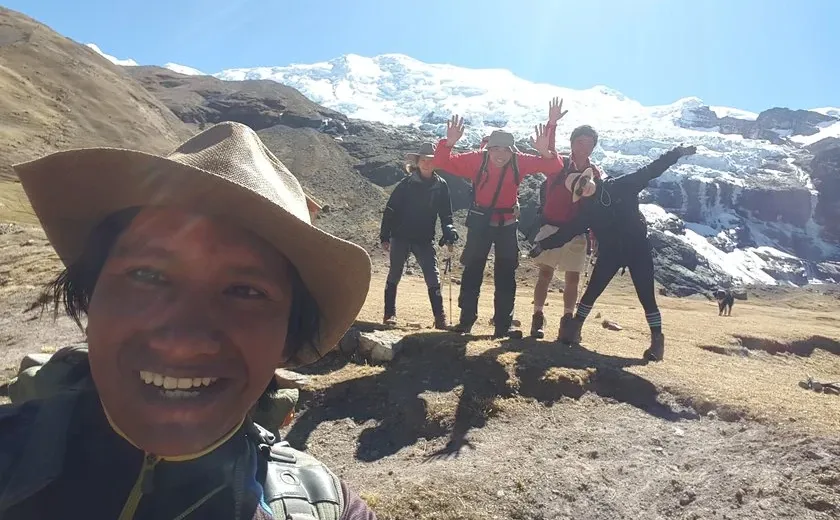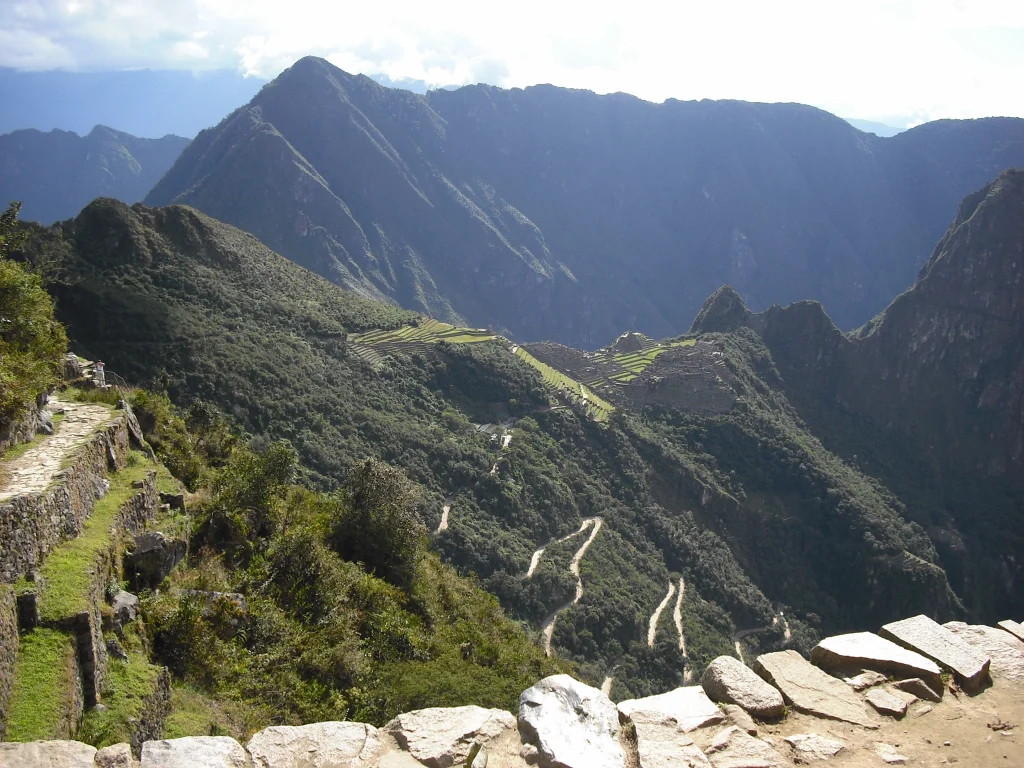
Travelers come to the Andes to see mountains. They photograph them, stand before them, feel something — and then leave, carrying an image. This is the standard relationship between a person and a landscape: the mountain is the object, the traveler is the observer, and the encounter ends when the view does. The Inka Method proposes something different. The mountain is not what you came to learn. It is where the learning becomes possible.
The Difference Between Content and Container
A classroom is not the subject. No one attends a lecture to study the room. The room does something else entirely: it removes distraction, focuses attention, and creates conditions in which something can actually be transmitted. Its value is real and completely invisible.
No one goes to a classroom to study the room. Its entire value is that it makes learning possible.
This is precisely the mountain’s role. It is not the content of the Inka Method. It is the container — the environment that makes a depleted modern mind capable of receiving something it could not have absorbed at home.
Why the Modern Mind Cannot Learn at Home
Consider trying to deliver genuine understanding to a person in their ordinary environment. Their attention is fragmented by constant demand. Their nervous system is running in low-grade alert. Their stress chemistry is elevated. Research from institutions including the American Psychological Association (APA) has documented how chronic stress impairs the prefrontal cortex — the region responsible for exactly the reflection and integration that understanding requires.
You can hand this person the most valuable framework in the world and it will not land. Not because they are incapable, but because their conditions make reception impossible. They are trying to learn in a room where the fire alarm never stops.
What the Mountain Removes
The mountain works by subtraction. It removes the notifications, the demands, the artificial stimulation, the constant low-level threat signals of modern life. As these disappear, the nervous system downshifts. Cortisol drops. The attention systems, no longer forced into continuous filtering, begin to recover.
The mountain does not teach you anything. It removes everything that was preventing you from learning.
What remains is a person who can, perhaps for the first time in years, actually think clearly and receive something. The mountain has not taught them anything. It has made them teachable.
The Physical Dimension
There is a second function the classroom metaphor captures less obviously. Moving through Andean terrain demands genuine physical effort — and effort triggers regeneration, neuroplasticity, and the biological processes that a sedentary life leaves dormant.
This matters for learning specifically. Research documents the link between physical activity and neuroplasticity — the brain’s capacity to form new connections. The mountain does not merely calm a person. It puts their brain into the state most capable of forming new understanding. It is a classroom that improves the student while they sit in it.
Why This Reframing Changes the Journey
Understanding the mountain as classroom rather than content changes what a traveler does with it. The person who treats the mountain as the lesson photographs it and leaves satisfied. The person who understands it as a classroom arrives with a different question: what am I here to understand?
That question transforms the journey. The landscape stops being a spectacle to consume and becomes the environment in which genuine work happens — the work of seeing one’s own life clearly, understanding what modern living has cost, and learning what a coherent existence actually requires.
The Honest Consequence
This framing carries an honest implication: the mountain alone is not enough, and no one should pretend it is. A magnificent classroom with no teaching is just a beautiful empty room. The Andes without a framework of understanding produce a wonderful trip and an unchanged person.
This is why the Inka Method insists on both. The mountain creates the conditions; the framework provides what is worth understanding. The classroom matters enormously — but only because of what happens inside it.
Travel becomes education the moment you stop looking at the mountain and start using it.