The Inka Method is the framework at the core of therapeutic tourism as developed by Therapeutic Tourism. It is what separates a genuinely transformative journey from an ordinary trip through beautiful scenery. While the environment of the Peruvian Andes provides the conditions for change, the Inka Method provides the understanding that turns those conditions into lasting insight. It rests on three pillars: History, Science, and Simplicity.
Nature creates the conditions. The Inka Method creates the understanding.
Without a framework of understanding, an extraordinary landscape remains only a landscape. With the Inka Method, every environment becomes part of a structured process of learning about history, identity, and life itself. This is the difference between visiting a place and being changed by it.
Pillar One: History
History, within the Inka Method, is not nostalgia or the memorization of dates. It is treated as evidence — a record of what has actually worked for human minds and human societies across thousands of years.
The reasoning is direct. Successful civilizations developed ways of life based on natural rhythm, community, meaningful roles, and direct relationship with the environment. Many of these societies endured for far longer than the modern industrial model, which is only about two hundred years old. From a historical perspective, modernity is a recent experiment, while these older models were stable, tested systems of human organization.
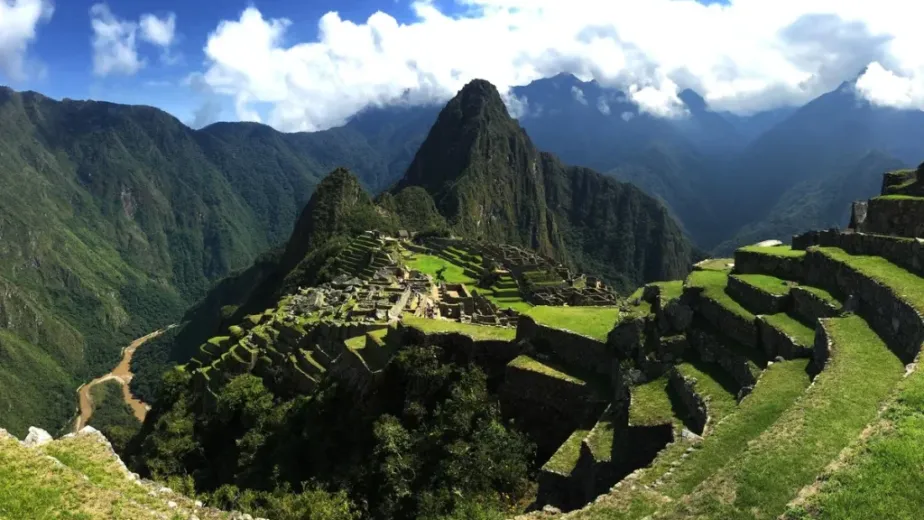
The Inka Method also treats official history critically. The conventional historical narrative was largely written by those who conquered — and conquest, throughout human history, has always required controlling not only territory but the story a population believes about itself. The civilización inka left architectural and agricultural evidence of sophistication that the official narrative, framed by its conquerors, does not fully account for. History, approached honestly, becomes a functional map: a way to distinguish what genuinely sustains human life from what distorts it.
History is not about the past. It is a way of understanding life.
Pillar Two: Science
The second pillar translates ancient insight into the language of modern research. Where history shows that certain conditions supported human wellbeing, science explains why — in terms of the brain, the nervous system, and human biology.
Modern research in neuroscience, environmental psychology, and physiology, from institutions including the National Institutes of Health (NIH) and universities worldwide, has begun to confirm what older cultures understood through experience. Natural light regulates circadian rhythm. Physical movement drives regeneration and neuroplasticity. Natural environments lower cortisol and restore attention. Social belonging supports mental health. What was once expressed in the language of tradition is increasingly expressed in the language of measurable biology.
Crucially, the Inka Method does not overstate what science has proven. It uses established research where it is solid, and treats areas at the frontier of knowledge — where modern physics and neuroscience are only beginning to explore what ancient cultures intuited — as open questions worth approaching with humility rather than as settled fact.
Pillar Three: Simplicity
The third pillar is the most easily misunderstood, because it is often confused with minimalism. They are not the same. Minimalism asks: what can I remove? It reduces possessions but leaves a person’s underlying relationship to the system — the dependence, the disconnection — unchanged. It functions like an aspirin, relieving a symptom without resolving the condition.
Minimalism asks what you can eliminate. Simplicity asks what is genuinely necessary to live in accordance with the conditions that sustain life.
Simplicity, within the Inka Method, is not about owning less. It is about relearning capacities that every human being once possessed: to produce what one needs, to move the body, to read the natural world, to live in direct relationship with the conditions of life rather than through layers of dependence and abstraction. Physical effort is not merely labor — it is a form of self-regeneration built into human biology. Simplicity restructures how life is organized, rather than merely reducing what fills it.
Convergence: Human Realignment
The three pillars do not operate in isolation. When history, science, and simplicity interact within an immersive environment, they create the conditions for what the Inka Method calls Human Realignment — a process in which a person temporarily steps outside habitual cognitive patterns and reconnects with fundamental aspects of experience: perception, identity, environment, and perspective.
This is the point of the entire framework. It is not to deliver information, but to create the conditions under which a person can observe their life with genuine clarity and understand what a coherent way of living actually requires.
Without the Inka Method, this could simply be another extraordinary journey through Peru. With it, every landscape becomes part of a structured process of understanding life itself.