You have tried the usual answers. New goals, new purchases, a trip, more exercise, maybe fewer commitments. And still the question returns, usually at night: what to do when nothing makes you happy anymore?
Most advice treats this as a motivation problem. It rarely is. If you have energy for your obligations but feel nothing from your rewards, the issue is not that you lack discipline — it is that the reward system itself has gone quiet. Psychologists call it anhedonia when it is clinical; in high-functioning people it often appears in a milder, stranger form: life keeps working, and it keeps meaning less.
Why the Usual Fixes Don’t Work
Buying, achieving, and optimizing all operate inside the same structure that produced the numbness: compressed time, saturated environments, constant stimulus. Adding a new input to an overloaded system does not restore sensitivity — it raises the threshold further. This is why the vacation that should have helped left you strangely unmoved, and why the promotion changed nothing for longer than a week.
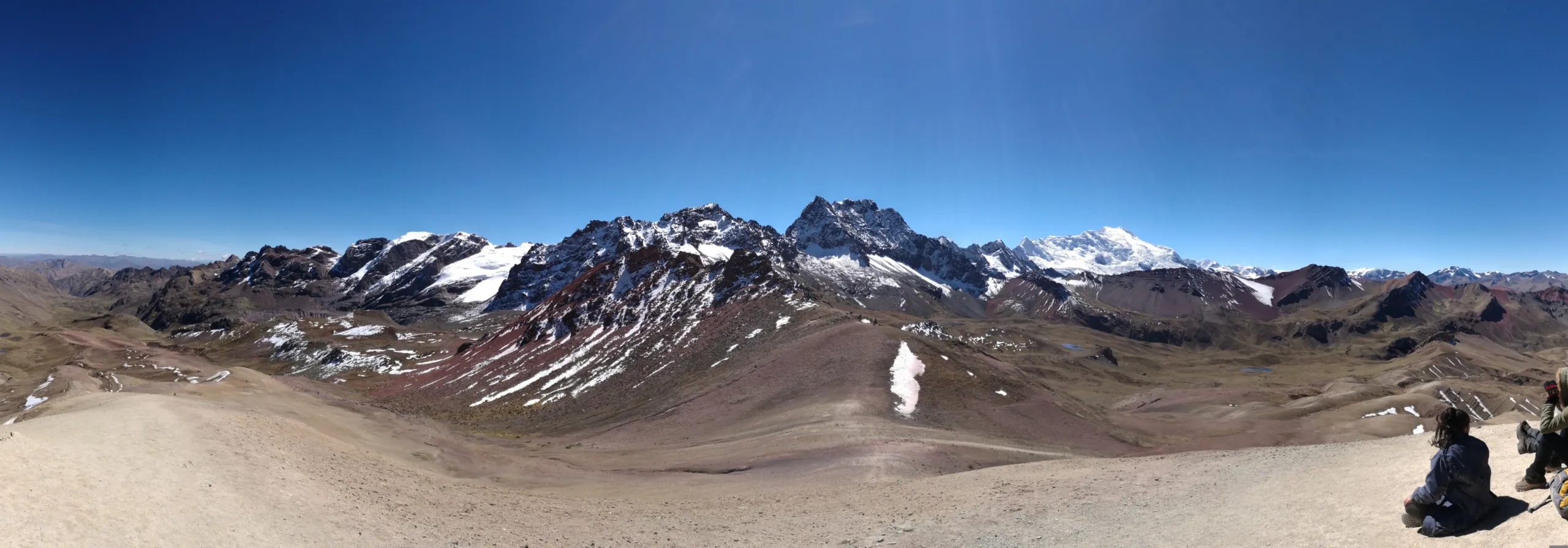
The research points somewhere less intuitive. Sensitivity returns not when we add stimulation but when we subtract it — for long enough, in environments different enough, that the nervous system recalibrates its baseline. Exposure to natural environments activates the parasympathetic nervous system, the branch responsible for recovery and regulation. Altitude, silence, and open horizons reduce external stimulation in ways no urban setting can replicate.
What to Do When Nothing Makes You Happy: A Different Sequence
Before assuming something is wrong with you, consider the order of operations most people never try:
First, stop adding. No new goal, no new purchase, no new self-improvement project for now. Each one postpones the encounter with the actual question.
Second, change the conditions, not the content. Happiness rarely responds to direct pursuit. It responds to conditions: real time, regulated environments, meaningful input. Change those and the feeling tends to follow — not the other way around.
Third, give it structure. Unstructured escape becomes tourism; structured distance becomes a process. The difference between the two is what you return with.
The Question Behind the Question
“Nothing makes me happy” is almost never the real statement. The real statement is usually: the way I have been living stopped fitting, and I kept living it anyway. That is not a defect to fix. It is information — possibly the most useful information you have received in years.
This is the premise behind the Inka Method: that clarity is not produced by thinking harder inside the same conditions, but by stepping into environments designed to restore perception — and letting structured knowledge give the experience direction. Not as an escape. As a recalibration.
If this described you more precisely than you expected, the next step is not another article. It is a conversation about where you are — which is exactly where an application begins.