
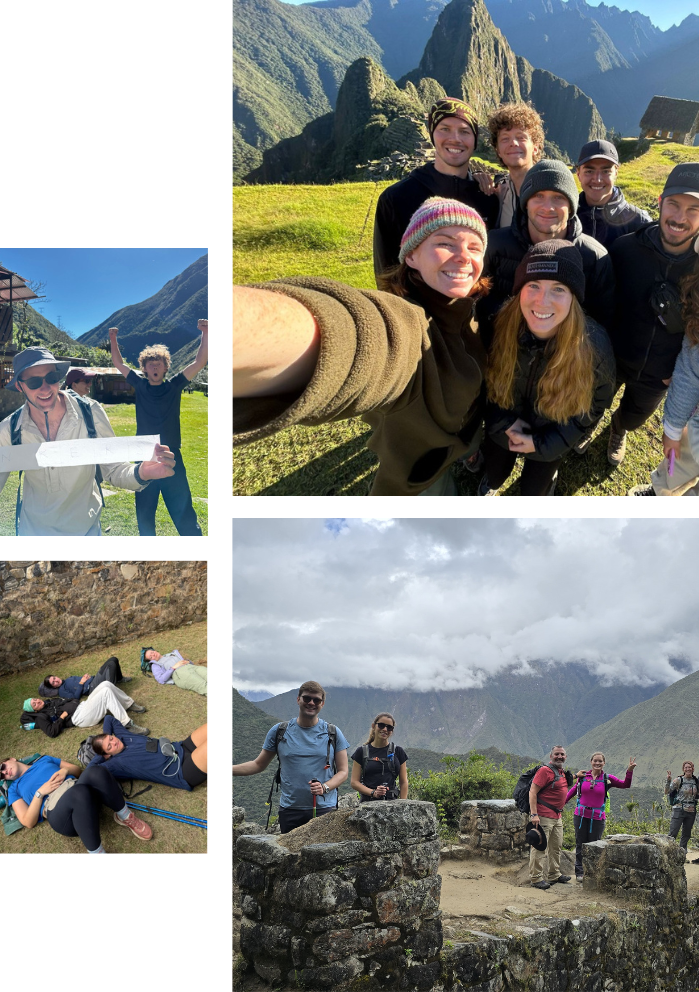

environment active elements in the process of mental restoration
Destinations are not chosen. They are prescribed
All destinations are integrated within the Inka Method framework and selected based on environmental psychology and neuroscience research.
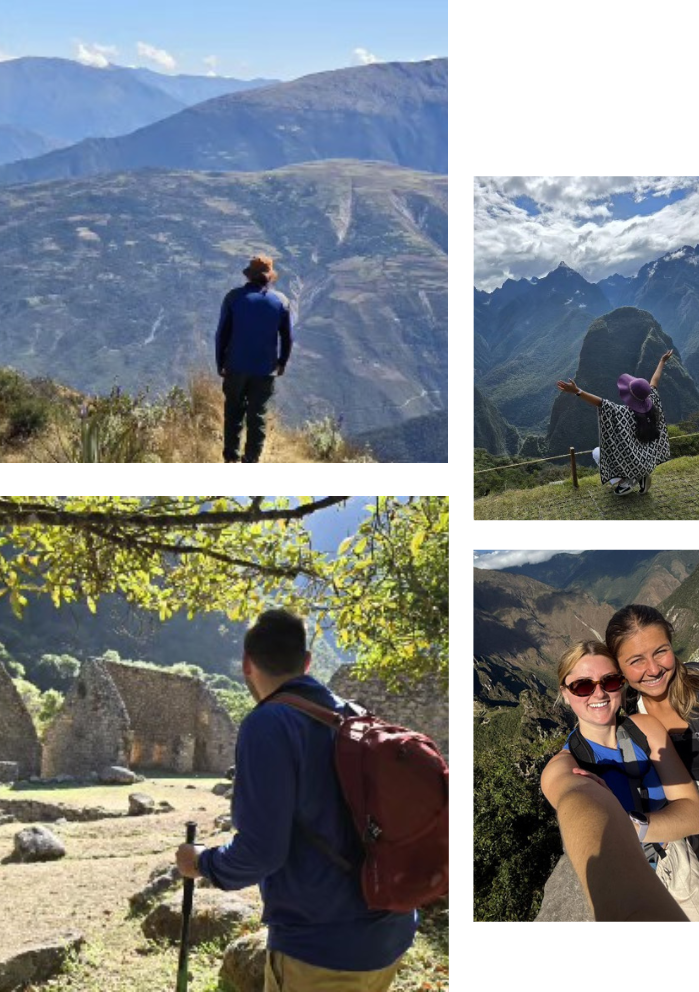
The Science Behind the Environment
Your Nervous System Already Knows Where It Needs to Be
Modern research confirms what ancient civilizations understood intuitively: the environment you inhabit directly shapes your mental clarity, biological balance, and emotional state.
Altitude and Cognitive
Reset
High-altitude natural environments reduce external stimulation and alter physiological rhythms, creating measurable conditions for mental decompression and perceptual clarity.
Nature and Nervous System Regulation
Exposure to natural activates the parasympathetic nervous system. Studies report that 98% of participants in nature showed improvement in mental health indicators.
Ancestral Environments and Human Identity
Environments shaped by ancient civilizations carry layers of cultural and historical meaning that engage the mind beyond ordinary perception. The Inka Method uses this dimension as a structured element.
The Andes are not a destination. They are a biological and historical condition for human evolution/restoration.
Therapeutic Environments
Where the Mind Finds Its Way Back
Each destination is selected for one purpose: its capacity to restore the mind.
Your chosen environment becomes the therapeutic center of the journey — the place where your therapy is anchored and your process unfolds. Additional sites are naturally integrated along the way, and destinations can be combined when the design calls for it. One environment. One intention. One direction.
Machu Picchu
For the therapeutic process, Machu Picchu functions as a point of arrival — a place where knowledge accumulated throughout the journey crystallizes into personal clarity and renewed direction.
Therapeutic value line:
Empowering brands through personalized strategies, innovative design, and proven solutions for impactful digital experiences.
Salkantay
The Wild Mountain — This environment is prescribed for individuals who require a profound break from mental overload — where physical challenge becomes the catalyst for psychological reset.
Therapeutic value line:
Stress release and cognitive restoration through physical engagement.
Sacred Valley
The Sacred Valley of the Inkas — Within the Inka Method, the Sacred Valley is used as an environment for cultural immersion and biological recalibration — where the pace of life itself becomes the therapeutic variable.
Therapeutic value line:
Nervous system regulation through cultural simplicity and natural rhythm.
Lares
Lares represents one of the last living expressions of Andean community life — For high-performing individuals, Lares offers something rarely accessible in modern life: the direct experience of a simpler, more coherent way of existing.
Therapeutic value line:
Perspective restoration through simplicity and human connection.
Rainbow Mountain
At 5,200 meters, Rainbow Mountain demands full physical and mental presence, this environment is used to interrupt habitual mental patterns and restore direct sensory presence — a rare condition for minds accustomed to constant abstraction.
Therapeutic value line:
Mental pattern interruption and restoration of present-moment awareness.
Choquequirao
For individuals seeking deep disconnection from modern systems, Choquequirao offers something increasingly rare: genuine silence, genuine remoteness, and genuine encounter with human history.
Therapeutic value line:
Deep cognitive disconnection and existential clarity through solitude.
Ausangate
Ausangate is prescribed for individuals ready for deep transformation — where the boundary between physical endurance and mental clarity dissolves, and a more fundamental understanding of life begins to emerge.
Therapeutic value line:
Deep personal transformation through physical and psychological challenge.
Cusco
Once the capital of the most sophisticated civilization in the Americas, Cusco remains a living city where Inka architecture, colonial history, and Andean culture coexist in a single urban environment.
Therapeutic value line:
Historical perspective and initial cognitive reorientation.
Huchuy Q'osqo
For the therapeutic process, Huchuy Q’osqo represents a transition environment — a place where physical effort, solitude, and direct encounter with ancestral knowledge combine to produce a natural state of mental openness and reflection. Few places in the Andes offer this level of undisturbed connection with Inka civilization.
Therapeutic value line:
Mental openness through physical effort, solitude, and ancestral proximity.
Inca Trail
Within the Inka Method, the Trail is used as a structured process of progressive disconnection from modern life. Each day reduces external noise, increases physical presence, and deepens the encounter with ancestral knowledge.
Therapeutic value line:
Progressive mental reset through physical endurance, purpose, and historical immersion.
Wacrapucara
In Andean tradition, Wacrapucara was considered an oracle — a place where the boundary between human perception and deeper natural intelligence becomes permeable. Within the therapeutic process, this environment is prescribed for individuals seeking a profound encounter with their own inner clarity, beyond the reach of modern distraction and artificial systems.
Therapeutic value line:
Deep inner clarity through energetic isolation and ancestral presence.
The Convergence Point
Every Journey Can Lead to Machu Picchu
Not as a destination. As a conclusion.
Within the Inka Method, Machu Picchu is not the reason for the journey — it is the result of it. Every program, every destination, and every format within Therapeutic Tourism can be designed to culminate at the Historical Sanctuary of Machu Picchu.
The Inka civilization understood Machu Picchu as a place of convergence — where knowledge, nature, and human purpose aligned. For the therapeutic process, it functions in the same way: a point of arrival where everything experienced along the journey crystallizes into clarity, perspective, and renewed direction.
For many participants, reaching Machu Picchu at the end of their therapeutic journey becomes the most significant moment — not because of what they see, but because of what they understand.
The mountain has always been there. The journey is what prepares you to see it.